Monteverde vs La Fortuna
Monteverde vs La Fortuna? One is wild cloud forest, the other is volcano, hot springs, and adventure - here’s how to choose the right Costa Rica stop.
Choose each destination for a different experience, then check the actual starting place and overnight arrangements before buying a package.
Booking Choice. Explore the main reserve with a naturalist and shared spotting scope. Explore Monteverde Reserve Naturalist Walk
Monteverde vs La Fortuna: At a Glance
| Ecosystem | Cloud forest – mist, moss, rare biodiversity, 1% of world’s forests | Tropical rainforest – lush, warm, humid, volcanic landscape |
| Temperature | 12-22°C (54-72°F) year-round; cool evenings | 25-32°C (77-90°F); warm and humid year-round |
| Elevation | 1,400-1,600m (4,600-5,200 ft) | 250m (820 ft) |
| Signature Experience | Resplendent quetzal, cloud forest reserve, night tour | Arenal Volcano views, hot springs, La Fortuna Waterfall |
| Road Access | Mountain roads; some unpaved; can be challenging in wet season | All paved roads; no 4×4 required |
| Town Feel | Small, quiet, mountain village; backpacker-meets-ecotourism vibe | Larger, busier, more developed; strong tourism infrastructure |
| Activities | Cloud forest hiking, birding, night tours, hanging bridges, ziplining, coffee tours | Hot springs, waterfall, ziplining, white-water rafting, canyoneering, hanging bridges, ATV tours |
| From San José (SJO) | ~3-3.5 hours | ~3-3.5 hours |
| Budget (approx daily) | $75-$200+/day | $90-$220+/day |
| Best For | Birders, wildlife enthusiasts, slow travelers, couples, nature-first visitors | First-time visitors, families, adventure seekers, travelers wanting hot springs |
Data verified March 2026. Daily costs are approximate and depend on accommodation tier and activities selected.
Monteverde vs La Fortuna: Which One Is Right for You?
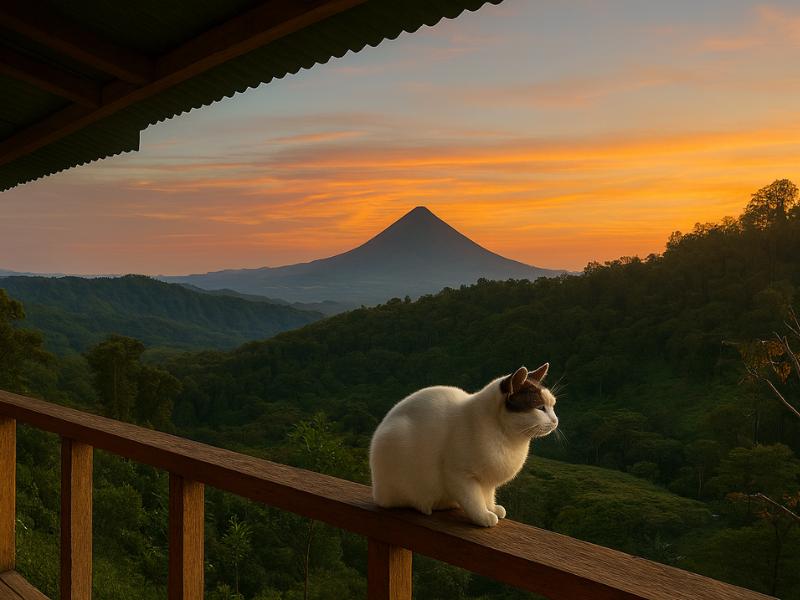
Monteverde and La Fortuna are not interchangeable. They share a country and a reputation, but they occupy completely different ecosystems, have different climates, and attract different types of travelers. Monteverde is a cloud forest at high elevation – cool, quiet, and built around one of the rarest habitats on Earth. La Fortuna is a volcanic rainforest town at the base of Arenal, warm and humid, with a much broader activity menu and a more developed tourist infrastructure. The question is not which is better. It is which matches your travel style.
We guide travelers through Monteverde every week of the year and hear this comparison constantly. The honest version is that most travelers who visit both and report back say the same thing: they are glad they did both, and they are glad they did not skip either one. But if you only have one week in Costa Rica and have to pick, the decision matters. Getting it wrong means spending most of your time in the wrong ecosystem for what you actually wanted.
La Fortuna tends to be the default choice for first-time visitors and travelers on packaged tours, partly because the roads are easier and partly because the activity list is longer. Monteverde is the more deliberate choice – travelers who come here have usually heard about the quetzal, or the cloud forest, or the night tour, and they are coming specifically for that. Both groups are right for their own reasons.
This article goes through every meaningful comparison point – climate, wildlife, activities, cost, accessibility, and who should actually go where – so you can make the choice that fits your trip rather than the default one.
Planning the Monteverde side of your Costa Rica trip? If you want both inland stops plus the coast in one booking, see the 3-day itinerary from San José .
Need help with logistics? Check out our breakdown on how to plan a trip to Monteverde Cloud Forest tours – from navigating mountain roads to choosing between reserves.
How Are Monteverde and La Fortuna Different as Destinations?
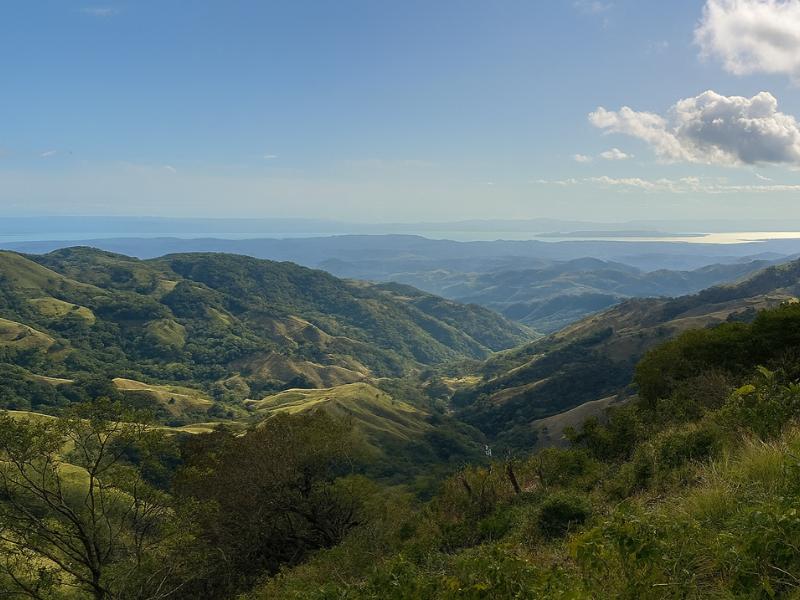
The difference starts with the air. In La Fortuna, you step off the shuttle into thick tropical warmth at 25-32°C, the sky is blue or theatrically stormy, and the Arenal Volcano cone dominates the skyline when clouds allow. In Monteverde, you step off into something cooler, damper, and much quieter. The temperature is rarely above 22°C. The forest is always close. Everything moves at a different pace – not because there is less to do, but because the cloud forest itself sets the tempo.
La Fortuna as a town is considerably more developed than Santa Elena in Monteverde. The main street in La Fortuna has restaurants, car rental agencies, tour operators with flashing signs, souvenir shops, and the kind of infrastructure that makes logistics easy. It is, by the standards of Costa Rican inland towns, relatively close to a proper tourist hub. Santa Elena is smaller, quieter, and built more around a few streets and a central triangle of local businesses. Neither town is particularly beautiful on its own – both are vehicles for getting into the natural environment around them.
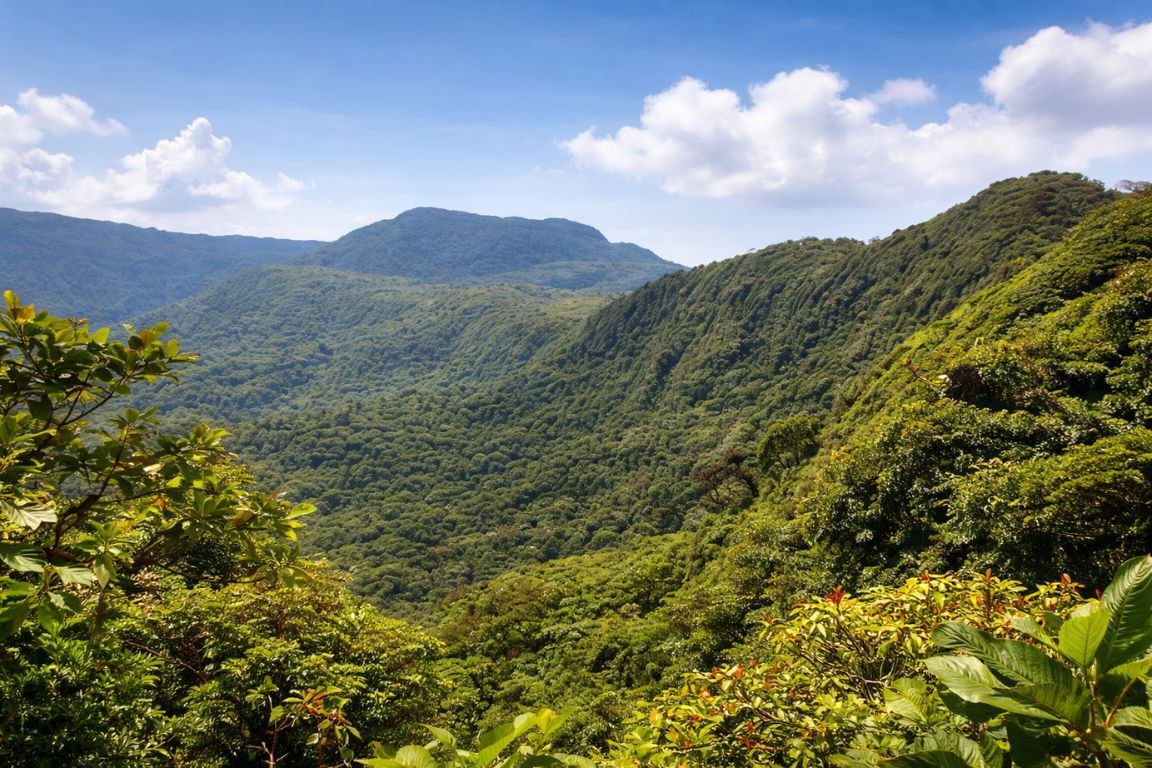
The ecosystems are genuinely different, not just superficially so. The rainforest around La Fortuna is lush, warm, and rich with the visual drama of volcanic geology. There are hanging bridges, waterfalls, a crater lake, and geothermal hot springs that make the volcanic landscape a daily presence. Monteverde’s cloud forest is something else entirely. Cloud forests cover less than 1% of Earth’s land surface. The constant mist that blows through the canopy supports a plant community found almost nowhere else – moss-covered ancient trees, air plants pulling water directly from clouds, over 500 species of orchid. You feel the strangeness of it within minutes of stepping onto a trail.
| Average daytime temp | 17-22°C (63-72°F) | 25-32°C (77-90°F) |
| Average nighttime temp | 12-15°C (54-59°F) | 21-24°C (70-75°F) |
| Rainfall pattern | Year-round mist; dry season Dec-Apr; rainy May-Nov | Dry Dec-Apr; tropical rainy May-Nov; afternoon showers common |
| Humidity feel | Cool and damp; forest mist; wind-driven drizzle (pelo de gato) | Warm, humid, sometimes heavy afternoon rain |
| What to pack | Layers, waterproof jacket, hiking boots, warm layer for evenings | Light clothes, rain jacket, swimwear, sunscreen, insect repellent |
| Swimming weather | Too cool for swimming (no pools at most hotels) | Perfect for swimming, hot springs, waterfall dips |
Verified March 2026.
Which Has Better Wildlife and Nature Experiences?
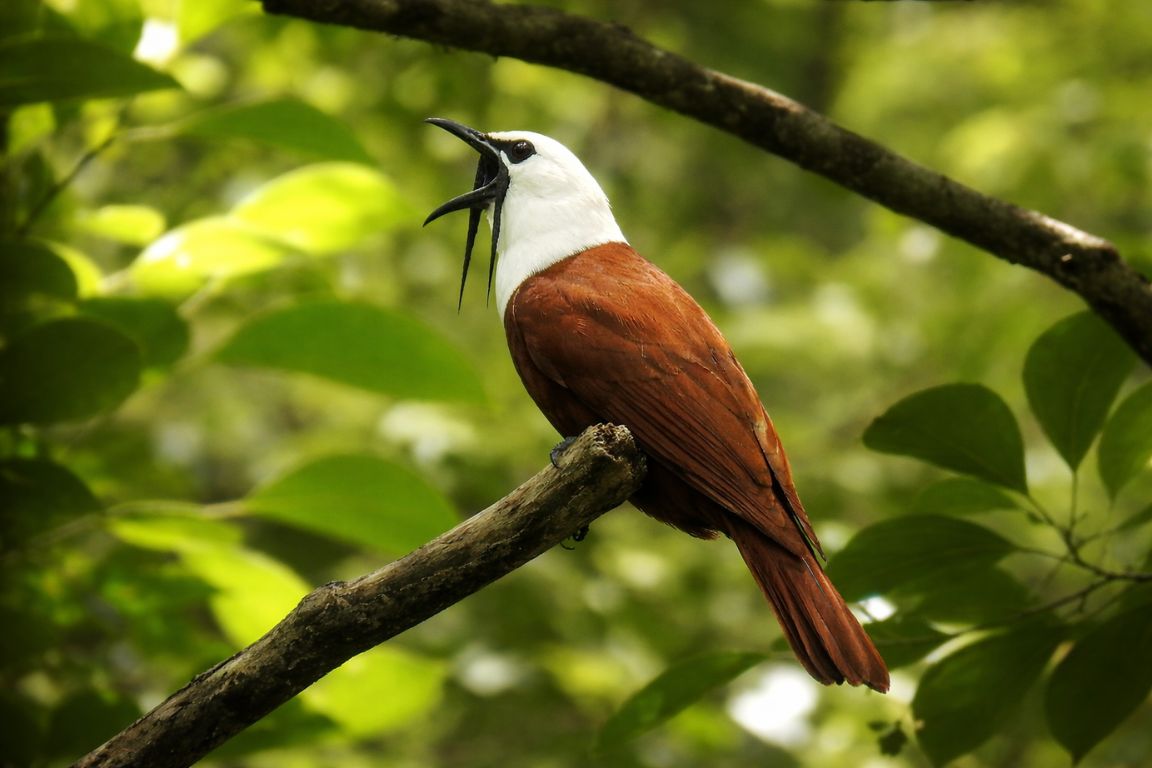 For birders and serious wildlife enthusiasts, Monteverde has no equal in Costa Rica. The cloud forest holds over 500 bird species including the resplendent quetzal – arguably the most spectacular bird in the Western Hemisphere – along with the three-wattled bellbird and species found nowhere else at lower elevations. La Fortuna offers easier, more casual wildlife viewing for travelers who want reliable sightings without deep commitment. Monkeys, sloths, toucans, and caimans are commonly seen from the road or from hotel balconies.
The key distinction is density versus accessibility. Monteverde’s cloud forest is extraordinarily biodiverse but the animals are often hidden in the dense canopy. The guides who work here have spotting scopes and know which avocado trees the quetzals are feeding from this week. Without a guide, you will walk through one of the most biologically rich places on the planet and see relatively little. With a good guide and a scope, you will see things that leave a permanent impression. The night tour alone, which reveals the 80% of the forest’s animal life that is nocturnal, changes how most visitors understand what a forest actually contains.
La Fortuna’s wildlife is more surface-level accessible. The vegetation is slightly more open, the elevation is lower, and the warm humid conditions keep animals more active and visible during the day. Howler monkeys announce themselves loudly through the canopy. Toucans move through the trees in the morning. Caimans bask on river banks near the hanging bridges. White-faced capuchin monkeys are common along forest edges. For travelers who want to say they saw animals without the discipline of patient guided birding, La Fortuna delivers more reliably.
One experience is unique to Monteverde and cannot be replicated anywhere else in Costa Rica: the cloud forest night tour. La Fortuna has night tours too, and they are good. But the biodiversity of Monteverde’s cloud forest at night, particularly during wet season when amphibians are breeding, is something guides at both destinations acknowledge as categorically different.
Curious about cloud forest wildlife? Here’s everything about the animals of Monteverde Cloud Forest – what’s easy to find, what requires a good guide, and when quetzals are most active.
| Resplendent Quetzal | Best place in Costa Rica; Feb-Jun breeding season | Rare; not a reliable sighting location |
| Howler / Capuchin Monkeys | Present; less commonly seen from roads | Frequently seen; often from hotel balconies |
| Sloths | Present; guide with scope needed | Commonly spotted; sanctuary options available |
| Toucans | Present; canopy guides find them | Commonly spotted in the wild and from hotels |
| Red-Eyed Tree Frogs | Outstanding on night tours; peak wet season | Present; fewer species than cloud forest |
| Caimans / Crocodilians | Not present | Seen on river safari tours and hanging bridge walks |
| Cloud Forest Species (orchids, bromeliads, moss) | Extraordinary – 500+ orchid species, unique ecosystem | Not present – different ecosystem entirely |
| Night Tour Quality | Exceptional; 80% of species nocturnal; highest species density | Good; different species; easier terrain |
| Bird Species Count | 500+; world-class birding destination | ~400; excellent but broader ecosystem spread |
Based on field observation. Individual sightings never guaranteed. Verified March 2026.
Which Is Better for Adventure Activities?
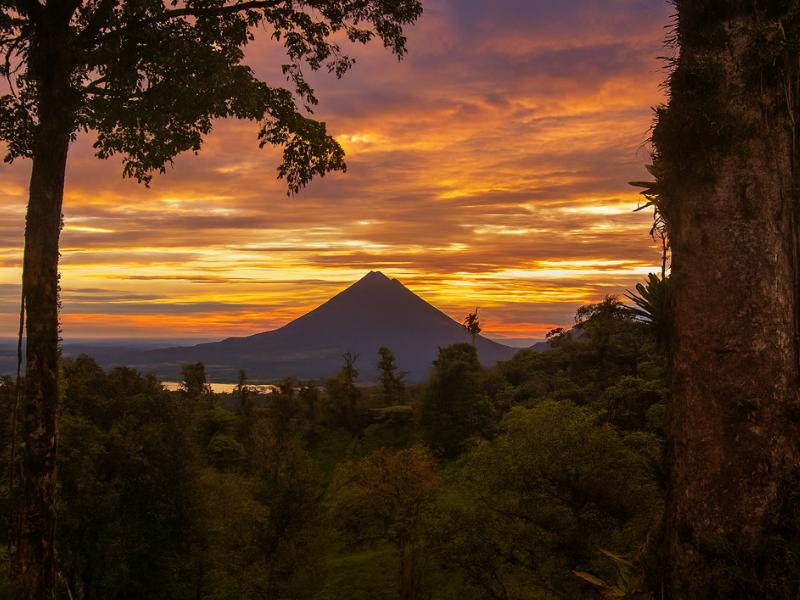
La Fortuna wins on raw activity volume and variety. The list is genuinely long: white-water rafting on the Sarapiquí and Toro rivers, canyoneering and waterfall rappelling, ATVs, the La Fortuna Waterfall hike, cave exploration at Venado Caves, kayaking on Lake Arenal, and over a dozen hot spring resorts ranging from free river access to full luxury resort day passes. Monteverde has excellent ziplining and hanging bridge parks, but the activity menu is shorter and more nature-focused rather than adrenaline-driven.
The La Fortuna Waterfall is a genuine highlight – a 70-meter cascade inside Arenal Volcano National Park, with a 500-step descent to a swimming pool at the base. The hike back up is warm work in the heat, but the waterfall itself is worth the effort. The hot springs are a separate category entirely. There are over 14 hot spring operations in the La Fortuna area, ranging from the free El Choyin natural river section to the Tabacón Grand Thermal Resort. Soaking in geothermally heated water as the Arenal Volcano looms in the background is one of those experiences that travelers almost universally describe as the best night of their Costa Rica trip.
Monteverde’s signature adventure activity is ziplining, and it is legitimately excellent. Sky Adventures and Selvatura both run zipline circuits through the cloud forest canopy that feel very different from the lower-elevation ziplines around La Fortuna – the mist, the tree ferns, and the altitude add a dimension the rainforest operations cannot replicate. The hanging bridges at Selvatura and Sky Walk offer a treetop perspective at canopy height, giving a different view of the forest than the trails below. For adventure, both destinations deliver. La Fortuna delivers more of it.
Which Is Easier to Get To?
La Fortuna is easier to reach and easier to navigate once you are there. All roads to La Fortuna are paved. No 4×4 is required in any season. The town has car rental agencies, a direct public bus from San José, and better road infrastructure throughout the surrounding area. Monteverde has improved significantly since Route 606 was paved in 2019, but roads within and above the town remain unpaved in parts, wet-season conditions can challenge low-clearance vehicles, and there are no car rental agencies in Monteverde itself.
Both destinations sit roughly 3 to 3.5 hours from San José’s Juan Santamaría Airport by shuttle or car. Both are approximately 2.5 hours from Liberia Airport. On a map, Monteverde is actually slightly closer to San José than La Fortuna, but the mountain approach means the drive times converge. From San José by shared shuttle, expect to pay $50-$69 to either destination.
Between the two destinations, travel is either a 3.5-4.5 hour drive around the north end of Lake Arenal or the famous jeep-boat-jeep transfer across the lake. The jeep-boat-jeep takes about 3.5 hours, involves a 30-40 minute boat crossing with views of the volcano, and costs $33-$73 per person depending on operator and whether you book shared or private. It is one of the most enjoyable transport connections in Central America and turns the journey between the two destinations into an experience in itself. The road around the lake is longer and involves some rough patches, but gives you lake views from shore that the boat crossing cannot.
| San José to Monteverde | Shared shuttle | $50-$69 | 3.5-4.5 hrs | Door-to-door; most popular option |
| San José to La Fortuna | Shared shuttle | $55-$70 | 3-3.5 hrs | Door-to-door; paved roads throughout |
| San José to La Fortuna | Public bus (direct) | ~$6 | 4-4.5 hrs | Departs Terminal Atlántico Norte, 8:40 AM |
| La Fortuna to Monteverde | Jeep-boat-jeep (shared) | $33-$50 | ~3.5 hrs | Includes 30-40 min boat crossing; scenic; recommended |
| La Fortuna to Monteverde | Road (around lake) | Variable (rental car) | 3.5-4.5 hrs | Longer but lake views; some rough sections |
| La Fortuna to Monteverde | Private transfer | $245 (up to 5 pax) | ~3.5 hrs | Hotel-to-hotel; flexible departure |
Prices verified March 2026. Jeep-boat-jeep departs La Fortuna at 8:00 AM and 2:00 PM daily (high season); once daily in low season.
Which Is Cheaper?
 Monteverde edges out La Fortuna on overall daily costs for most traveler types, though the difference is not dramatic. Budget accommodation is genuinely cheaper in Monteverde’s Santa Elena than in La Fortuna’s town center. Reserve entry fees are fixed and similar between destinations. Where La Fortuna gets expensive is the hot springs – a full-day pass at a resort like Tabacón runs $100-$150 per person, which has no equivalent at Monteverde. La Fortuna’s adventure activities also skew pricier: white-water rafting, canyoneering, and ATV tours each cost $60–$120 per person.
The honest cost comparison depends heavily on which activities you choose. A traveler who visits both reserves, does the night tour, and eats at local sodas in Monteverde can manage on $80-$100 per day including accommodation. A traveler in La Fortuna who visits the hot springs, does the waterfall, and takes one adventure activity can easily spend $150-$200 per day even at mid-range accommodation. The activity list in La Fortuna is tempting and cumulative – every additional activity adds another $50-$100 to the day’s total in a way that Monteverde’s more fixed reserve-and-night-tour structure does not.
One genuine advantage for budget travelers in Monteverde: the free hot springs equivalent does not exist there, but the cloud forest experience – the actual reason most people come – costs a fixed $29 at the Monteverde Reserve and $18 at the Santa Elena Reserve. Neither destination charges for the experience of just being in the town or walking the roads. Monteverde’s coffee tour ($35-$45) and El Trapiche farm tour ($40-$50) offer cultural depth at lower costs than most comparable La Fortuna activity prices.
| Budget accommodation (per night) | $25-$55 | $35-$70 |
| Mid-range accommodation (per night) | $80-$180 | $90-$200 |
| Main reserve entry (adult) | $29 (Monteverde Reserve) | $20 (Arenal National Park day pass) |
| Hot springs (resort day pass) | Not available (no volcanic hot springs) | $33-$150+ depending on property |
| Hot springs (free option) | Not available | Free (El Choyin river; unmanaged) |
| Night tour (group) | $40-$45/person | $45-$60/person |
| Zipline (canopy tour) | $65-$85/person (Sky Adventures) | $65-$100/person |
| White-water rafting | Not available locally | $70-$120/person |
| Waterfall entrance | Not applicable (no comparable feature) | ~$20/person (La Fortuna Waterfall) |
| Estimated daily budget (activities + meals) | $80-$120 | $100-$170 (higher due to hot springs and adventure costs) |
Prices verified March 2026. Hot spring resort prices are day-pass only; accommodation at hot spring resorts costs more.
Spending time in Monteverde and want help building your reserve and tour schedule? Book a guided cloud forest walk and a small-group night tour first, then fit reserve entries around those times.
Should You Visit Both and in What Order?
If your trip is 9 days or longer, visit both. They are different enough that seeing only one leaves something real undone. The jeep-boat-jeep transfer across Lake Arenal is genuinely one of the most enjoyable travel experiences in Costa Rica and connects them efficiently. Three nights at each is the balanced allocation for a 9-10 day trip. If the trip is 7 days or fewer, you need to choose – trying to squeeze both into a week means 7-10 hours of transit and rushed visits at each end.
On which order: most itinerary planners put Monteverde first when flying into San José, since it is slightly closer and the cooler, quieter start sets a different tone than jumping straight into La Fortuna’s higher-energy atmosphere. Arriving in Monteverde first also means the jeep-boat-jeep transfer carries you from the mountains down toward the volcanic lowlands, which feels like a natural progression – cloud forest to volcano, cool to warm, contemplative to exhilarating.
The reverse order also works well, particularly for travelers coming from Guanacaste beach destinations and working their way back to San José. La Fortuna first, then Monteverde, then back to the capital. Some travelers find it easier to end on Monteverde’s quieter pace after the busier La Fortuna experience. There is no wrong answer, only which direction your overall itinerary flows.
One practical note: the jeep-boat-jeep transfers run twice daily in high season (departures at 8:00 AM and 2:00 PM from La Fortuna; 8:00 AM and 2:00 PM from Monteverde) and once daily in low season. Book in advance during December through April. Last-minute availability is usually fine in May through November, but do not leave it to the morning of departure during peak weeks.
Wondering how long to stay? Here’s how many days you need in Monteverde Cloud Forest tours to hit both major reserves and key activities without feeling like you’re just killing time on the mountain.
| 6-7 days | Choose one; 3 nights at each is rushed | Either destination alone + beach | Trying both in 7 days means 7+ hours transit and 2-night stays at each – too short |
| 8 days | 3 nights Monteverde + 3 nights La Fortuna | Monteverde first (from SJO), then jeep-boat-jeep to La Fortuna | Works if arrival and departure days are near airport; tight but doable |
| 9-10 days | 3 nights each + beach | SJO → Monteverde → La Fortuna → Manuel Antonio/coast → SJO | The classic well-paced Costa Rica circuit |
| 11-14 days | 3-4 nights each | Either direction; can add Tortuguero or Osa extension | More time lets you slow down at both and avoid rushing the night tour |
Verified March 2026. Transit time not included in night counts.
Who Should Choose Monteverde Over La Fortuna?
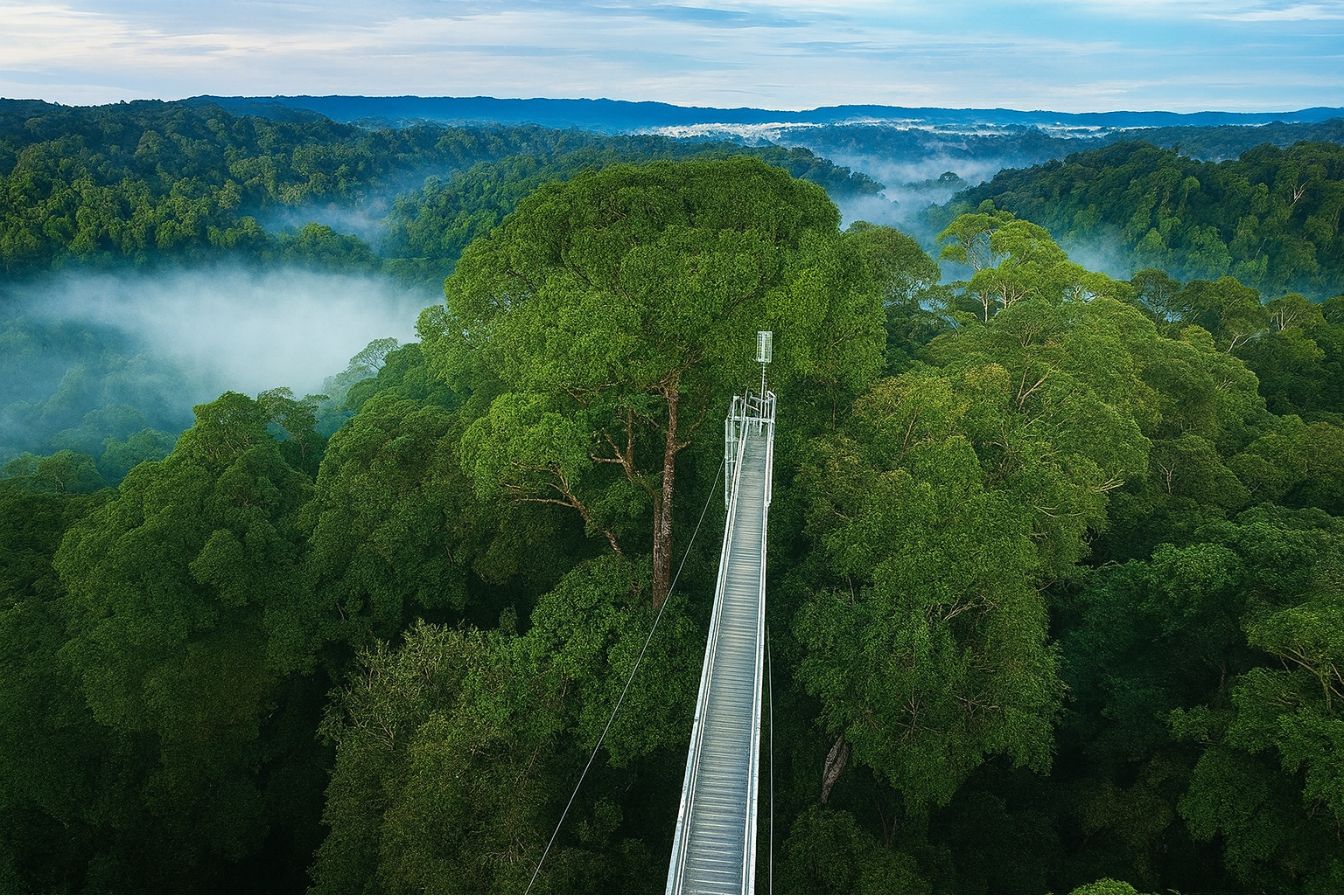 Choose Monteverde if the cloud forest is your primary reason for visiting Costa Rica, if birds and wildlife are a serious interest rather than a casual preference, if you want a quieter and more contemplative travel pace, or if you are combining Monteverde with a Pacific coast beach destination rather than including La Fortuna. Monteverde also wins clearly for travelers who specifically want to see the resplendent quetzal – nothing in La Fortuna competes with the February through June quetzal season at Curi-Cancha and the Monteverde Reserve.
Travelers who do better in Monteverde tend to arrive with a specific interest in the ecosystem itself – not just in “seeing wildlife” in a general sense, but in understanding why a cloud forest is different, what the mist actually does to the plants that live in it, and why 80% of the animals emerge only after dark. Those travelers leave Monteverde deeply satisfied. The ones who arrive without that orientation, expecting something like La Fortuna but cooler, sometimes find the reserve underwhelming because they were not set up to see it.
Monteverde is also the stronger choice for travelers combining their inland destination with a Pacific coast beach stop like Manuel Antonio or Uvita. The ecosystems genuinely differ: rainforest around both La Fortuna and Manuel Antonio means two humid jungle destinations in a row, which can feel repetitive. Monteverde’s cloud forest is something fundamentally different and more unusual. Pairing it with the beach creates a genuine contrast that La Fortuna plus beach does not.
If you’re heading to the original cloud forest preserve, here’s our Monteverde Cloud Forest Reserve guide so you know which trails to prioritize and when to arrive.
Who Should Choose La Fortuna Over Monteverde?
Choose La Fortuna if this is your first visit to Costa Rica and you want the broadest possible activity range in one place, if hot springs are a priority, if you are traveling with young children who benefit from the warmer climate and more varied activity menu, or if you have limited time and want to maximize what you can see and do without the logistics complexity of mountain roads. La Fortuna is the easier destination for nearly every logistical variable – better roads, easier arrival, more accommodation range, and more activity choices at every price point.
The hot springs argument alone tips the balance for many travelers. There is genuinely nothing in Monteverde that replicates the experience of soaking in 38°C water fed by volcanic geothermal activity with the Arenal Volcano silhouetted against a night sky. It is one of those Costa Rica experiences that photographs cannot exaggerate. Travelers who care about this experience belong in La Fortuna.
La Fortuna also works better for travelers who want to be active every day with a different experience each day. The activity list spans from water-based (rafting, kayaking, waterfall swimming) to volcanic (hot springs, volcano hiking, lava field walks) to aerial (ziplines, hanging bridges, tram rides) without exhausting itself. Three or four nights in La Fortuna can fill naturally without any planning pressure. Monteverde’s activity menu, while excellent, is more focused and rewards a specific interest rather than the generalist approach.
Wondering if the cloud forest suits young travelers? Check out our guide on Monteverde Cloud Forest tours with kids – trail length, fog, and kid-friendly activities all matter more than you’d think.
| Serious birder / wildlife enthusiast | Monteverde | Quetzal, cloud forest biodiversity, best night tour ecosystem |
| First-time Costa Rica visitor | La Fortuna (or both) | Easier logistics; broader activity menu; hot springs |
| Couple wanting romance and atmosphere | Monteverde | Quieter; misty forest views; intimate lodge feel |
| Family with young children | La Fortuna (slight edge) | Warmer; more varied activities; hot springs appeal to all ages |
| Adventure / adrenaline traveler | La Fortuna | Rafting, canyoneering, ATVs, waterfall, hot springs |
| Budget traveler | Monteverde (slight edge) | Lower accommodation costs; fixed reserve fees; cheaper night tours |
| Combining with Pacific beach | Monteverde | Different ecosystem avoids repetition; cloud forest contrasts with beach |
| Combining with Caribbean coast | La Fortuna | Route from SJO works naturally; Tortuguero connection possible |
| Coffee / culture / food tourism | Monteverde | Best highland coffee; farm tours; Quaker heritage; cheese factory |
| Traveler wanting hot springs | La Fortuna | 14 hot spring options; unique geothermal experience; no equivalent at Monteverde |
Verified March 2026. These are general tendencies, not absolute rules. Many traveler types enjoy both destinations equally.
Frequently Asked Questions
Is Monteverde or La Fortuna better for first-time visitors?
La Fortuna has a slight edge for first-time visitors due to easier logistics, better roads, a wider activity range, and the hot springs experience which has no equivalent elsewhere. That said, Monteverde’s cloud forest is uniquely atmospheric and often described by first-timers as the most memorable part of their Costa Rica trip. If you have 9 or more days, visit both. If you have to choose, La Fortuna is the more forgiving introduction to Costa Rica’s inland destinations.
Can you visit Monteverde and La Fortuna in the same trip?
Yes, and most travelers on 9-plus day Costa Rica trips do exactly this. The jeep-boat-jeep transfer across Lake Arenal connects them in about 3.5 hours and is genuinely enjoyable. Three nights at each is the balanced allocation. The transfer costs $33-$50 per person shared and departs twice daily in high season. It is one of the best travel connections in Costa Rica and turns the journey between destinations into a scenic experience.
Is La Fortuna much hotter than Monteverde?
Yes, significantly. La Fortuna sits at 250 meters above sea level with daytime temperatures of 25-32°C and high humidity year-round. Monteverde sits at 1,400-1,600 meters with daytime temperatures rarely above 22°C and cool evenings regularly dropping to 12-15°C. Pack completely differently for each destination. What you wear in La Fortuna – light shirts, shorts, swimwear – is wrong for Monteverde, where you need layers, a waterproof jacket, and closed-toe hiking shoes even in dry season.
Does La Fortuna have a cloud forest?
No. La Fortuna sits at a much lower elevation and has a tropical rainforest ecosystem, not a cloud forest. Cloud forests are defined by their elevation and the persistent mist that blows through the canopy, feeding plants directly from cloud moisture. This ecosystem exists in Monteverde but not around La Fortuna. If seeing a cloud forest is important to your trip, only Monteverde delivers it.
Which destination has better ziplining?
Both have excellent zipline operations, and the debate is genuinely subjective. Monteverde’s ziplining through the cloud forest canopy – with mist, tree ferns, and the altitude adding an atmospheric dimension – feels different from La Fortuna’s ziplines over rainforest. La Fortuna has longer cables and more adrenaline-focused options. Monteverde’s Sky Adventures is frequently cited as one of the best zipline experiences in the country for atmosphere. La Fortuna’s operations appeal more to travelers wanting raw speed and height.
Is it worth going to both Monteverde and La Fortuna?
For most travelers on trips of 9 days or more, yes. They are different enough that visiting both does not feel repetitive – it feels like two genuinely distinct Costa Rican experiences. The cloud forest and the volcanic rainforest are not variations on the same thing. The jeep-boat-jeep transfer makes the connection efficient and scenic. The most common regret among travelers we survey is not that they visited both, but that they tried to do both in too few days.
Decided on Monteverde? If the Monteverde side is settled, start with a cloud forest walk and the Kinkajou night walk .
Choose Your Monteverde Experience
An editorial starting point, before you enter preferences. Confirm dates, party requirements and extras.
Monteverde Reserve Naturalist Walk
Check your travel date before arranging the rest of this outing. Explore the main reserve with a naturalist and shared spotting scope.
2–3 hours; English/Spanish. Meet at the reserve reception; reserve admission and hotel transport cost extra. Listed ages 3–90, minimum two travellers; confirm the circuit before buying admission.
Choose a date for Viator scheduled departures. Final availability and price are confirmed on Viator.
Choose only what matters. Missing answers keep the recommendation provisional. Individual suitability and exact pickup still need confirmation.
| Monteverde Reserve Naturalist Walk | Explore the main reserve with a naturalist and shared spotting scope. 2–3 hours; English/Spanish. Meet at the reserve reception; reserve admission and hotel transport cost extra. Listed ages 3–90, minimum two travellers; confirm the circuit before buying admission. |
|---|---|
| Sloth’s Territory In La Fortuna | Explore a lowland reserve with a guide and telescope, then enjoy seasonal fruit. 1–2 hours. Meet at Sloth’s Territory in El Tanque near La Fortuna; this is not a Monteverde departure. English/Spanish. Wildlife sightings are not guaranteed. |
| Three-Day Arenal, Monteverde And Manuel Antonio Loop | Combine three Costa Rica destinations in a guided road itinerary from San José. 3 days, English/Spanish. Two hotel nights in La Fortuna and Jacó, no Monteverde overnight. Monteverde hanging bridges included; optional zipline and coffee visits cost extra. Starts and ends in San José. |
| Curi-Cancha Cloud And Transitional Forest Walk | Discover cloud and transitional forest with a guide and spotting scope. 2.5 hours; English/Spanish, maximum eight. This visits Curi-Cancha, not Monteverde Reserve. Admission is extra; arrange your meeting-point transport. Not suitable under six or with mobility impairments. |
| Selvatura Zipline And Bridges Package | Combine guided canopy ziplining with a self-guided hanging-bridges walk. 3–4 hours; English/Spanish canopy guides. Listed ages start at four; harness fit and provider restrictions still apply. Confirm pickup location. Bridges are self-guided. |
| San José Airport To Monteverde Private Transfer | Arrange a private arrival transfer from San José Airport to Monteverde. One-way SJO arrival transfer; the listing allows six hours. English/Spanish. Confirm exact hotel, flight, luggage and child-seat needs; do not assume accommodation is included despite a generic inclusion field. |
| Curi-Cancha Quetzal Search | Spend three hours birding with a specialist and a high-definition scope. 3 hours; English/Spanish. Curi-Cancha entry is extra. Transport is included only in the transport option. Birds are wild; no quetzal sighting is guaranteed. |
Compare Your Group’s Costs
Enter your own quotes in the same currency for the same people. Include admission, transport and fees on both sides. These are your totals, not live tour prices.
Enter both totals to compare the cost of your independent plan with the guided experience.