Animals of Monteverde Cloud Forest
Monteverde’s cloud forest packs 2.5% of global biodiversity - 400+ birds, rare mammals, and quetzals. Night walks and a guide make all the difference.
| Birds | 400+ | Resplendent quetzal, three-wattled bellbird, violet sabrewing |
| Mammals | 100+ | 58+ bat species, 3 monkey species, 6 wildcat species |
| Reptiles & Amphibians | 161 | Red-eyed tree frog, eyelash palm pit viper, glass frogs |
| Plants | 3,000+ | 450+ orchid species, 800+ epiphyte species |
| Insects & Invertebrates | Thousands (many undescribed) | Blue morpho butterfly, leafcutter ants, bioluminescent beetles |
| Share of world’s biodiversity | ~2.5% | From a single cloud forest reserve |
Pay for guided identification and habitat interpretation, rather than a promise of a particular animal.
Booking Choice. Spend three hours birding with a specialist and a high-definition scope. Explore Curi-Cancha Quetzal Search
What Animals Live in the Monteverde Cloud Forest?
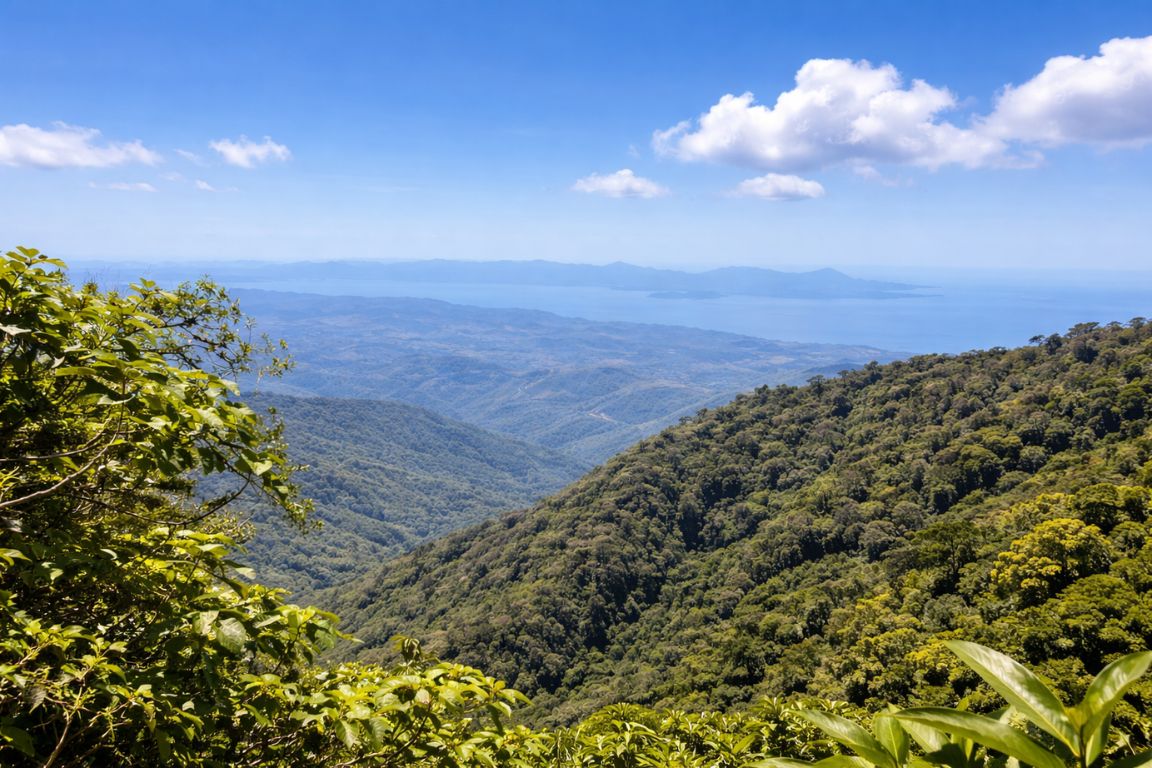 The Monteverde Cloud Forest holds over 400 bird species, more than 100 mammal species, 161 reptiles and amphibians, and thousands of insects – roughly 2.5% of all life on Earth crammed into a single misty mountain ecosystem. This isn’t marketing language. It’s a figure that scientists have been verifying and building on for over 50 years of continuous research here.
The number stops people in their tracks the first time they hear it. Two and a half percent. The whole planet, compressed into a ridge on the Continental Divide in northwestern Costa Rica. Part of what makes this possible is the way the cloud forest collects water from both Pacific and Caribbean slopes, creating microclimates that shift within a few hundred meters. You can literally feel the air change as you walk a trail, moving from one ecosystem into the next without quite realizing it happened.
What you actually see, though, depends on when you come, who you come with, and whether you’re willing to come back out after dark. The cloud forest is not a zoo. Animals have dense cover, cold mornings, and absolutely no reason to make themselves easy to spot. That’s the honest version of “incredible biodiversity” – it means the forest will always surprise you, but it also means you have to work a little to find it.
The reserve sits at 1,200 to 1,800 meters above sea level, which explains why it feels nothing like the Costa Rican lowland rainforest. Cooler, damper, and much stranger. Eight distinct life zones stack on top of each other across the property. Six of Costa Rica’s wildcat species – jaguar, puma, ocelot, margay, oncilla, and jaguarundi – share this same stretch of mountain. Getting all six in the same place is genuinely remarkable and reflects how intact the habitat is.
Need the full breakdown on the main reserve? Our Monteverde Cloud Forest Reserve guide walks you through everything from entrance fees to trail maps to quetzal spotting spots.
What Birds Can You See in Monteverde?
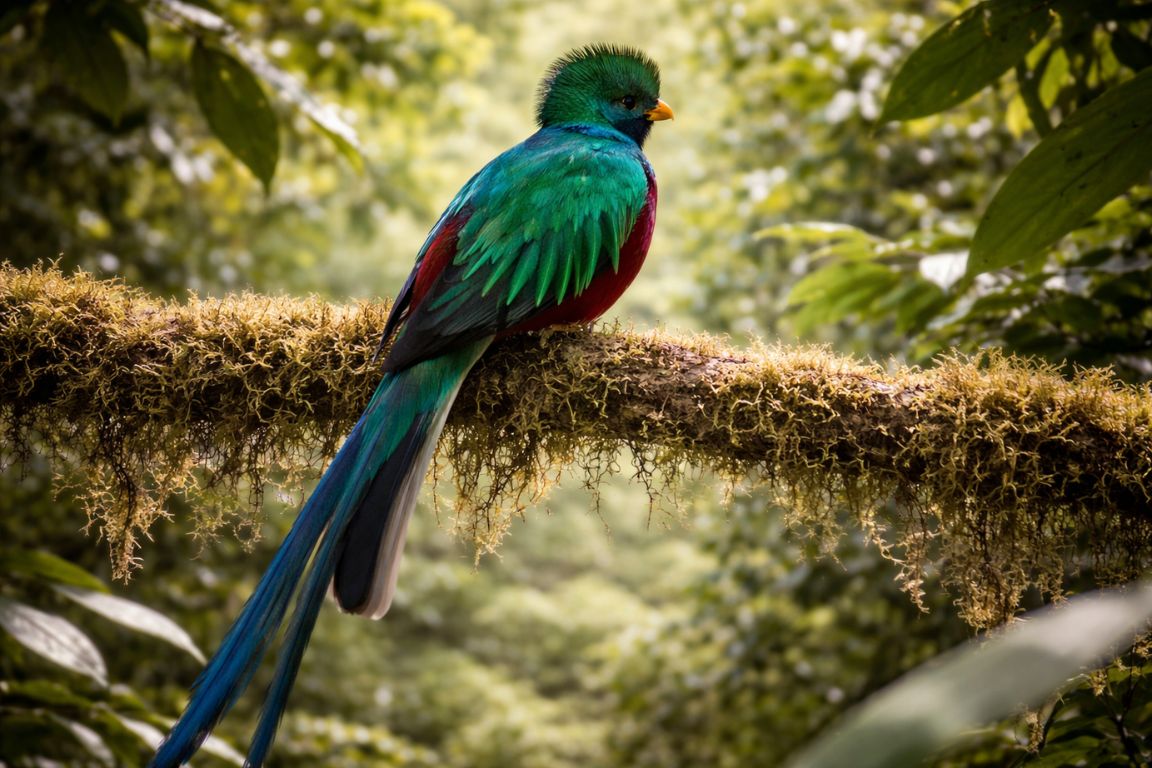 Monteverde has over 400 bird species, and it’s one of the best places on Earth to see the resplendent quetzal. Other standouts include the three-wattled bellbird, violet sabrewing hummingbird, emerald toucanet, and bare-necked umbrellabird. Ten of Monteverde’s bird species are considered globally endangered due to their restricted cloud forest habitat.
The quetzal gets all the attention, and fair enough. The male has tail feathers that can reach a meter long and iridescent green plumage that somehow blends perfectly into the cloud forest until a shaft of light hits it at the right angle. You’ll be staring into a wall of green for ten minutes before your guide moves the scope two inches and suddenly it’s right there, perched six feet above the wild avocado tree it’s been visiting all week.
Peak quetzal season runs from late February through June, with March and April being the most reliable months. This is breeding season, when males are active and visible, performing display flights and staking out nesting trees. Outside that window they still live here year-round, but they move to lower elevations in the September to November months and are genuinely hard to find. The best time of day is early morning, 6 to 9 AM, when they’re feeding and calling. Our guides know which avocado trees are in fruit. That knowledge alone is worth more than binoculars.
The three-wattled bellbird is the other bird that stops hikers cold. You hear it before you see it – a metallic bonk that carries for miles through the canopy, one of the loudest bird calls in the Americas. Males have three long wattles hanging from the bill during breeding season (March through August roughly) and congregate in leks where they spend hours calling. Females are much quieter and olive-brown. Most visitors who hear it have no idea what they’re listening to until a guide explains it.
The Hummingbird Gallery near the reserve entrance is free with circuit entry and worth every minute. Fourteen hummingbird species visit the feeders there. Violet sabrewingers, green-crowned brilliants, coppery-headed emeralds – they hover at arm’s length and the light catches their feathers differently every second. Kids go absolutely quiet in front of those feeders. Adults do too.
If you’re planning a family visit, here’s the honest take on Monteverde Cloud Forest tours with kids based on what actually keeps them interested and when they hit the wall on muddy forest trails.
If you want a real shot at seeing one, a guided cloud forest walk covers the early start, the scopes, and a naturalist who already knows the current feeding trees.
Key Bird Species at a Glance
| Resplendent Quetzal | Feb-Jun (peak Mar-Apr) | Monteverde & Curi-Cancha reserves | Near wild avocado trees; 6-9 AM best window |
| Three-Wattled Bellbird | Mar-Aug | Canopy of primary forest | Hear it long before you see it |
| Violet Sabrewing | Year-round | Hummingbird Gallery (free with reserve entry) | Largest hummingbird in the region |
| Emerald Toucanet | Year-round | Forest edges and fruit trees | Common but still striking |
| Bare-Necked Umbrellabird | Dry season (Dec-Apr) | Primary forest interior | Rare; striking crest display |
| Mantled Howler Monkey | Year-round, dawn and dusk | Throughout the reserve | Call carries 3 miles; sets the mood every morning |
What Mammals Might You Actually See?
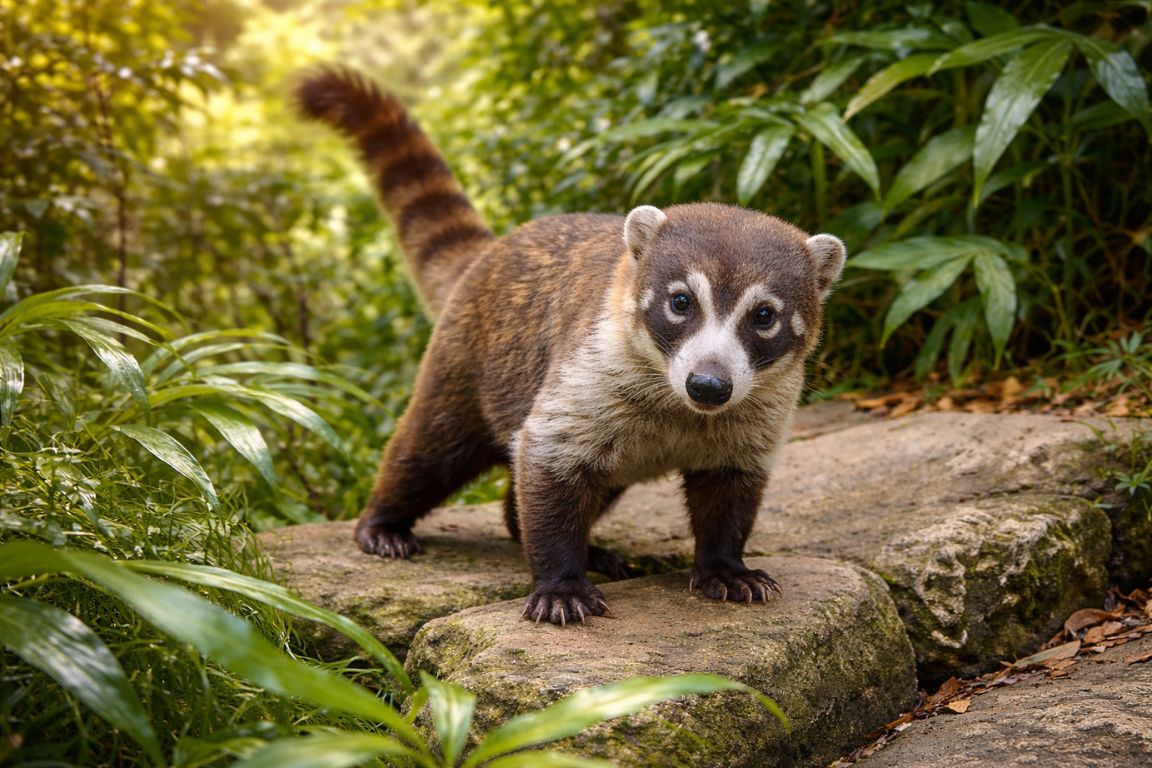 The most commonly spotted mammals in Monteverde are white-faced capuchin monkeys, mantled howler monkeys, white-nosed coatis, Central American agoutis, two-toed sloths, and kinkajous. Seeing big cats, tapirs, or peccaries requires luck and a night walk. More than half of Monteverde’s 100+ mammal species are bats – 58 species confirmed – most active after sunset.
The honest answer here is that daytime mammal sightings in the cloud forest are hit or miss. The density of vegetation gives animals cover that lowland forests simply don’t have. Our guides have walked the same trails thousands of times and still have days where they spot nothing warm-blooded larger than an agouti. That’s not failure. That’s cloud forest.
What tends to show up reliably: coatis. They’re bold, they move in groups, and they don’t especially care that you’re watching. Agoutis are almost always on the forest floor near fruit trees, moving in short bursts, stopping and listening. White-faced capuchins are the showoffs of the reserve – curious, loud, occasionally coming down to eye level. Howler monkeys are guaranteed to wake you up early; actually seeing one takes a few minutes of following the sound into the canopy.
Sloths. Everyone wants to see a sloth. Both two-toed and three-toed sloths live in the reserve, and the three-toed variety is more likely to be active during daylight. They don’t move much, which means if you don’t know what a sloth looks like wedged into a branch twenty meters up, you’ll walk right past it. Our guides find them with scopes. Without a scope the honest detection rate is low.
The six wildcat species are present but sightings remain rare. Jaguars and pumas avoid humans consistently. Ocelots and margays have been spotted more frequently since Costa Rica banned hunting in 2012. The population recovery is real, but these animals are nocturnal, secretive, and not on any predictable schedule. If you see one it’s a genuine memory for life. We’ve had clients encounter them on night walks and not speak a word the entire way back.
Bats deserve more attention than they get. Fifty-eight species in a single reserve. They’re out every night, pollinating flowers that won’t be touched until after dark, dispersing seeds across the forest floor. The bat houses near some reserves give you a chance to watch them up close. Most people skip this. The ones who don’t rarely forget it.
What Reptiles and Amphibians Live Here?
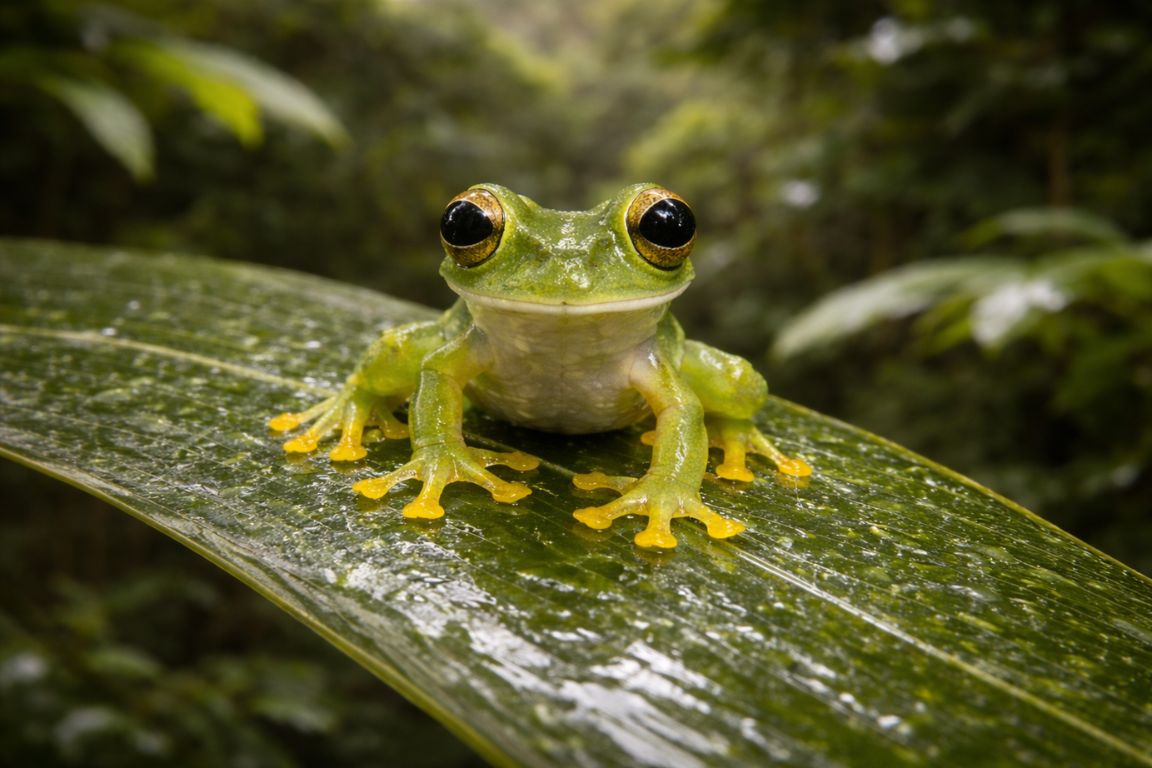 Monteverde has 161 reptile and amphibian species, including the famous red-eyed tree frog, multiple glass frog species, eyelash palm pit viper, fer-de-lance, and several poison dart frogs. The rainy season (May through November) brings amphibians out in force. Night walks are by far the best way to see frogs, lizards, and snakes that are nearly invisible during the day.
The red-eyed tree frog is Monteverde’s most photographed amphibian – that shocking combination of red eyes, green body, and orange feet that ended up on every nature documentary poster in the 1990s. They’re real, they’re here, and during the wet season they’re not hard to find on night walks. The eyes stay red because the pupils are adapted to sudden light, causing them to temporarily flash that color. In the dark, with a headlamp, it’s as surreal as it looks in photos.
Glass frogs are the other crowd-pleaser. Their undersides are literally translucent – you can see the organs, the beating heart, the whole works. They usually nest on leaves overhanging streams and rivers, guarding eggs laid on the leaf surface. Getting close without disturbing them requires a guide who knows where to look and how to approach.
Snakes get more attention than they probably deserve. The eyelash palm pit viper, which curls into yellow or green coils on branches, is genuinely striking but not aggressive unless provoked. The fer-de-lance is the one to watch on trail margins, particularly at dawn and dusk. The guides know. They’ve seen enough of them to recognize the shape from three meters out. You probably won’t.
One note worth making: poison dart frogs are present but less abundant here than in lowland rainforests. The cloud forest’s cooler temperatures favor different amphibian communities. You’re more likely to find rain frogs, glass frogs, and climbing toads than the brightly colored dart frogs of Costa Rica’s Caribbean slope.
What Insects and Invertebrates Live in the Cloud Forest?
Monteverde’s insect life is staggering – thousands of species, many still undescribed by science. Key species include blue morpho butterflies, leafcutter ants, bioluminescent beetles, tarantulas, and countless moth species. Invertebrates make up more than 80% of all animal life in the reserve and form the base of nearly every food chain in the ecosystem.
The blue morpho butterfly is the one everyone recognizes, that flash of iridescent blue you catch at the corners of your vision on forest trails. They fold their wings when they land, hiding the blue entirely and showing only the dull brown underside. So they spend most of their time invisible, which is the cloud forest lesson in a nutshell: look twice, look again, and stay still long enough to let the forest show itself.
Leafcutter ants are impossible to miss. They build highways across the forest floor, trails of living movement carrying cut vegetation back to fungus gardens underground. A single colony can strip the leaves off an entire tree overnight. They’ve been doing it for millions of years and they’re better organized than most human operations. Stopping to watch them for ten minutes is not boring. It’s actually fascinating once you realize you’re looking at a city.
The bioluminescent beetles are a night walk exclusive. In the complete darkness of the cloud forest, certain beetle larvae and adults glow a faint greenish light along the forest floor. It’s subtle and you’d never notice it walking with a flashlight at full power. Guides know how to cut the light at the right moment. The effect is worth the momentary disorientation.
Tarantulas come out at night as well. They’re large, they’re visible, and they almost never cause any problems – they’re far more interested in beetles and small frogs than in hikers. The guides hold them sometimes, which tends to divide the tour group cleanly into two camps. Both reactions are valid.
When Is the Best Time of Day and Year to See Wildlife?
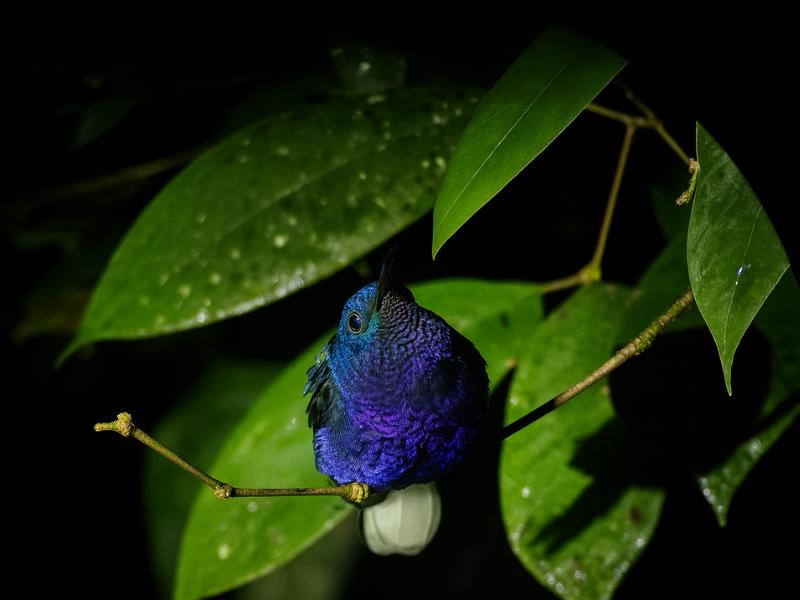
Early morning (6-9 AM) is best for birds, especially the quetzal. Dusk into night is when mammals, frogs, snakes, and invertebrates become active – at least 80% of Monteverde’s mammals are nocturnal. February through June is the peak season for bird diversity and quetzal sightings. The rainy season (May-November) brings out more amphibians but reduces some mammal activity.
There is no single best time that covers everything. Which is a feature, not a problem. It means every visit surfaces something different.
For birds: come in the dry season, February through April especially. The forest is slightly more open, trails are drier, and the quetzal is nesting. Come at dawn. The forest wakes up fast and loud – howler monkeys first, then a wave of birdcall as the light shifts. By mid-morning the heat (such as it is at 1,500 meters) quiets things down.
For amphibians: the rainy season is spectacular. A night walk in July or August, after heavy rain, turns up frogs that you’d never find otherwise. Glass frogs emerge to guard egg masses on streamside leaves. Red-eyed tree frogs call from the undergrowth. The trails get slippery but the reward scales with the mud.
For mammals: night, any time of year. The forest changes entirely after sunset. Mammals that spent all day invisible are suddenly moving. The thermal contrast brings out snakes. Beetles glow. The sounds are completely different. We’ve had clients who did a daytime trail and saw almost nothing, then went out at night with a guide and spent three hours barely moving because there was too much to look at.
The season you pick completely changes your cloud forest experience. This breakdown of the best time to visit Monteverde Cloud Forest tours shows you exactly what to expect throughout the year – from crisp dry season to atmospheric wet season.
| Dry Season | Dec-Apr | Quetzal (Feb-Apr), birds nesting, monkeys | Amphibians (less rain = less activity) |
| Early Rainy Season | May-Jul | Quetzal still active (May-Jun), frogs emerging, butterflies | Clear trail days less predictable |
| Deep Rainy Season | Aug-Oct | Night walk amphibians at peak, migratory birds passing through | Quetzals mostly gone to lower elevations |
| Late Rainy / Transition | Nov-Dec | Bellbird season winding down; early quetzal activity (Dec) | Wind picks up significantly; some trails rougher |
How Do You Actually Spot Animals in the Cloud Forest?
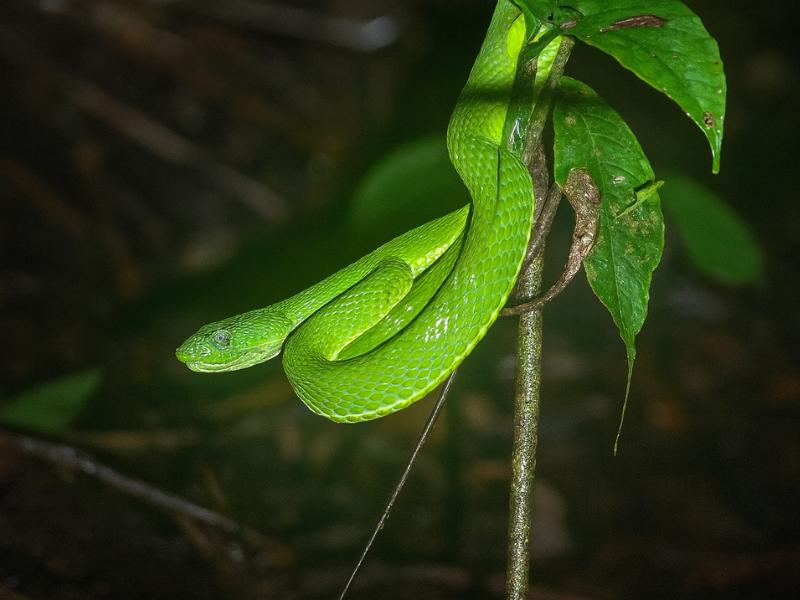
A local guide is the single biggest variable in what you see. A guided walk through the reserve consistently turns up wildlife that self-guided visitors walk past entirely – not because guides are magic, but because they have walked these trails thousands of times and know specific trees, feeding patterns, and hiding spots. Binoculars, patience, and moving slowly matter almost as much.
Here’s the thing that people figure out too late: the cloud forest does not reward rushing. Groups that push to cover all the trail in two hours see less than groups that stop at the first interesting thing and stay there for twenty minutes. Noise travels. Animals hear hikers long before hikers see them. The ones who find the most are usually the ones moving at half the pace.
Guides carry spotting scopes for a reason. Sloths at 20 meters, quetzals in the canopy, a kinkajou tucked into a tree fork – without a scope these are invisible. With one, they’re clear. The difference in a quetzal sighting between “I think I saw something green move” and “I watched it for five minutes as it swallowed a wild avocado whole” is entirely the scope.
A few tactics that genuinely help, from years of guiding these trails. Look at eye level and below, not just up. Most visitors spend their time craning their necks at the canopy. The forest floor and mid-level vegetation hold glass frogs, snakes, lizards, and a huge variety of invertebrates that go completely unseen. Guides scan all levels simultaneously. Train yourself to do the same.
Be quiet near streams. Stream corridors concentrate wildlife – drinking spots, breeding habitat for frogs, hunting grounds for snakes. Approaching quietly almost always pays off more than a rapid pass-through.
Night walks are not a niche activity. They’re a completely different ecosystem experience. The forest you walk at 8 PM is not the forest you walked at 8 AM. If your trip includes only daytime trails, you’ve seen maybe half of what Monteverde offers.
Questions before you book? Diego and the team answer them every day. Start with a daytime cloud forest walk or a small-group night walk, depending on whether you care more about birds or nocturnal wildlife.
What Rare and Endangered Species Live in the Cloud Forest?
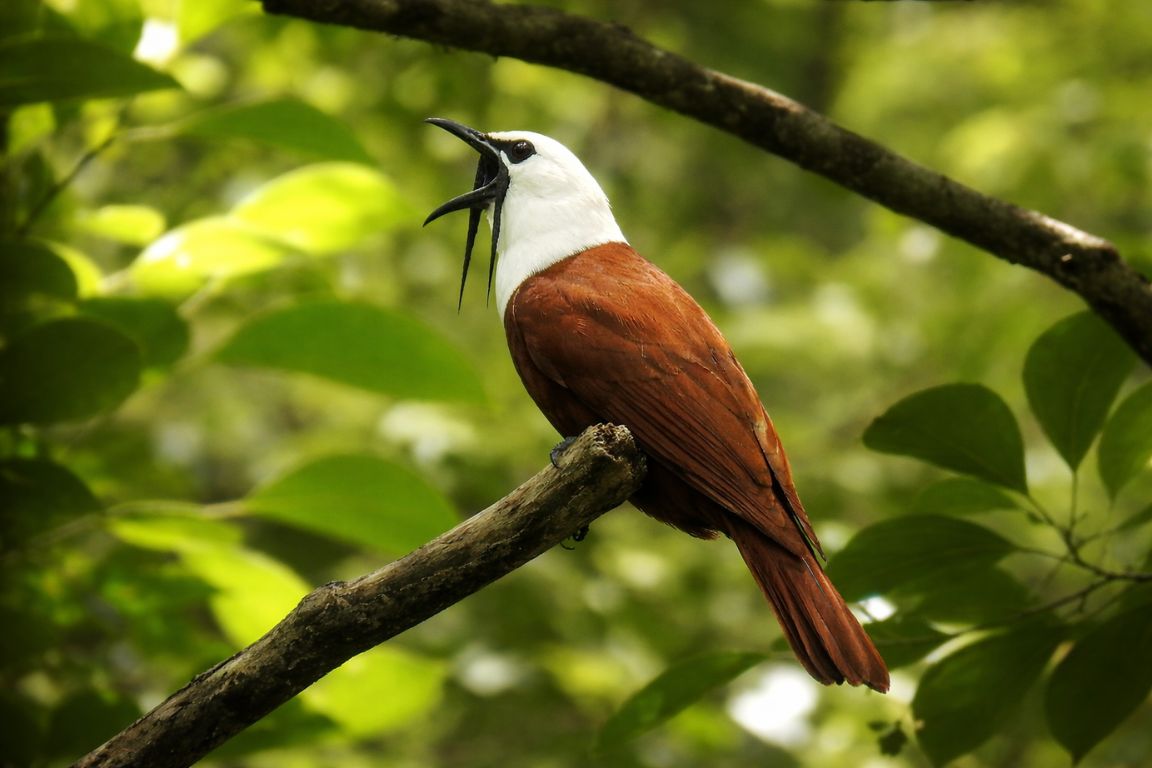 Monteverde shelters some of the rarest wildlife in Central America, including the Baird’s tapir, six wildcat species, the three-wattled bellbird, and multiple globally threatened bird species. It is also the site of one of the most documented extinctions in modern conservation history: the golden toad, last seen on May 15, 1989, and declared extinct in 2004.
The golden toad deserves more than a footnote. It was a small toad, the males a brilliant burnt orange that looked almost painted, endemic to a four square kilometer patch of cloud forest north of Monteverde. In 1987 researchers counted 1,500 adults converging on breeding pools. Two years later, one lone male was spotted on the Brillante trail. That was the last confirmed sighting of any individual, ever. The species was declared extinct in 2004.
It became the first terrestrial species whose extinction was directly linked to climate change. Dry El Nino conditions in the late 1980s reduced mist frequency and raised temperatures, creating conditions where the chytrid fungus spread rapidly through already vulnerable amphibian populations. The Monteverde golden toad is now the symbol of what climate change does to a highly specialized species with nowhere to go. Scientists still debate the exact mechanism. The toad is still gone.
The lesson the golden toad left behind shaped how Monteverde’s reserves think about conservation. The expanded protected areas, the amphibian monitoring programs, the focus on maintaining mist frequency through forest cover – all of it traces back in part to what happened in 1989. We think about it every time we take a group into this forest.
The Baird’s tapir is still present, the largest land mammal in Central America and heavily endangered throughout its range. They’re solitary, mostly nocturnal, and shy. Sightings are rare, and when they happen they tend to define the trip. The bellbird’s populations have declined significantly due to habitat loss outside the reserve. Monteverde remains one of its last strongholds. Ten bird species that live here are on the global endangered list specifically because cloud forest habitat worldwide has been reduced to scattered fragments.
Frequently Asked Questions
Is Monteverde a good place to see wildlife compared to other Costa Rica parks?
Yes, with a qualification. Monteverde is exceptional for birds, cloud forest mammals, amphibians, and invertebrates specific to high-elevation ecosystems. For volume of mammals and lowland species like scarlet macaws and crocodiles, Tortuguero or Corcovado will produce more raw sightings. Monteverde is the right choice for cloud forest specialists, the quetzal, and anyone who wants depth over breadth.
Will I definitely see a quetzal in Monteverde?
Nothing in wildlife watching is guaranteed, including quetzal sightings. What we can say: during February through June, with an experienced local guide and a scope, the odds are genuinely high. Outside that season the bird is still here but harder to find. Going without a guide during peak season significantly reduces your chances. Our guides know the specific avocado trees the birds are using in any given week.
Are there dangerous animals in the Monteverde Cloud Forest?
The fer-de-lance snake is present and venomous, but unprovoked bites are extremely rare on maintained trails. The eyelash palm pit viper is common but non-aggressive unless directly handled. Staying on trail, watching where you put your hands, and following guide instructions covers nearly all risk. This is a safe forest for visitors who pay attention.
How important is a guide for seeing wildlife?
More important here than most places. Cloud forest is dense and multi-layered, animals have cover on every level, and guides carry scopes. The difference between what a guided group sees versus a self-guided group in the same two hours is consistently large. If wildlife is the reason you came, guide-led is not optional.
What happened to the golden toad?
The Monteverde golden toad was a small amphibian endemic to a tiny patch of cloud forest here. In 1987 researchers counted over 1,500 individuals. By 1988 that had dropped to roughly ten. The last confirmed individual was seen on May 15, 1989. The species was officially declared extinct in 2004. Climate-driven drought and chytrid fungus are the most widely cited causes, and it is considered the first terrestrial species whose extinction was directly linked to climate change.
Is the night walk worth doing?
It depends on what you’re looking for. For birds only, probably not essential. For a full picture of what actually lives in this forest – frogs, snakes, nocturnal mammals, bioluminescent beetles, tarantulas, the works – the night walk is one of the best hours you can spend in Monteverde. The forest you walk at 9 PM is completely different from the one you walked at 9 AM. More than 80% of Monteverde’s mammals are nocturnal. That fact alone is the case for doing it.
Choose Your Monteverde Experience
An editorial starting point, before you enter preferences. Confirm dates, party requirements and extras.
Curi-Cancha Quetzal Search
Check your travel date before arranging the rest of this outing. Spend three hours birding with a specialist and a high-definition scope.
3 hours; English/Spanish. Curi-Cancha entry is extra. Transport is included only in the transport option. Birds are wild; no quetzal sighting is guaranteed.
Choose a date for Viator scheduled departures. Final availability and price are confirmed on Viator.
Choose only what matters. Missing answers keep the recommendation provisional. Individual suitability and exact pickup still need confirmation.
| Curi-Cancha Quetzal Search | Spend three hours birding with a specialist and a high-definition scope. 3 hours; English/Spanish. Curi-Cancha entry is extra. Transport is included only in the transport option. Birds are wild; no quetzal sighting is guaranteed. |
|---|---|
| Monteverde Reserve Naturalist Walk | Explore the main reserve with a naturalist and shared spotting scope. 2–3 hours; English/Spanish. Meet at the reserve reception; reserve admission and hotel transport cost extra. Listed ages 3–90, minimum two travellers; confirm the circuit before buying admission. |
| Wildlife Refuge Small-Group Night Walk | Search for nocturnal wildlife with a guide, flashlights and spotting scope. 2 hours; English/Spanish. Meet at Monteverde Wildlife Refuge. Reserve entry and transport are extra. Confirm child arrangements and the chosen group option. Sightings are not guaranteed. |
| Curi-Cancha Cloud And Transitional Forest Walk | Discover cloud and transitional forest with a guide and spotting scope. 2.5 hours; English/Spanish, maximum eight. This visits Curi-Cancha, not Monteverde Reserve. Admission is extra; arrange your meeting-point transport. Not suitable under six or with mobility impairments. |
| Tityra Lodge Night-Vision Walk | Explore after dark using night-vision visors as well as a guide’s scope. 2 hours; English/Spanish. Tityra Lodge reserve admission and private transportation are extra. The advertised experience is capped at eight; confirm party requirements. No guaranteed wildlife sightings. |
Compare Your Group’s Costs
Enter your own quotes in the same currency for the same people. Include admission, transport and fees on both sides. These are your totals, not live tour prices.
Enter both totals to compare the cost of your independent plan with the guided experience.