Monteverde Cloud Forest with Kids
Monteverde is fantastic for families - easy trails, wildlife exhibits, and unforgettable night walks. Plan slower days and let kids explore.
| Reserve entry (children 5-11) | $63 USD per child (Monteverde Cloud Forest Reserve); children 0-4 free |
| Easiest trail for young kids | Essence Trail – 1.4 km, ~1-1.5 hrs, waterfall at end, suitable from age 4-5 |
| Best indoor fallback (rainy afternoon) | Bat Jungle (~$12), Frog Pond (~$20), Butterfly Garden (~$18) – all in Santa Elena area |
| Night walk minimum age | Most operators recommend 6-8 years minimum; 5 is possible with calm, adventurous kids |
| Zipline minimum age / weight | Varies by operator; most require age 8-10 and minimum 25-30 kg; check at booking |
| Recommended minimum stay (families) | 3 nights – 2 nights feels rushed with kids |
| Best months for families | February-April (dry trails, quetzal season); July (school break crowd fits families); avoid Sep-Oct |
| Strollers on trails | Not practical – root-covered, uneven, muddy in rain. Baby carriers recommended for toddlers. |
Build around the youngest traveller’s walking comfort and bedtime, then check each listing’s ages and meeting arrangements.
Booking Choice. Explore the main reserve with a naturalist and shared spotting scope. Explore Monteverde Reserve Naturalist Walk
Is Monteverde Cloud Forest Good for Families with Kids?
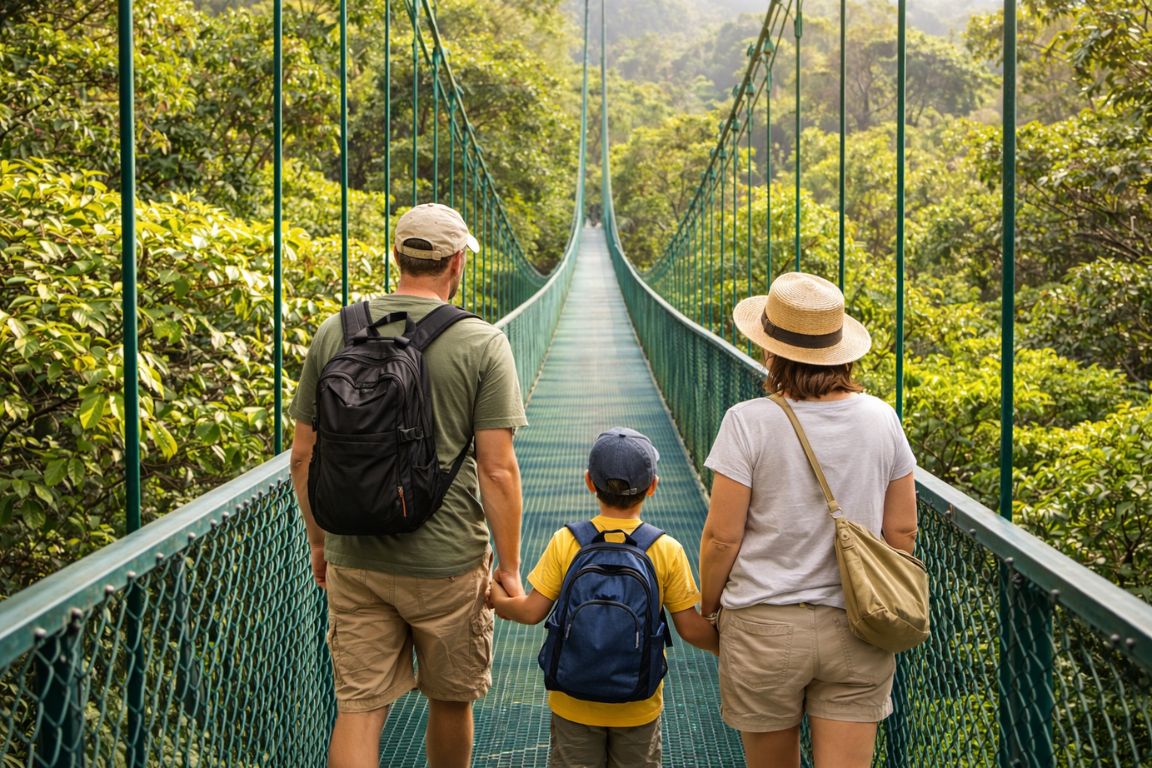 Yes, and it’s one of the most genuinely educational destinations in all of Costa Rica for children. The cloud forest offers wildlife encounters, hanging bridges, night walks, butterfly gardens, frog ponds, and a bat jungle that work across a wide age range. The biggest family-specific considerations are trail fitness, the cooler temperatures, and managing a day that doesn’t try to do too much.
We’ve guided a lot of families through this forest over the years. Some of the most memorable moments we’ve witnessed have involved kids – the seven-year-old who stood completely still for four minutes watching a coati eat fruit three feet off the trail, the twelve-year-old who spotted a sleeping sloth before the guide did, the kindergartner who decided the hanging bridge was the best thing in her entire life. Monteverde does something to children that screens and theme parks don’t. It asks them to slow down and pay attention, and when they do, the forest rewards them in ways that stick.
That said, Monteverde is not Manuel Antonio. There are no sandy beaches ten minutes from the reserve. The weather is cool and frequently wet. The trails require proper footwear and some physical effort, even on the easier circuits. Families who arrive expecting an easy, resort-style nature experience sometimes find it more demanding than they expected. Families who arrive prepared find it genuinely transformative – for parents as much as for kids.
The practical advantage Monteverde has over other Costa Rica destinations for families is density of experience. Within a ten-minute drive of Santa Elena you can access the cloud forest reserve, the butterfly garden, the frog pond, the bat jungle, hanging bridges, ziplines, and coffee and chocolate farm tours. You don’t need a car for most of a day and you don’t spend the morning in transit. For families with younger children who have shorter windows of energy, that matters enormously.
What Age Is Monteverde Suitable For?
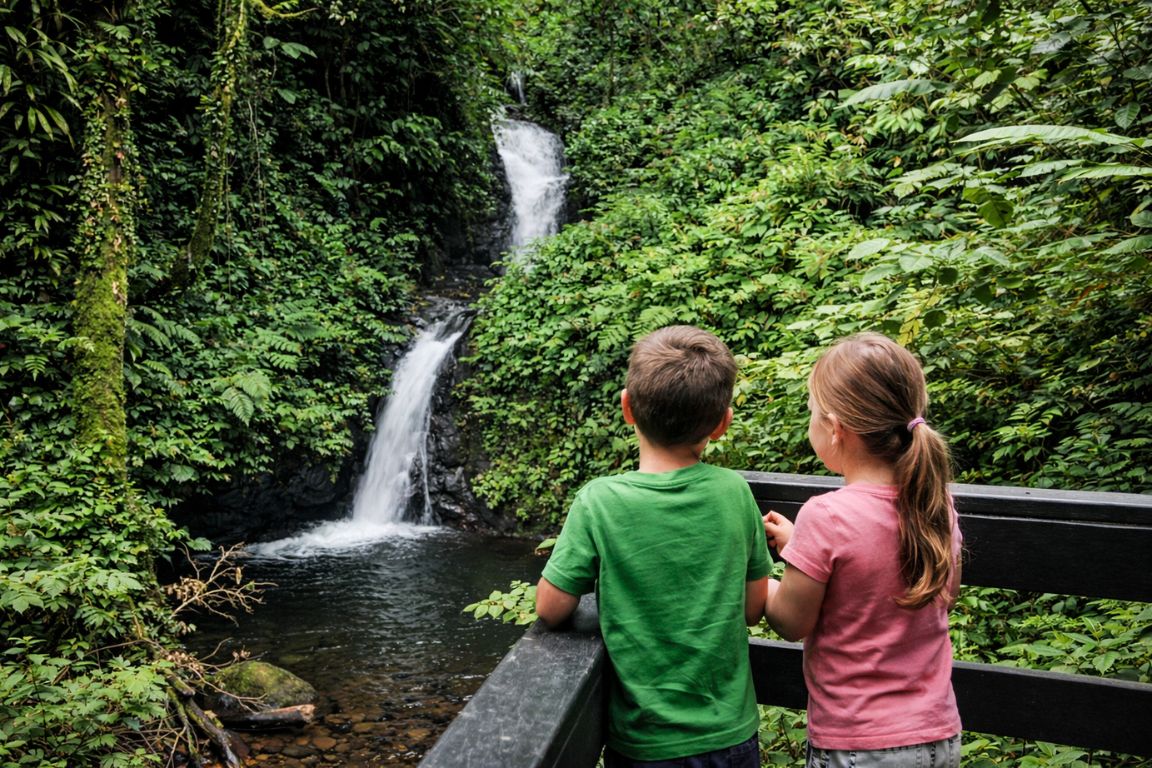 Monteverde works well for kids from around age 4 or 5 upward for the easier trails, and is excellent for ages 8 and above across almost all activities. Toddlers under 3 can enjoy the butterfly garden, frog pond, hummingbird gallery, and hanging bridges in carriers – the cloud forest reserve trails are not stroller-friendly. Teenagers tend to love the ziplines, night walks, and the sheer weirdness of the cloud forest once a good guide opens it up for them.
The honest age breakdown based on what we see with our family groups: children under 4 are mostly observers. The frog pond and butterfly garden are genuinely engaging at this age because the animals are visible, colorful, and contained. The forest trail is harder to sell to a two-year-old when the novelty wears off at the 400-meter mark. A baby carrier or a parent willing to carry makes the Essence Trail possible with very young children. Strollers are not practical on any of the reserve circuits – the roots, steps, and uneven terrain rule them out entirely.
Ages 5 to 8 is where Monteverde starts delivering consistently. Kids this age love the hanging bridge on the Heart of Forest circuit. They want to know what every insect is. The night walk at this age can be genuinely life-changing – that mix of slightly spooky and incredibly exciting is exactly the right calibration for a 6-year-old with a headlamp. Guide selection matters more with this age group: a guide who naturally engages children, asks them questions, and adjusts the pace of information will produce a completely different experience from one who lectures at adult level.
Ages 9 and up, Monteverde becomes fully accessible. Ziplines, longer hikes, night walks, the coffee and chocolate tours that involve real process and tasting – all of it works. Teenagers specifically tend to respond well to being treated as real participants in nature observation rather than passive tourists. A guide who trusts a thirteen-year-old to spot something first, then explains why it’s remarkable, earns genuine engagement.
Which Trails and Activities Work Best for Kids?
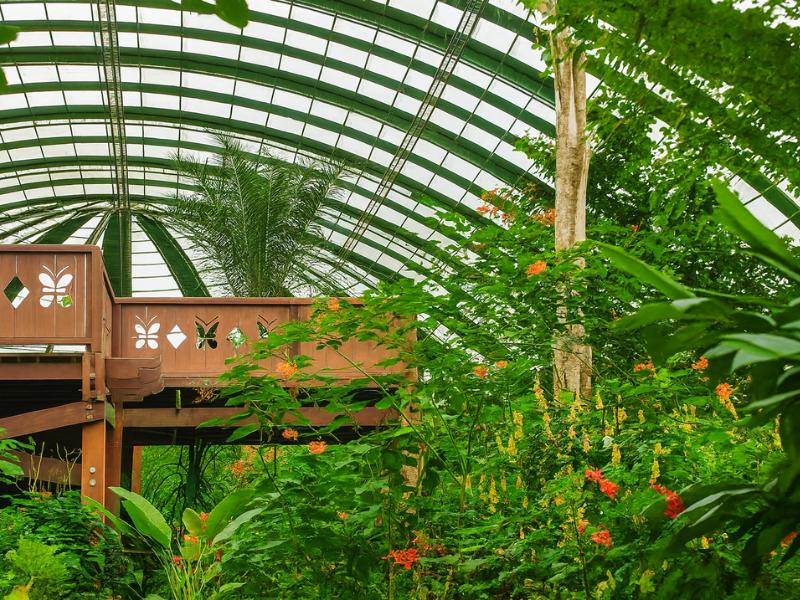
The Essence Trail (1.4 km, ~1.5 hours) is the best first choice for families with younger or less experienced hikers – it ends at a small waterfall and is the most accessible circuit. The Heart of Forest circuit (2.8 km) adds a hanging bridge and suits families with kids aged 7 and up. Beyond the reserve, the butterfly garden, frog pond, bat jungle, and hummingbird gallery are all strong family options that work as afternoon activities when outdoor energy is spent.
The Essence Trail is short enough that even a reluctant 5-year-old can finish it with encouragement, and the waterfall at the end gives kids a concrete goal to hike toward. It passes through genuine primary cloud forest with mosses, bromeliads, and massive ficus roots that kids find endlessly interesting. A guide on this trail can turn every ten meters into a discovery – the leaf that carries frog eggs, the fungus that glows at night, the bark where a woodpecker worked last season. Without a guide it’s still a good walk, but with one it becomes a different kind of experience.
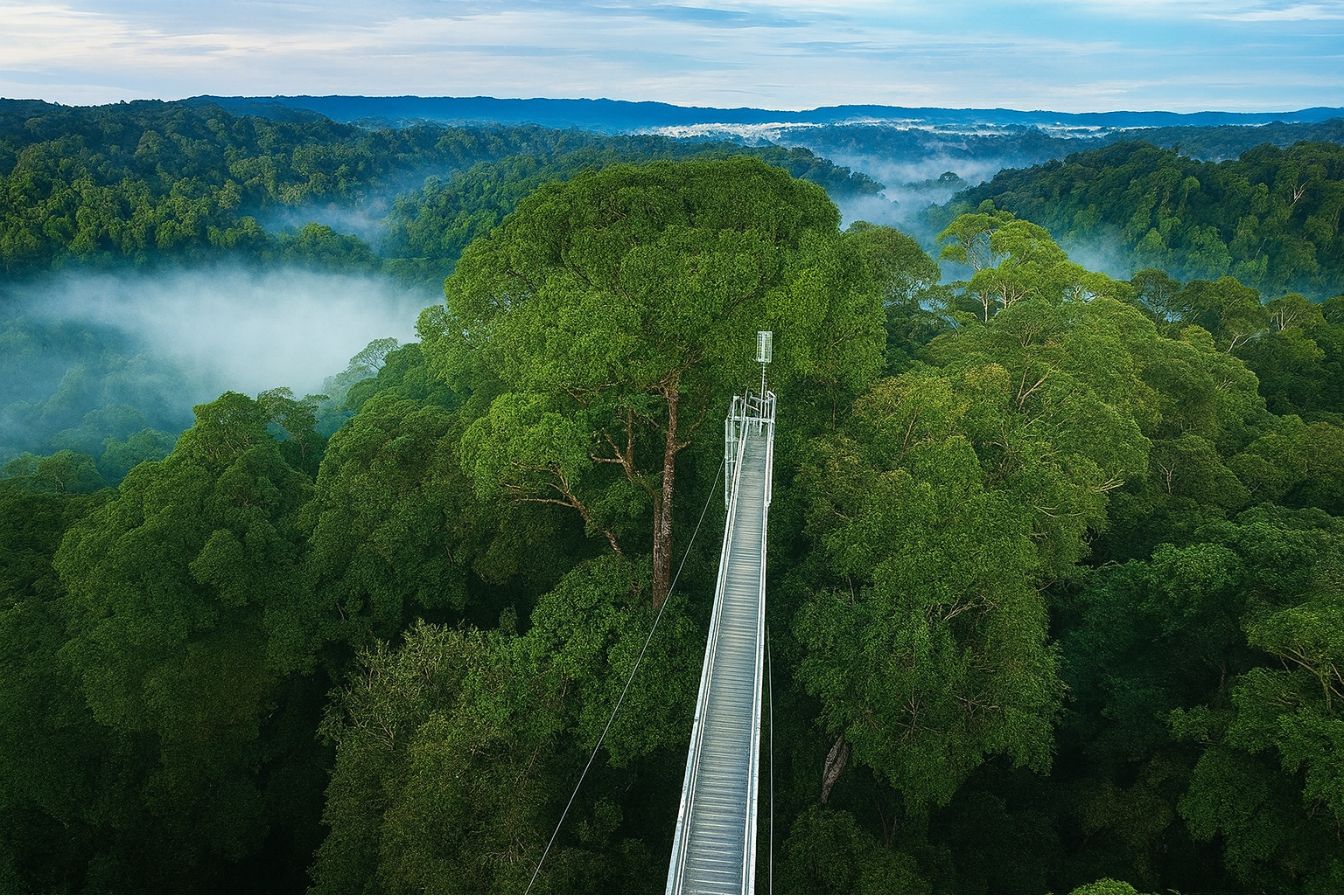
The Heart of Forest circuit adds the hanging bridge, which is the reserve’s single most iconic element for families. Kids who were tired before reaching it almost always wake up on the bridge. It sways slightly, the views into the canopy are real, and crossing it becomes the story they tell. It’s a moderate circuit so most children 7 and up handle it well, though the pace needs to be slower than an adult group and breaks are worth building in.
The indoor attractions deserve more credit than they typically get in family itineraries. The Bat Jungle has 85 live free-flying bats in an enclosure designed to simulate cloud forest at night, with an ultrasonic microphone that lets you hear their echolocation in real time. The guided tour runs about 45 minutes and costs around $12. Children are completely absorbed by it, and parents who expected to be bored usually aren’t. The Frog Pond (Ranario) has over 25 frog species in glass terrariums, including the red-eyed tree frog and poison dart frogs. Admission includes a guided tour. On a rainy afternoon when outdoor plans are compromised, the Frog Pond and Bat Jungle run back-to-back and fill two excellent hours without anyone getting wet.
The Monteverde Butterfly Garden has four separate enclosures housing 40 species, including the famous blue morpho. Kids who try to photograph morphos learn quickly that the butterflies fold their wings when they land and flash blue only in flight. There’s something genuinely instructive in that – the forest is always showing you something, but it’s on its own schedule, not yours. The butterfly garden teaches that lesson in a gentle, friendly way before the forest trail delivers it at full intensity.
| Essence Trail (reserve) | 4+ | ~1.5 hrs | Easiest circuit; ends at waterfall; great first forest hike |
| Heart of Forest (reserve) | 7+ | ~2 hrs | Includes hanging bridge; moderate terrain |
| Continental Divide Trail | 10+ (confident hikers) | ~2.5-3 hrs | Longest circuit; La Ventana viewpoint; best for older kids |
| Hummingbird Gallery | All ages | 15-30 min | Free with reserve entry; 14 species; great for all ages |
| Butterfly Garden | 3+ | 1-1.5 hrs | ~$18; colorful, accessible, great rainy day option |
| Bat Jungle | 5+ | ~45 min | ~$12; live bats, echolocation demo; consistently a family favorite |
| Frog Pond (Ranario) | 4+ | ~1 hr | ~$20; 25+ frog species including red-eyed tree frog; guided tour included |
| Night Walk | 6+ (calm kids); 8+ generally | ~2 hrs | ~$38-40; family highlight; book in advance during peak season |
| Zipline (Selvatura/Treetopia) | 8-10+ (check operator minimums) | 2-3 hrs | Weight and age requirements vary; confirm at booking |
| Coffee / Chocolate Tour (Don Juan or El Trapiche) | 6+ | ~2 hrs | Tastings included; educational and delicious; great family afternoon |
Traveling with kids and want someone who knows how to pace the day and keep younger travelers genuinely engaged? A guided cloud forest walk keeps the group small enough that a naturalist can work at a child’s pace.
What Wildlife Will Kids Actually See?
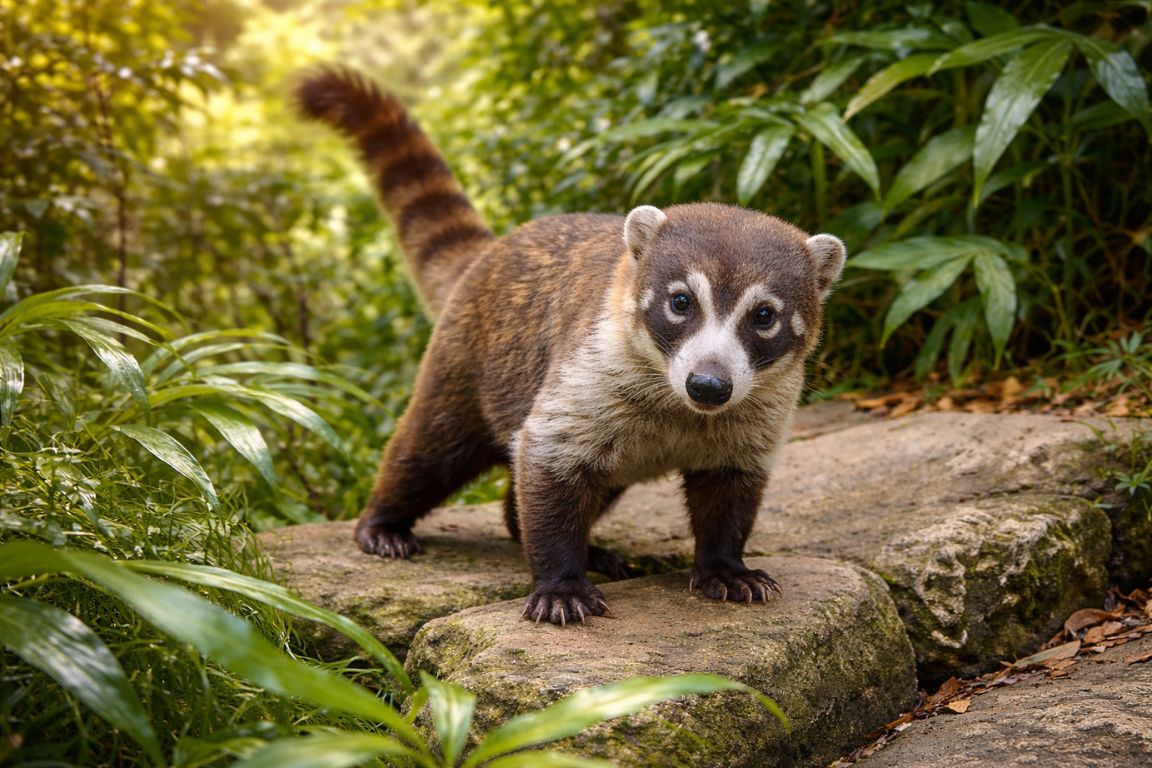 The most reliably spotted animals for families in Monteverde are white-nosed coatis, Central American agoutis, white-faced capuchin monkeys, hummingbirds at the gallery, and (on night walks) red-eyed tree frogs and tarantulas. Kids respond especially strongly to animals that move, make noise, or look dramatically different from anything at home. Coatis fit all three criteria and are encountered on almost every trail visit.
Coatis are the great equalizer of Monteverde wildlife. They don’t care especially whether you’re a seasoned naturalist or a six-year-old. They move in groups, they’re curious, they forage in full daylight, and they get close. We’ve watched coati groups come within a meter of trail-side visitors, inspect a backpack, and carry on. Kids are fascinated. The white-nosed coati looks just exotic enough – somewhere between raccoon and anteater – that it doesn’t feel like the familiar urban wildlife they already know.
Agoutis cover the forest floor in short, nervous bursts. Kids who are told they’re watching one of the forest’s most important seed dispersers often get unexpectedly interested in what would otherwise be “just a big rodent.” Context transforms the experience, which is one reason a good guide matters especially with children. The animal that gets dismissed without explanation becomes genuinely remarkable when someone explains why the forest can’t survive without it.
Monkeys are heard more than seen at first. The howler monkey call at dawn is a genuine alarm clock in Monteverde – deep, resonant, impossible to sleep through after the first morning. Following the sound until you find the source, then watching the group move through the canopy, is usually one of the trip highlights for kids. White-faced capuchins are the more visible daytime species, sometimes coming low enough on branches that binoculars aren’t needed.
The hummingbird gallery near the reserve entrance is free with circuit ticket and runs about fifteen minutes if you’re in a hurry, or considerably longer if a child decides they need to photograph every single species individually. Fourteen species visit the feeders. They hover at arm’s length. They’re fast, colorful, and loud for their size. Younger children in particular find the scale of them – smaller than a fist, faster than tracking – genuinely astonishing.
Night walk wildlife for families: the red-eyed tree frog is the star, and guides know where to find them on wet leaves above streams. Tarantulas are the next favorite – large, visible, and reliably dramatic for children who have been told their whole lives that spiders are small. The guide’s reaction to finding one sets the tone. Our guides treat every encounter with genuine enthusiasm. Kids pick that up immediately and match it.
If you’re going for the wildlife, here’s our breakdown of the animals of Monteverde Cloud Forest so you can set realistic expectations about what you’ll see in the misty canopy.
How Do You Prepare Kids for the Cloud Forest?
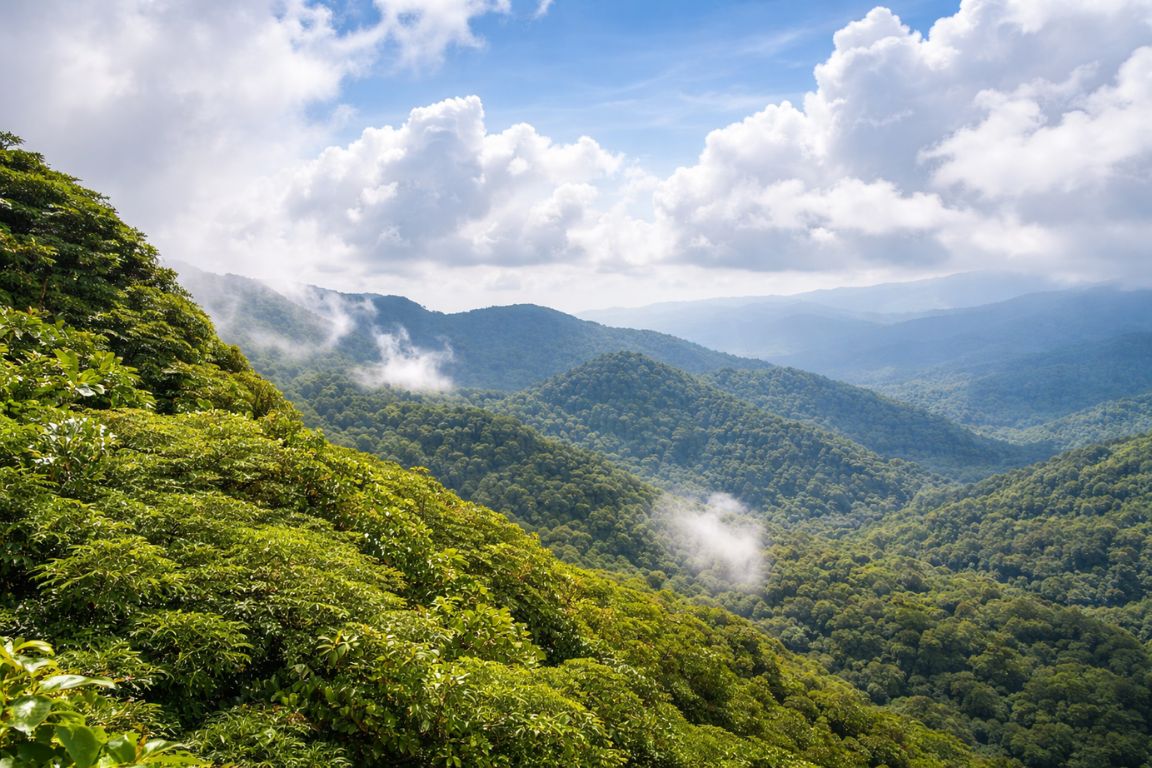 The most important preparation is gear: waterproof hiking shoes with grip, a warm layer, and a rain jacket for every member of the family. Beyond gear, the mindset shift that makes Monteverde work for families is moving slowly and treating the forest as something to read rather than pass through. Kids who are given a small mission – count how many different colors of moss you can find, watch for moving eyes in the canopy – engage more deeply than kids who are just following adults through trees.
Footwear for kids follows the same rules as adults. Waterproof, closed-toe, actual grip on the sole. Children’s feet on wet roots are more vulnerable to slips than adult feet simply because their stride is shorter and their center of gravity is higher. A child’s trail shoe or light hiking boot from most outdoor brands works well. What doesn’t work: their school sneakers, sandals, or the canvas slip-ons they wore on the flight down. If you haven’t sorted this before leaving home, Santa Elena has limited but workable options in children’s sizes.
The cold surprises families more than almost anything else in Monteverde. Parents from warmer climates pack light summer layers and find their kids shivering by 7 AM on a trail. The Monteverde Cloud Forest Reserve opens at 7:30 AM, and morning circuits are noticeably cooler than midday. A warm fleece for every child is non-negotiable. Hotels sell sweatshirts but the sizing is unpredictable and the selection limited. Pack it from home.
Need the full breakdown on the main reserve? Our Monteverde Cloud Forest Reserve guide walks you through everything from entrance fees to trail maps to quetzal spotting spots.
On the mindset side: give children a job in the forest. “Your job is to be the one who spots the next bird” changes engagement instantly. Younger kids can carry a small notebook to draw things they see – not photographs, actual drawings, because drawing makes you look more carefully. Older kids can take on bird count or be the designated “what was that sound?” tracker for the group. The forest is endlessly interactive if you give children a way into it that isn’t just walking behind adults.
Manage expectations honestly before the trail, not at the trailhead. Kids who are told “we might see a quetzal and we might not, and either way the trail is incredible” handle uncertainty better than kids who were promised a quetzal and then didn’t see one. The cloud forest operates on its own schedule. Children who understand that going in tend to find their own sources of wonder when the wildlife doesn’t cooperate on cue.
Need packing guidance? Our guide on what to wear in Monteverde Cloud Forest tours covers layers, waterproof essentials, and footwear that can handle slippery boardwalks and muddy trails.
Where Should Families Stay in Monteverde?
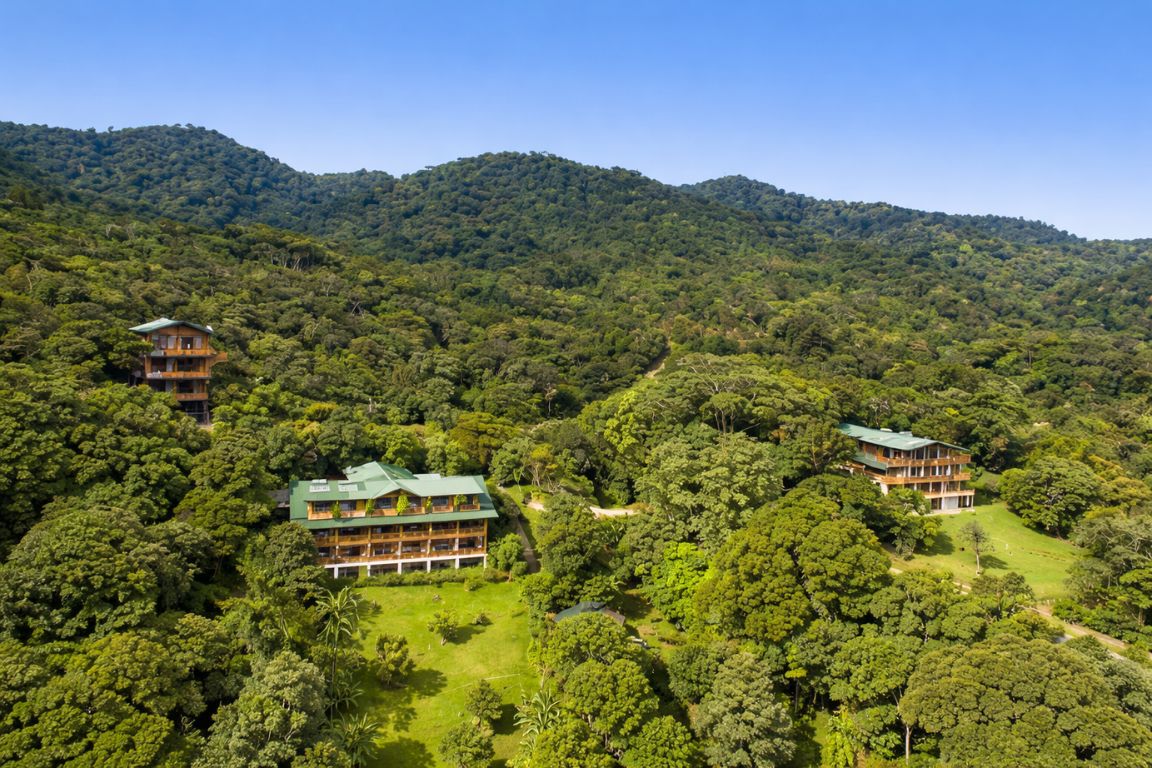 Families do best staying within the Santa Elena to Cerro Plano corridor – close enough to the reserve road that you’re not adding significant transit to every activity, with access to town for meals and rainy-afternoon fallback options. Hotels with garden grounds, wildlife corridors, and family-specific room configurations make a real difference for multi-night stays with children.
The practical consideration for families is that most of the activities in Monteverde require transit between locations, and Santa Elena is the logical hub. Hotels on the main road between Santa Elena and the reserve are positioned to reach most activities in ten to fifteen minutes. Hotels further out on Route 620 corridor can be beautiful but add travel time that matters more when you’re working around kids’ energy windows.
Families with young children specifically benefit from hotels that have garden space or grounds where kids can decompress between activities. A property where a child can walk outside after dinner and watch coatis in the garden, or sit on a terrace listening to howler monkeys at dusk, extends the nature experience without requiring a formal activity. Several Monteverde properties are positioned near wildlife corridors and get regular coati and bird visitors – worth asking about when booking.
Room configuration matters more than it gets credit for. Families of four or five who book a standard double room are setting up for friction on day two. Properties that offer family suites or interconnecting rooms absorb the inevitable clothing-everywhere, gear-drying, everyone-needs-to-shower-before-7AM reality of a hiking trip with children. Ask specifically about family configurations rather than assuming a double room handles it.
One practical detail that families miss: the road to the reserve is not paved for its full length, and even the better-paved sections are steep and winding. If your children are prone to car sickness, factor that in. Short transfers are manageable. Long routes via unpaved mountain roads in the early morning can start a day badly if someone gets sick on the way to the trail.
Need help choosing your base? Our guide on where to stay in Monteverde Cloud Forest tours covers the two main areas and what you actually get at different price points on the mountain.
How Should You Structure Your Days as a Family?
 The most effective family day structure in Monteverde is one major outdoor activity in the morning, a longer lunch and rest period midday, and one lighter or indoor activity in the afternoon. Reserve the night walk for one evening, ideally toward the middle of the stay rather than the first or last night. Plan three nights minimum – families who stay two nights consistently wish they had stayed longer.
Morning is the best time for the forest. The circuits open at 7:30 AM, the wildlife is active, the trails are at their freshest, and children haven’t yet spent their energy. Getting the family to the Visitors Center by the first shuttle is worth the early alarm. An hour and a half in the forest before 10 AM, then breakfast or a proper brunch in Santa Elena, sets up a day that still has afternoon capacity.
Midday in Monteverde has a natural rhythm that families can use rather than fight. The temperature peaks (it’s still only the mid-60s to 70s°F, but relatively warmer than morning), the trails get more crowded, and children who were enthusiastic at 7 AM are running lower by 11. A longer lunch at one of the Santa Elena sodas or restaurants doubles as a rest period. An hour or two of genuine downtime in the early afternoon – not structured, not another activity – makes the difference between a family that’s still happy at dinner and one that’s fraying.
Afternoon activities that work well: the butterfly garden, bat jungle, frog pond, coffee or chocolate tour. These are mostly covered, mostly seated or slow-paced, and mostly under two hours. They pick up the educational thread of the morning without requiring the same physical commitment. Children who were genuinely tired at noon often find a second wind for the bat jungle at 2 PM, especially because it’s cool, dark, and involves live bats.
The night walk deserves its own evening and should not be immediately preceded by an exhausting day hike. Children who are overtired before a night walk struggle to stay attentive and comfortable through two hours in the dark. Plan the night walk on a day with a gentler morning – hanging bridges and lunch, then night walk at 6 PM works well. The forest at 7 PM is genuinely unlike anything children have encountered before, and arriving with some energy in reserve means they actually experience it rather than endure it.
Want to get the planning right? This breakdown of how to plan a trip to Monteverde Cloud Forest tours covers all the details most visitors only figure out after they’ve already arrived on the mountain.
What Do Kids Usually Love, and Struggle With – in Monteverde?
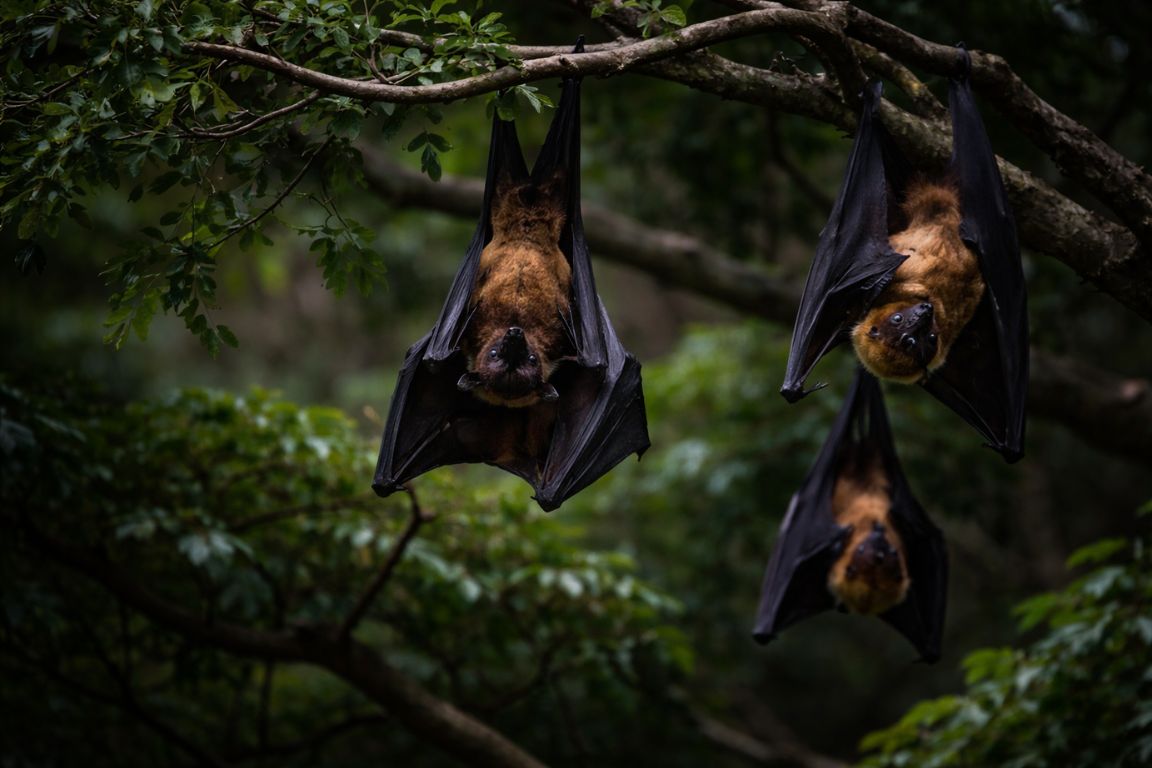 Kids consistently love the night walk, the hanging bridge, the hummingbird gallery, coati encounters, and the Bat Jungle. They struggle most with the physical demands of longer trails, the cold and damp on windy mornings, waiting quietly for wildlife that doesn’t appear on cue, and the car ride to the reserve on winding mountain roads. Planning around both lists produces a much better family trip than ignoring either one.
The night walk is the near-universal family highlight, based on years of leading groups through this forest. Something about the combination of darkness, unexpected finds, headlamps, and a guide who builds genuine suspense before showing you what’s on the branch ahead hits children at exactly the right level. We’ve had kids who showed no interest in nature during the daytime trail suddenly become completely absorbed on a night walk. The forest shifts its character at night, and children respond to that shift in ways that are hard to predict and consistently impressive.
The hanging bridge moment is similar. Walking across a bridge suspended over forest canopy, feeling it sway, looking straight down through the leaves – this is the kind of experience that photographs carry for years. Children who have hiked the trail quietly for an hour suddenly want to tell you about it when they reach the bridge. Let them take their time on it. Don’t rush through.
What kids struggle with most: the cold on mornings when the mist is thick and the wind is up. Families whose children are accustomed to beach or city conditions sometimes find the 60°F, windy, drizzly 7 AM at the reserve trailhead harder than expected. Warm layers change this entirely. A child in a fleece and rain jacket who is warm enough can engage with the forest. A child who is cold and wet is thinking only about being cold and wet. The gear matters.
The other consistent challenge: wildlife patience. Children are taught, by television and nature documentaries, to expect wildlife on demand. The cloud forest runs on its own schedule. Some days a coati appears within five minutes. Other days you walk an entire circuit and see mainly birds and insects. Children who haven’t been prepared for this can become genuinely frustrated, and that frustration can shape how they remember the experience. Setting expectations before the trail – “we might see a lot, we might see a little, and the trail itself is worth every step” – is worth taking seriously before departure.
We know how to pace a day with young kids, which trails work for which ages, and how to make the cloud forest genuinely exciting for children who’ve never been in one. A small-group night walk is the evening outing to put on the calendar before you arrive.
Frequently Asked Questions
Is the Monteverde Cloud Forest Reserve suitable for toddlers?
The Essence Trail (1.4 km) is manageable for energetic toddlers aged 3 to 4, especially with a guide who keeps them engaged. Strollers are not practical on any reserve circuit – root-covered, uneven terrain rules them out. A baby carrier works for very young children and allows the parent to hike the trail fully. Children under 5 are free at the reserve. The frog pond and butterfly garden are often better first choices for children under 3 since the experience is more contained and immediately rewarding.
Is the night walk appropriate for young children?
Most operators recommend a minimum age of around 6 to 8 years. A calm, curious 5-year-old who doesn’t startle easily can often handle it. The walk lasts two hours, takes place in darkness on uneven terrain, and involves encountering tarantulas, frogs, and the occasional snake from close range. Children who are anxious about the dark or easily frightened do better waiting until they’re a bit older. Children who love spiders, frogs, and flashlights take to it immediately.
What’s the most important thing to pack for kids in Monteverde?
A warm layer – specifically a fleece or insulated jacket, and waterproof footwear with grip. Parents consistently pack their own warm layers and forget to do the same for children. The cloud forest runs 15 to 20 degrees cooler than the coast, and mornings on the trail at 7 AM feel genuinely cold without a proper warm layer. This is the item we see children missing most often, and it has the largest impact on how much they enjoy the experience.
How many days do families need in Monteverde?
Three nights is the minimum we recommend for families. Two nights feels consistently rushed – you end up choosing between the reserve, the night walk, and the other attractions rather than doing all of them at a pace that actually works with children. Three nights allows the morning trail, an afternoon at the butterfly garden or bat jungle, the night walk, and a recovery or flexible day without anyone feeling like they’re on a forced march.
Is Monteverde better than Arenal for families with kids?
They offer different things. Arenal has the volcano views, hot springs (a massive family hit), and a warmer lowland climate that suits younger children who struggle with Monteverde’s cold. Monteverde offers the cloud forest, more wildlife diversity at close range, and the night walk experience. Families who can do both should. Families choosing one: Arenal is often easier with very young children, while Monteverde rewards more with ages 6 and up. Both on a 9 to 10 day itinerary is the most common recommendation we give.
Can kids go ziplining in Monteverde?
Yes, with age and weight requirements that vary by operator. Most major zipline operators in Monteverde require a minimum age of around 8 to 10 years and a minimum weight of roughly 25 to 30 kg, though these differ between companies. Confirm the specific requirements when booking. The zipline through the cloud forest canopy is typically the most popular activity for older children and teenagers – it’s fast, it’s above the treetops, and it’s a genuine adrenaline experience that most kids want to do again immediately after finishing.
Choose Your Monteverde Experience
An editorial starting point, before you enter preferences. Confirm dates, party requirements and extras.
Monteverde Reserve Naturalist Walk
Check your travel date before arranging the rest of this outing. Explore the main reserve with a naturalist and shared spotting scope.
2–3 hours; English/Spanish. Meet at the reserve reception; reserve admission and hotel transport cost extra. Listed ages 3–90, minimum two travellers; confirm the circuit before buying admission.
Choose a date for Viator scheduled departures. Final availability and price are confirmed on Viator.
Choose only what matters. Missing answers keep the recommendation provisional. Individual suitability and exact pickup still need confirmation.
| Monteverde Reserve Naturalist Walk | Explore the main reserve with a naturalist and shared spotting scope. 2–3 hours; English/Spanish. Meet at the reserve reception; reserve admission and hotel transport cost extra. Listed ages 3–90, minimum two travellers; confirm the circuit before buying admission. |
|---|---|
| Coffee, Chocolate And Sugar Cane Walk | Follow three crops from plants to tastings, including coffee, chocolate and cane juice. 2 hours; English/Spanish. Transport is excluded. Listed booking ages start at seven; check directly before planning for younger children. Tastings are included; no current price is promised here. |
| Wildlife Refuge Small-Group Night Walk | Search for nocturnal wildlife with a guide, flashlights and spotting scope. 2 hours; English/Spanish. Meet at Monteverde Wildlife Refuge. Reserve entry and transport are extra. Confirm child arrangements and the chosen group option. Sightings are not guaranteed. |
| Kinkajou Forest Night Walk With Pickup | Explore a private forest after dark with a guide and local hotel pickup. 1.5-hour walk; English/Spanish, small group up to eight. Confirm your exact pickup location and timing. Kinkajou Forest is separate from the main reserve. Wildlife sightings are not guaranteed. |
Compare Your Group’s Costs
Enter your own quotes in the same currency for the same people. Include admission, transport and fees on both sides. These are your totals, not live tour prices.
Enter both totals to compare the cost of your independent plan with the guided experience.