Best Coffee Tours in Monteverde, Compared
Coffee-only and three-crop farm visits offer different experiences, and transport varies by listing. Here is what each format actually gives you.
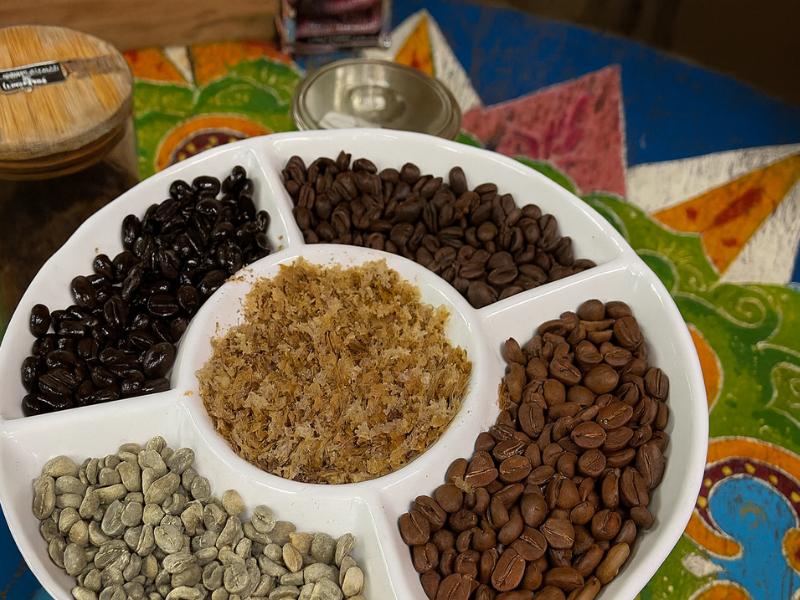
Monteverde grows coffee higher than most of Costa Rica manages to. The town sits above 1,400 metres in the Tilaran Mountains, and the forest just above the farms holds a steady 15 to 20°C. Cool air slows the cherry down. It ripens across a longer season, the bean comes out denser, and you can taste that in a cup poured within sight of the tree it grew on.
The confusing part is not the coffee. It is the shopping. Search for a farm visit here and you get Don Juan, Café Monteverde, El Trapiche and a stack of combination packages, all advertising roughly two hours, all sounding interchangeable. They are not interchangeable. What separates them is format: how many crops you walk through, whether a van collects you, how large the group gets, and whether you came to learn or came to taste.
This page compares coffee-only and three-crop options. A farm visit usually fits between an early reserve outing and your evening plans.
Decide whether you want coffee depth or three-crop variety, then compare the exact pickup and tasting inclusions.
Booking Choice. Follow three crops from plants to tastings, including coffee, chocolate and cane juice. Explore Coffee, Chocolate And Sugar Cane Walk
What Actually Happens on a Monteverde Coffee Tour?
A Monteverde coffee tour walks you through the whole bean-to-cup chain on a working farm: picking ripe cherries, stripping the pulp, fermenting and washing, drying, roasting, then tasting what the farm produced. Most run about two hours, most finish with a tasting, and most keep the processing demonstrations under cover so drizzle never cancels your morning.
The order rarely changes because the process does not change. You start in the rows, where a guide hands you a basket and shows you what a ripe cherry looks like against the six unripe ones next to it. Picking is selective here, done by hand, several passes across the same tree over a season. That single fact explains most of what you will later be told about price.
From there the cherries go through a depulper, a piece of machinery that looks agricultural and sounds worse, which strips the fruit off the seed. What comes out is a slick, mucilage-covered bean that gets fermented, washed, and spread out to dry. Drying is where the farm's character shows. Patio drying, raised beds, mechanical dryers, each produces a different cup, and a decent guide will let you smell the difference between a parchment bean and a green one before either goes near heat.
Roasting is the part everyone photographs. It is also the shortest part of the tour, usually a demonstration batch rather than something you control. Then the tasting, which on most Monteverde farms includes the same beans at several roast levels, so you can finally understand why the dark roast you buy at home tastes of the roast rather than the farm.
| Stage | What you actually do | Why it matters to the cup |
|---|---|---|
| Picking | Walk the rows, pick ripe cherries by hand into a basket | Selective hand-picking is the single biggest labour cost, and the reason high-altitude Costa Rican coffee is not cheap |
| Depulping | Watch the pulp stripped from the seed, usually within hours of picking | Delay between picking and depulping causes off flavours, so farms process fast |
| Fermenting and washing | See the tanks, smell the difference between hours one and twelve | Fermentation length is a deliberate flavour decision, not an accident |
| Drying | Handle parchment beans on a patio or raised bed | Slow, even drying protects the acidity the altitude gave the bean |
| Roasting | Watch a demonstration batch, smell first crack | Roast level can hide or reveal what the farm did; this is where the tasting makes sense |
| Tasting | Compare the same beans at different roast levels | The only part of the tour that changes how you shop for coffee at home |
Three-crop farms add two more stops. Cacao gets fermented, dried, roasted, peeled and ground in front of you, and you usually get to grind some yourself. Sugar cane goes through a trapiche, the traditional press, which is where the ox cart photos come from and where the guide will ask for a volunteer. The juice you drink straight from the press is the sweetest thing you will taste in Monteverde, and it is the part children remember.
Which Coffee Tours Do Travellers Actually Search For?
Three operator names carry almost all the search demand: Don Juan Tours, Café Monteverde and El Trapiche. The coffee, chocolate and sugar cane tour we list runs at Don Juan, so two of those searches lead to the same farm. All three are legitimate, long-running operations, and none of them is a tourist trap.
That overlap matters, because a lot of travellers spend an evening comparing what they think are three separate products and one of them turns out to be a booking channel for another. Here is the honest layout.
Don Juan Tours offers a three-crop format: coffee, chocolate and sugar cane, with production demonstrations and tastings. The regular Viator experience reviewed here excludes transportation; do not assume that another booking channel has identical inclusions.
Café Monteverde runs a coffee-focused farm and roastery visit. The reviewed GetYourGuide listing includes six coffee tastings and excludes transport; its optional lunch is a separate choice.
El Trapiche is the family farm option, named for the sugar cane press at the centre of it. Our cost research puts it in the 40 to 50 dollar range booked direct, running two to three hours, open to all ages, with an ox cart ride and candy making that make it the strongest choice on this list for younger children.
One thing every operator here shares: the advertised two hours is optimistic. Coffee tours in Monteverde are advertised at two to two and a half hours and frequently run three, because the guides go deep and the questions compound. That is a good problem, but do not stack a farm visit directly in front of a timed reserve entry or a shuttle departure.
How Does a Coffee-Only Tour Differ From the Three-Crop Version?
A coffee-only tour spends its whole two hours on one plant, so you get proper time on processing, drying variables and roast comparison. A three-crop tour splits that time between coffee, cacao and sugar cane, which trades depth for variety and turns the visit into something a nine-year-old will happily sit through.
Neither is better. They are aimed at different people, and the mistake most travellers make is picking on price rather than on which of those two sentences describes their group.
If you roast at home, grind for a pour-over, or have ever argued about washed versus natural processing, the three-crop format will leave you slightly hungry. The coffee segment is one of three. You will see the full chain, but not the long-form drying-and-cupping detail a single-crop tour can afford to give you. On the other hand, if half your party is indifferent to coffee, the three-crop visit is the one where nobody is bored, because the chocolate grinding and the cane press carry the people who came along out of politeness.
The tasting is the honest tiebreaker. On the three-crop tour the chocolate flight is the surprise: the 70 percent with sea salt and the chilli version are the two people ask to try again, and the guides tend to be generous about seconds. If that sentence appeals to you more than a discussion of fermentation windows, book the three-crop version and stop researching.
What Do Monteverde Coffee Tours Cost?
Compare the current quote for your party on the exact listing. The regular three-crop Viator tour excludes transport, while the reviewed GetYourGuide three-crop option includes pickup in its local service area. A price difference alone does not tell you what is included.
Add any taxi, pickup charge and optional meal to the quoted activity price before comparing group totals. The calculator after this guide uses your own quotes.
Two costs people forget. The gift shop is genuinely good and sells what you just watched being made, which is the one souvenir in Monteverde that does not feel like a souvenir. And a farm visit does not use a reserve time slot, so it does not compete with your reserve budget the way a second guided walk would. For the wider picture on what a few days here costs, our comparison of Monteverde and La Fortuna lays the activity prices out side by side.
Why Does Monteverde Grow Such Good Coffee?
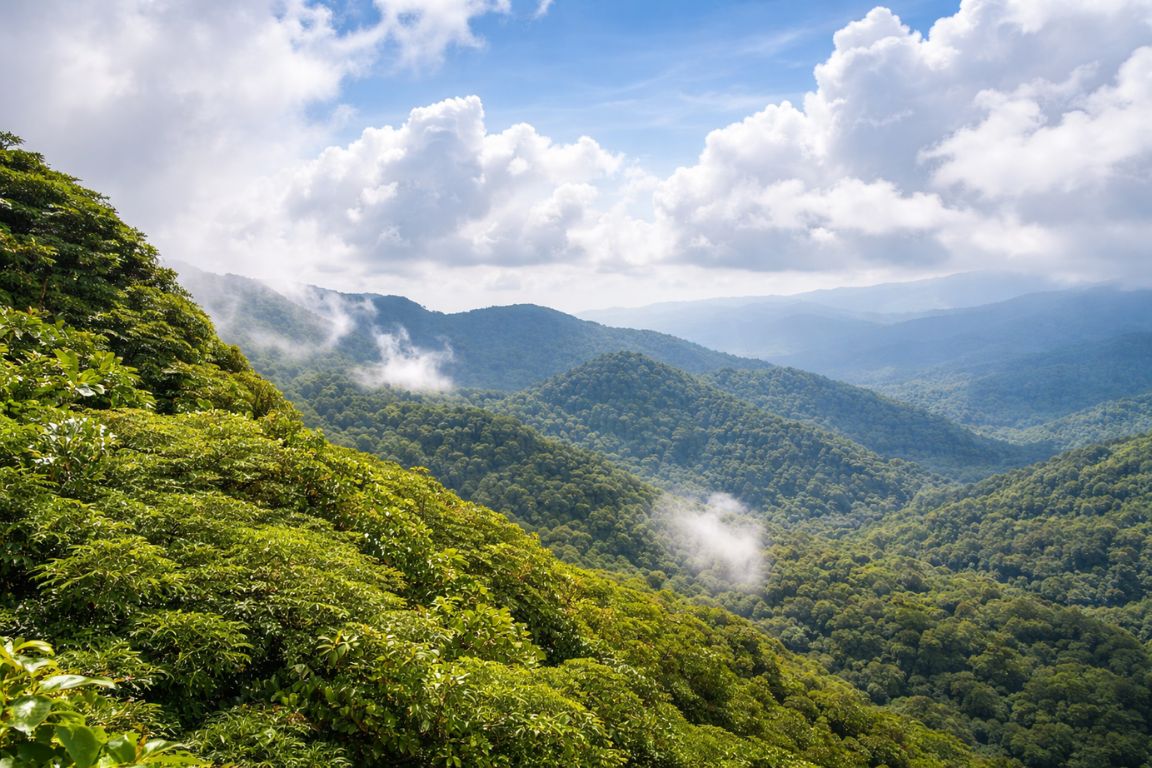
Elevation, and the cloud that comes with it. Monteverde sits above 1,400 metres, high enough that Costa Rica's own grading system reserves its top designation for beans grown at roughly this height. Cool temperatures slow the cherry's maturation, the bean develops more density and more acidity, and the near-permanent mist acts as natural shade.
Costa Rica grades coffee by growing altitude rather than by farm reputation, and the highest grades belong to beans grown near or above 1,200 metres. Monteverde clears that comfortably. The practical effect is that a cup here has more brightness and more structure than the same variety grown a thousand metres lower on the Pacific slope, which is why Monteverde coffee tastes noticeably different from the supermarket Costa Rican blend most visitors arrived with in their heads.
The cloud does the second half of the work. Monteverde's mist is not weather, it is a permanent condition of the Continental Divide, and it means the coffee plants get filtered light and low heat stress through most of the growing season. Farms here rarely need the artificial shade trees that lowland plantations plant. The forest supplies it.
| Condition | In Monteverde | Effect on the bean |
|---|---|---|
| Elevation | Town and farms sit above 1,400 metres | Slower cherry maturation, denser bean, higher acidity |
| Temperature | 15 to 20°C in the forest above the farms | Long ripening window, less heat stress on the plant |
| Cloud cover | Near-daily mist off the Continental Divide | Natural shade, steadier moisture, fewer irrigation demands |
| Harvest window | November to February | The only months you see bushes loaded with red cherries |
| Wet season | May to August | Sweetest cane growth, greenest farms, afternoon showers |
If you visit between November and February you will see the harvest in progress, which is the version of this tour everyone hopes for. Those are also the busiest months, and the farms recommend booking around 48 hours ahead. Outside harvest you still see every stage, just demonstrated with stored fruit rather than picked in front of you. Our guide to the best time to visit Monteverde covers how that season choice affects the rest of your trip.
Which Farm Tour Suits Which Traveller?
The three-crop format can provide more variety for children, while coffee enthusiasts may prefer a dedicated farm and roastery visit. Check the child booking ages and exact transport inclusions rather than choosing solely by the format.
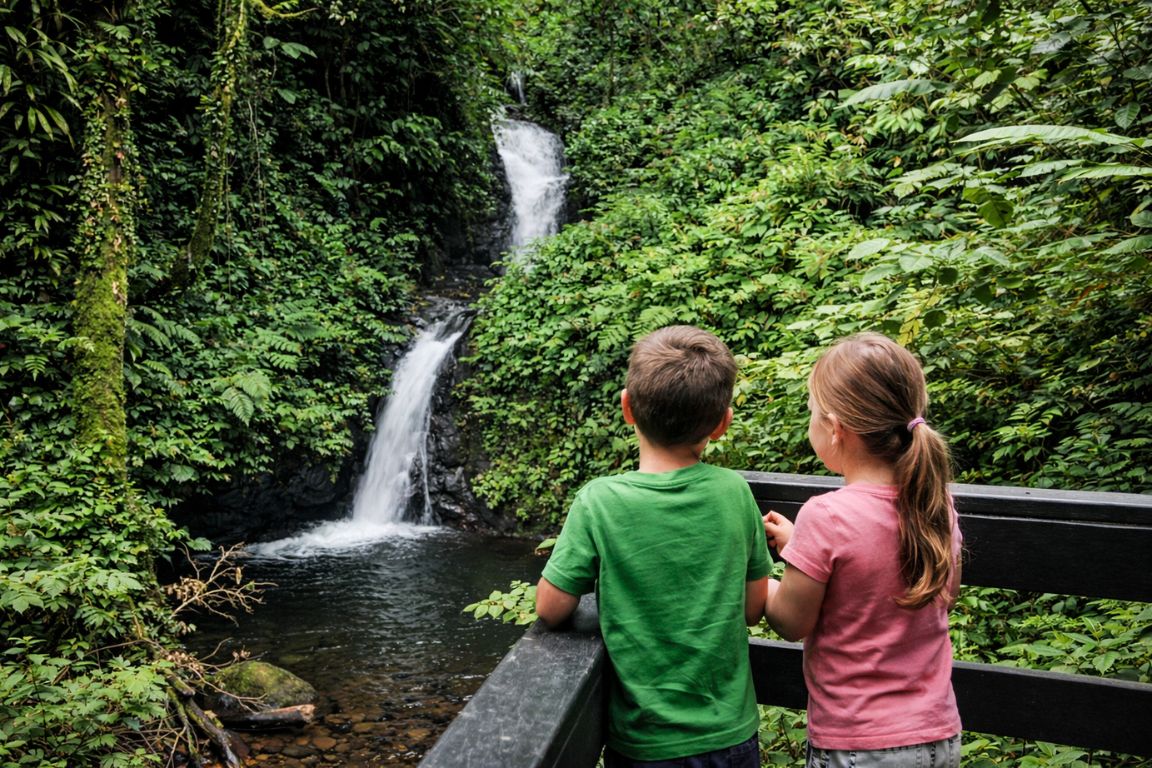
Children are the clearest case. The cane press is a physical, funny, slightly chaotic thing to watch, the candy making at El Trapiche is a genuine highlight, and chocolate tasting solves the attention problem that any two-hour agricultural walk otherwise creates. Our guide to Monteverde with kids puts the recommended age at six and up for the coffee and chocolate format, which matches what the guides say on the ground.
Accessibility must be confirmed for the specific farm and route. The reviewed Café Monteverde listing is not wheelchair accessible. Do not infer suitable surfaces or vehicle access from the general name “farm tour”.
When Should You Fit a Farm Visit Into Your Monteverde Days?
Late morning or early afternoon. The reserves pay out in the first two hours after dawn, the day circuits close at 4:00 PM, and a night walk starts around 5:30 PM, which leaves the middle of the day as the natural window for a farm. The operator's own recommended start is 10:00 AM, before the midday sun.
There is a case for the late slot too. From the farm's higher ground the view runs out over the Gulf of Nicoya, and it is at its best around 3:00 PM or 4:00 PM. If you have already done your reserve morning and you are not booking an evening walk, take the afternoon departure and stay for the light.
The other timing advantage is weather-proofing. A farm visit does not depend on dry trails or on a reserve time slot, so it is the activity you move to the front when the forecast collapses. September and October are the wettest months in Monteverde, and this is the tour that still works on those days because the processing demonstrations happen under cover.
| Morning | Middle of the day | Evening | Who this shape suits |
|---|---|---|---|
| Reserve circuit, first slot at 7:30 AM | Farm visit, 10:00 AM or after lunch | Guided walk after dark, 5:30 PM | First-timers with three nights, the standard best day here |
| Canopy park, zipline and bridges | Farm visit, afternoon slot | Dinner in town | Adventure-first travellers who still want one cultural stop |
| Slow start, hummingbird gallery | Farm visit with transport included | Guided walk after dark | Travellers combining several activities; confirm individual access needs |
| Farm visit, 10:00 AM | Lunch and town | Guided walk after dark | Arrival day, when reserve slots are already gone |
If you are building the evening half of that first row, our comparison of which night tour to book takes apart the four after-dark options and explains why they are not the same walk. For the daytime half, the canopy parks compared covers the zipline and hanging-bridge decision.
Who Should Skip a Monteverde Coffee Tour?
Anyone here for two nights with both reserves and an evening walk already booked. Anyone who has done a coffee tour elsewhere in Costa Rica and remembers the process. And anyone whose real interest is wildlife, because a farm morning is a morning not spent on a trail during the hours when the forest is actually awake.
We say this as people who sell the tour. Monteverde's scarce resource is early mornings, and there are only so many of them in a short stay. If you have three nights, you have room for a farm visit without giving up a reserve morning. If you have two, something has to lose, and the honest answer is that the forest is why you came. Spend those mornings deciding between the two cloud forest reserves instead.
The second group is travellers who have already done a plantation tour in the Central Valley or near Arenal. The process is the same process. What is different in Monteverde is the altitude story and the specific farms, which is interesting if you care about coffee and repetitive if you do not.
There is also a group-size caveat worth stating. The three-crop farm operates at scale, and if what you want is a quiet, small, unhurried visit, a large working estate in high season is not going to deliver it. Booking the September or October window helps, because groups shrink and the guides have time for questions. For a smaller-group feel on any day of the year, one of the guided walks among the Monteverde tours we recommend is the better use of the same two hours.
How Do You Book a Monteverde Coffee Tour?
Check your date and meeting instructions before arranging transport. For the reviewed pickup-inclusive GetYourGuide tour, provide your hotel at least 24 hours ahead and confirm it is inside the service area.
Arrival instructions differ by farm. Use the meeting point and check-in time supplied for your actual booking.
Two more practical points. Dress for a working farm rather than for a forest: closed shoes, something you do not mind getting cane juice on, and a light rain layer from May onwards. Our advice on what to wear in Monteverde applies here with one exception, in that you will not need the full waterproof trail setup. And check the reserve's own opening hours on the official reserve site before you build the rest of the day around your farm slot, because circuit availability changes and a farm booking is much easier to move than a reserve entry.
Payment on direct bookings is usually cash or card at the farm gate. Platform bookings carry the free-cancellation window shown at checkout, which is the practical reason many travellers use them for a first Monteverde day when the arrival time from San Jose is not fully in their control. If the whole trip is still unbuilt, start with planning a Monteverde trip and slot the farm in afterwards.
Choose Your Farm Visit
An editorial starting point, before you enter preferences. Confirm dates, party requirements and extras.
Coffee, Chocolate And Sugar Cane Walk
Check your travel date before arranging the rest of this outing. Follow three crops from plants to tastings, including coffee, chocolate and cane juice.
2 hours; English/Spanish. Transport is excluded. Listed booking ages start at seven; check directly before planning for younger children. Tastings are included; no current price is promised here.
Choose a date for Viator scheduled departures. Final availability and price are confirmed on Viator.
Choose only what matters. Missing answers keep the recommendation provisional. Individual suitability and exact pickup still need confirmation.
| Coffee, Chocolate And Sugar Cane Walk | Follow three crops from plants to tastings, including coffee, chocolate and cane juice. 2 hours; English/Spanish. Transport is excluded. Listed booking ages start at seven; check directly before planning for younger children. Tastings are included; no current price is promised here. |
|---|---|
| Café Monteverde Farm And Roastery Tour | Follow coffee from the fields to the roastery and compare six coffee tastings. 2 hours; English/French. Meet at Café Monteverde Farm & Roastery; transport excluded. Lunch is an optional extra Monday–Saturday. Not wheelchair accessible. |
| Three-Crop Farm Tour With Local Pickup | Taste coffee, chocolate and sugar cane on a guided farm visit with local transport. 2 hours on the farm; allow extra time for pickup. English/Spanish. Pickup serves Monteverde/Santa Elena: confirm your hotel and provide it at least 24 hours ahead. Tastings included. |
Compare Your Group’s Costs
Enter your own quotes in the same currency for the same people. Include admission, transport and fees on both sides. These are your totals, not live tour prices.
Enter both totals to compare the cost of your independent plan with the guided experience.