Which Monteverde Night Tour Should You Book?
Four listings, near-identical names, prices 13 dollars apart. The differences that actually matter are group cap, gear and whether anyone collects you from your hotel.
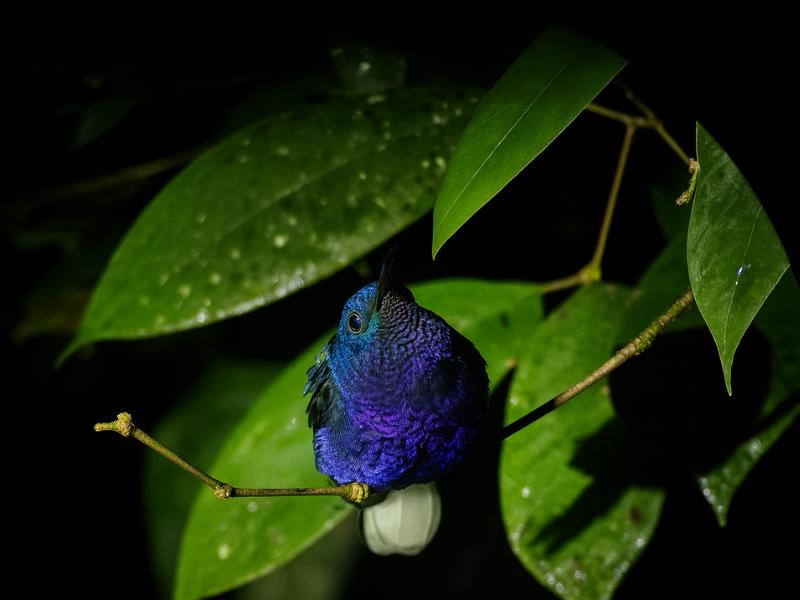
More than 80 percent of Monteverde's mammals are nocturnal. That single number is the entire argument for going back into the forest after dinner, and it is why almost every visitor here books an evening walk at some point during their stay. The forest you walk at 8 PM is not the forest you walked at 8 AM. Different animals, different sounds, and a guide's beam doing work your own eyes cannot.
The names overlap, but the reserves, equipment and pickup arrangements differ. The Kinkajou walk lasts about 90 minutes; the reviewed Wildlife Refuge and Tityra night-vision walks last about two hours. Compare the actual outing and its extras before comparing prices.
This page pulls the four apart, states plainly what each one gives you, and ends with a decision table. We are not going to steer you at the most expensive one, because for most travellers it is not the answer.
Choose the reserve, walking duration and equipment before comparing the headline price. Add admission and transport where they are separate.
Booking Choice. Search for nocturnal wildlife with a guide, flashlights and spotting scope. Explore Wildlife Refuge Small-Group Night Walk
What Is a Monteverde Night Walk Actually Like?
A guided walk on natural forest trails, two hours, moving slowly in a small group behind a guide with a powerful flashlight and usually a spotting scope. You cover far less ground than on a day hike. The trails are uneven, the temperature drops to around 14 to 16°C, and closed-toe shoes are a requirement rather than a suggestion.
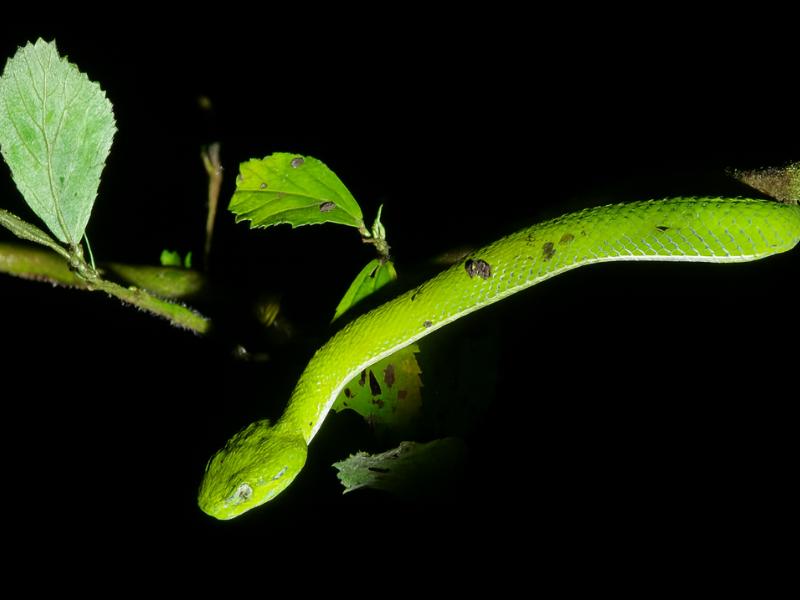
Pace is the thing nobody warns you about. A good night guide will stop for fifteen minutes over a single leaf, because there is a glass frog on the underside of it and the whole group needs a turn at the scope. If you are expecting a hike, you will find this slow. If you understand that you are on a wildlife hunt rather than a walk, two hours goes fast.
A night walk is a separate visit from the main reserve’s daytime circuits. The reviewed products visit Kinkajou Forest, Monteverde Wildlife Refuge or Tityra Lodge’s reserve; they do not take you into the main Monteverde Reserve after hours.
| What you are hoping to see | Realistic odds with a guide | Notes |
|---|---|---|
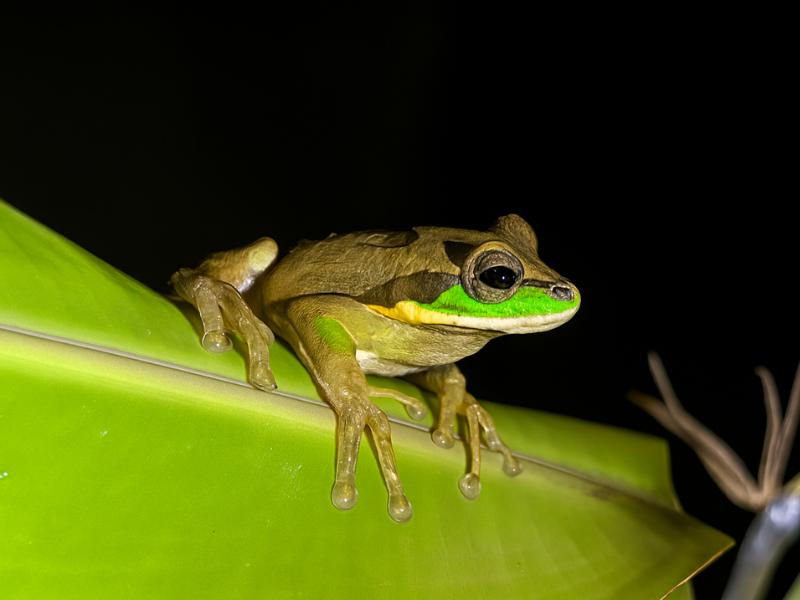
| Red-eyed tree frog | 75 to 95 percent | The signature night sighting; wetter months are far better |
| Glass frogs | Good in the wet season | Guides know the streamside leaves where males guard eggs |
| Sloth (any species) | 70 to 90 percent | Very hard to spot at canopy level without a scope |
| Kinkajou or porcupine | Better near fruiting trees | Fruit-bearing forest is where these two actually feed |
| Tarantulas, scorpions, stick insects | High | Ask about a UV blacklight; many scorpions fluoresce green |
| Sleeping birds | High | Roosting hummingbirds and toucans hold still, which day birds never do |
| Any wildcat species | 10 to 30 percent | Night walks only; a genuine once-in-a-trip event |
| Baird's tapir | 5 to 20 percent | Rare enough that guides talk about individual sightings for years |
Sightings vary by weather, habitat and the animals’ movements. A guide helps find and identify nocturnal life, but no particular mammal, frog or insect is guaranteed.
Why Do Four Similar Night Tours Exist?
They operate on different private ground with different equipment and logistics. Kinkajou includes local pickup; the reviewed Viator Wildlife Refuge and Tityra night-vision products exclude transport and charge reserve entry separately.
Once you know those four variables, the listings stop looking interchangeable. Reserve, cap, gear, transport. Everything else in the marketing copy is the same because the underlying experience genuinely is similar: a naturalist, a flashlight, two hours, a wet trail.
Group cap is the variable travellers underrate and then complain about afterwards. On a walk where the whole point is taking turns at a spotting scope, six people versus eight is a real difference in how long you spend looking at each animal, and both are far better than the twenty-person groups that some destinations run.
Read that bookings column carefully. It counts bookings, not reviews, and the cheapest tour has by a distance the most of them, which is what you would expect from the one with hotel pickup included and the lowest headline price. It is not evidence that it is the best walk. The two highest-rated listings are the two smallest and least-booked.
What Is the Kinkajou Forest, and Why Does It Get Its Own Tour?
Kinkajou Forest combines endemic trees and fruit-bearing habitat. Its guided walk is a chance to search for nocturnal wildlife, not a promise that kinkajous or porcupines will appear.
Kinkajous are nocturnal, fruit-eating mammals with prehensile tails. A guide can help interpret feeding habitat, but sightings remain unpredictable.
The practical case for this walk is logistics rather than wildlife, though. It is the only one of the four with pickup included as standard, drawing on a long list of collection points around Santa Elena town. If you arrived by shuttle and have no car, that removes the evening's hardest problem. It also runs rain or shine, which matters in a place where the forecast is a suggestion.
The current Kinkajou listing gives a 1.5-hour walking duration; allow extra time for pickup. Flash photography is prohibited. Confirm the exact pickup point before relying on transport from a remote accommodation.
How Do the Four Night Tours Compare Head to Head?
Compare three practical differences: a shorter Kinkajou outing with pickup, a two-hour Wildlife Refuge walk with a scope, or a two-hour Tityra outing with night-vision visors. Confirm the group option and total cost on the selected listing.
Here is the whole comparison in one place. This is the table to screenshot before you book.
Reserve entry and transport change the total. Add both to the Viator Wildlife Refuge and Tityra quotes. Kinkajou’s reviewed listing includes its entrance ticket and local pickup; verify the hotel service area.
We publish that because the listing prices genuinely mislead here. On headline price the four sit within 13 dollars of each other. On what you actually hand over, the spread is closer to double, and the cheapest walk on the list is the one that includes a lift from your accommodation.
Does Night Vision Actually Change What You See?
Night-vision equipment offers a different way to observe movement in darkness. The Tityra product supplies visors alongside a guide and scope, but equipment cannot guarantee bats, owls or other wildlife.
Choose the night-vision outing if using those optics interests you. Choose an ordinary scope-led walk if guided identification and the general forest experience are the main reasons to go.
Do not underrate the spotting scope. It is the difference between "I think that green thing moved" and watching a sleeping toucan for two minutes at what looks like arm's length. On the small-group walk the guides will align your phone to the eyepiece and take the shot for you, which produces the pictures people actually keep. On the Tropical Forest tour the same technique gets used on high-canopy sloths.
| Equipment | What it genuinely helps with | Which tours carry it |
|---|---|---|
| High-powered flashlight | Everything; the guide's beam and their eyes do most of the work | All four |
| Spotting scope or telescope | Canopy sloths, roosting birds, tiny frogs; phone photography through the eyepiece | Small-group walk, Tropical Forest tour, night-vision tour |
| Night-vision visors | Bats and owls in flight, movement in cover, animals that a beam would disturb | The night-vision tour only |
| UV blacklight | Scorpions, which fluoresce bright green under UV | Ask on the Tropical Forest tour |
One rule applies to all four regardless of the kit: no flash photography. Nocturnal eyes are built for almost no light, and a flash is genuinely harmful to them. Every operator here enforces it, and the good guides will explain why rather than just tell you.
Which Night Tour Should You Book?
For local pickup and a shorter walk, compare Kinkajou. For a Wildlife Refuge outing with a scope, compare the small-group walk. For night-vision equipment, compare Tityra. Ask about child arrangements and party pace before booking.
That is the short version. The longer version depends on which of four things you are optimising: cost, group size, equipment, or control over the pace.
If you want two evening walks, choose them for different reserves or equipment rather than assuming either guarantees a particular species.
Are These Tours Suitable for Children?
Consider whether your child is comfortable walking uneven trails in darkness and staying warm for the duration. The listings differ in child arrangements; confirm these for the actual date and party before booking.
Children who are into animals do brilliantly on these walks, and the eye-shine moment tends to be the thing they talk about for the rest of the trip. Children who are tired from a full day of ziplining do not. An earlier departure helps: the first slot after sunset is both the most productive for wildlife and the more manageable bedtime.
If your group's pace is the concern, the private option on the Tropical Forest night tour is the sensible spend. It lets the guide steer toward whatever holds your child's attention, whether that is spiders or mammals, and it removes the pressure of keeping up with strangers. Our guide to Monteverde with kids covers how an evening walk fits into a family day without wrecking the following morning.
None of the four is wheelchair accessible. All four run on natural forest trails with roots, mud and elevation changes, and no operator here pretends otherwise. If mobility is a constraint in your group, the accessible alternative is a farm visit rather than a trail, and Monteverde coffee tours compared explains which of those is built for it.
When Should You Go, and What Should You Bring?
Take the first slot after sunset, usually 5:30 PM or 6:00 PM. That window catches the day animals settling and the night animals emerging, which is the widest variety you will get. Bring closed-toe shoes, long trousers, a fleece or windbreaker, and a light rain jacket from May onwards.
Temperature is the mistake visitors make most. Monteverde drops to around 14 to 16°C after dark, and you spend a lot of that walk standing still while other people take their turn at the scope. Warm daytime weather tells you nothing about how the evening will feel on the ridge. Long trousers also cut down on the forest's active insect life brushing against you. Our advice on what to wear in Monteverde applies after dark with one addition, which is an extra warm layer you would not carry by day.
Season shifts what you see rather than whether you should go. The wet months, roughly May to October, are the best for amphibians, because frogs respond to moisture and are both more vocal and more visible. The drier months bring better trail conditions and clearer skies. Sightings of frogs and nocturnal species genuinely peak during the wet season, which is a useful thing to know when your only free evening lands in September. Our best time to visit Monteverde guide breaks the seasons down in more detail.
| Season | Months | What is better | The trade-off |
|---|---|---|---|
| Dry season | January to April | Best trail conditions, clearest skies, easy walking | Busiest months; caps of six and eight fill quickly |
| Green season | May to August | Peak amphibian activity; bioluminescent fungi at their brightest | High chance of rain during the walk; a jacket is not optional |
| Quiet season | September to November | Smallest groups, most guide attention, frogs still active | Muddy trails; waterproof closed-toe shoes matter more |
Book ahead in the dry season. A tour capped at six sells out in a way that a fifty-seat bus tour never does, and Monteverde is small enough that a same-evening walk-up is a gamble. If your reserve day and your evening walk are both fixed points, build the rest of the day around them; the sequence that works is a reserve circuit in the morning, something indoors or agricultural in the afternoon, and the trail again after dark. Full logistics are in our planning a Monteverde trip guide, and the tours we recommend shows what else fits the same days.
Who Should Skip a Monteverde Night Walk?
Anyone who cannot manage uneven ground in low light for two hours. Anyone who needs a guaranteed sighting to feel the money was well spent. And anyone whose evening is already spoken for after a full zipline day, because the walk starts at 5:30 PM and finishes when you are already tired.
We would rather lose the booking than have you stand in the rain at 7 PM regretting it. These walks reward patience and a tolerance for uncertainty. The forest owes you nothing on any given night, and the difference between an unforgettable walk and a damp one is often just which animals happened to be out.
That said, skipping the night entirely is the bigger mistake, and it is the one most short-stay visitors make. If your trip includes only daytime trails, you have seen roughly half of what Monteverde offers, because the mammals that made this forest famous are almost all on the night shift. Six wildcat species live here. Fifty-eight bat species do. You are not going to meet them at 10 AM.
If you are weighing an evening walk against a second day activity, the honest comparison is against a canopy park rather than against another guided hike. Our guide to zipline and hanging bridges compared covers that side, and if you are still deciding which reserve to walk by day, Monteverde or Santa Elena reserve settles it. For the specific question of whether you will meet a sloth, we wrote up the real sloth-spotting odds separately, and the answer for the region's big cats is in jaguars in Monteverde.
Choose Your Night Walk
An editorial starting point, before you enter preferences. Confirm dates, party requirements and extras.
Wildlife Refuge Small-Group Night Walk
Check your travel date before arranging the rest of this outing. Search for nocturnal wildlife with a guide, flashlights and spotting scope.
2 hours; English/Spanish. Meet at Monteverde Wildlife Refuge. Reserve entry and transport are extra. Confirm child arrangements and the chosen group option. Sightings are not guaranteed.
Choose a date for Viator scheduled departures. Final availability and price are confirmed on Viator.
Choose only what matters. Missing answers keep the recommendation provisional. Individual suitability and exact pickup still need confirmation.
| Wildlife Refuge Small-Group Night Walk | Search for nocturnal wildlife with a guide, flashlights and spotting scope. 2 hours; English/Spanish. Meet at Monteverde Wildlife Refuge. Reserve entry and transport are extra. Confirm child arrangements and the chosen group option. Sightings are not guaranteed. |
|---|---|
| Tityra Lodge Night-Vision Walk | Explore after dark using night-vision visors as well as a guide’s scope. 2 hours; English/Spanish. Tityra Lodge reserve admission and private transportation are extra. The advertised experience is capped at eight; confirm party requirements. No guaranteed wildlife sightings. |
| Kinkajou Forest Night Walk With Pickup | Explore a private forest after dark with a guide and local hotel pickup. 1.5-hour walk; English/Spanish, small group up to eight. Confirm your exact pickup location and timing. Kinkajou Forest is separate from the main reserve. Wildlife sightings are not guaranteed. |
| Monteverde Reserve Naturalist Walk | Explore the main reserve with a naturalist and shared spotting scope. 2–3 hours; English/Spanish. Meet at the reserve reception; reserve admission and hotel transport cost extra. Listed ages 3–90, minimum two travellers; confirm the circuit before buying admission. |
Compare Your Group’s Costs
Enter your own quotes in the same currency for the same people. Include admission, transport and fees on both sides. These are your totals, not live tour prices.
Enter both totals to compare the cost of your independent plan with the guided experience.