Monteverde Cloud Forest Reserve vs Santa Elena Cloud Forest Reserve
These are two different reserves, a short drive apart, and travellers mix them up constantly. One is a 10,500-hectare private reserve with a timed-entry system. The other is 310 hectares run by the local high school. Here is which one fits your priorities.
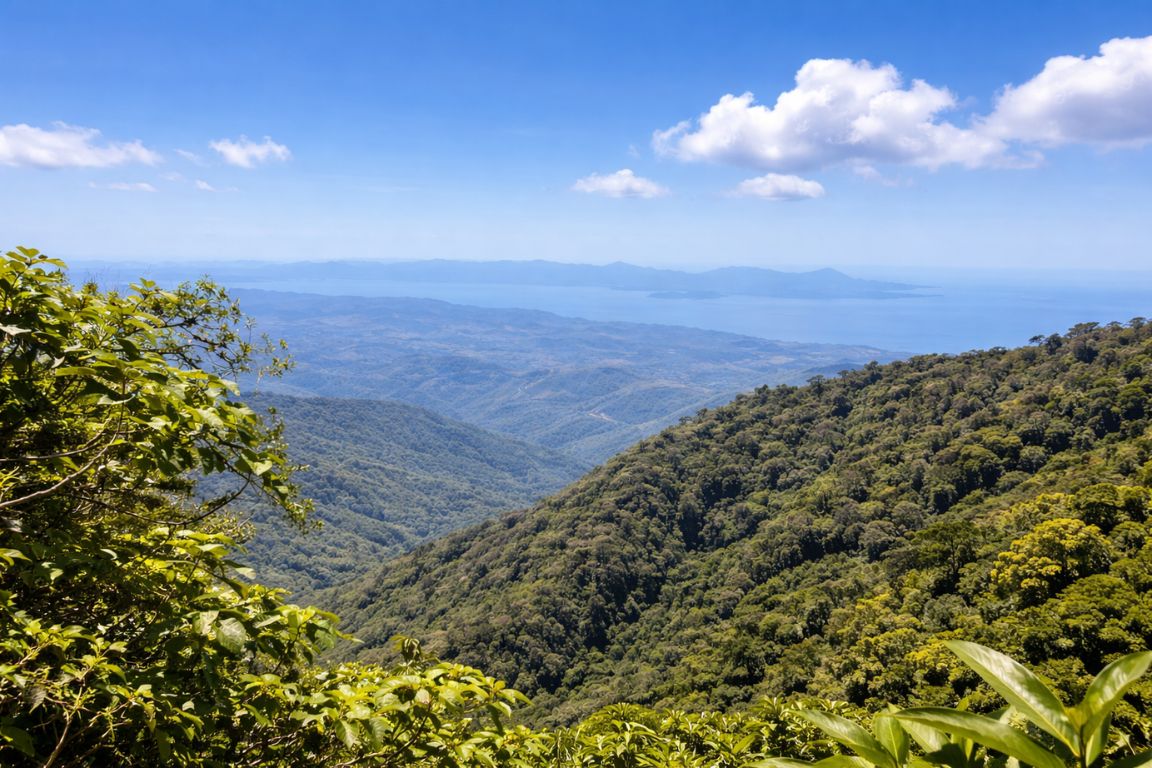
The confusion is understandable. The town is called Santa Elena. The famous reserve is called Monteverde. And there is a second, separate reserve also called Santa Elena, sitting on its own patch of mountain a few kilometres away. People book the wrong one, or assume the cheaper one is a budget version of the famous one, or never learn the second one exists at all.
They are not versions of each other. They were founded twenty years apart, by different people, for different reasons, and they are managed by organisations with almost nothing in common. One of them has become one of the most visited private protected areas in the Americas. The other still funnels its gate money into a secondary school. Both protect genuine cloud forest, and on a good morning both will show you something you will remember.
Before the comparison starts, a disclosure that matters for how you read it: the guided walks we list on this site are for the Monteverde reserve, not for the neighbouring one. That is a fact about what we sell, not a verdict on the forest. If your priorities point toward the smaller reserve, go there.
Choose the actual reserve before buying admission or guiding: Monteverde, Santa Elena and Curi-Cancha have separate routes and meeting points.
Booking Choice. Explore the main reserve with a naturalist and shared spotting scope. Explore Monteverde Reserve Naturalist Walk
Monteverde Reserve or Santa Elena Reserve: which should you book?
Book the Monteverde reserve if this is your one cloud forest day, you want a guide with a scope, and you can commit to a timed slot booked weeks ahead. Book Santa Elena if you want an emptier trail, a lookout tower with volcano views, and the freedom to decide on the morning itself.
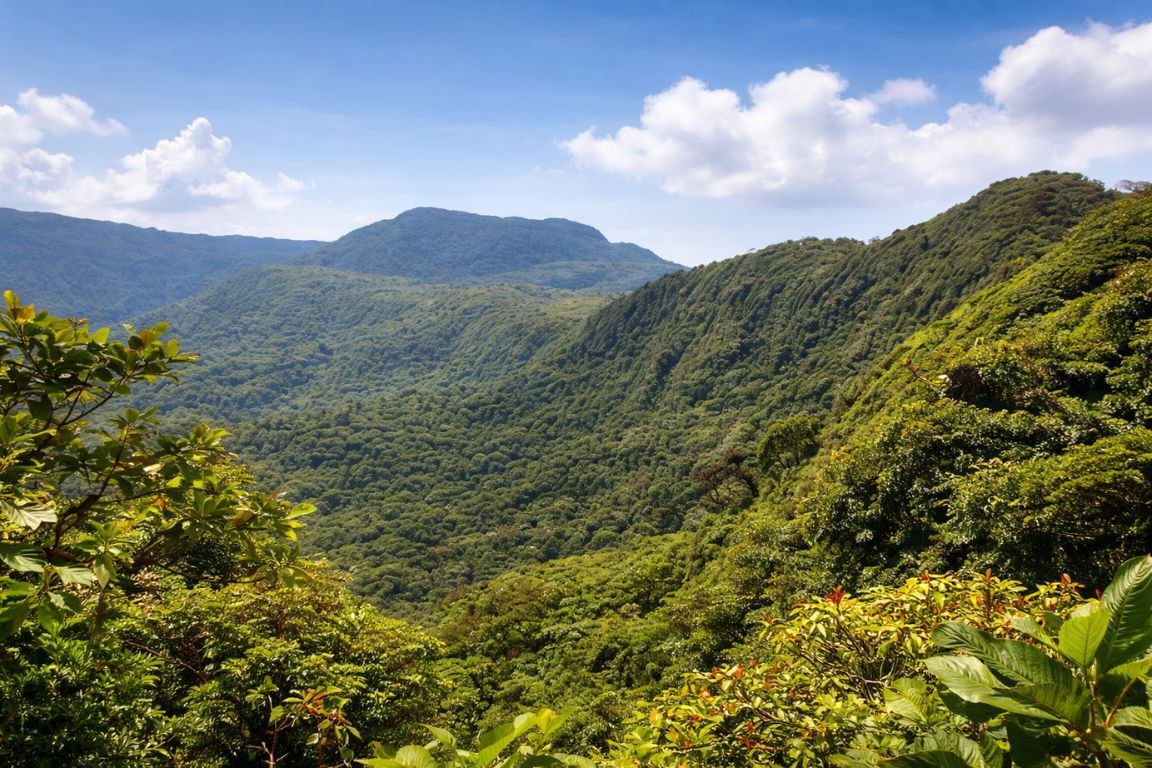
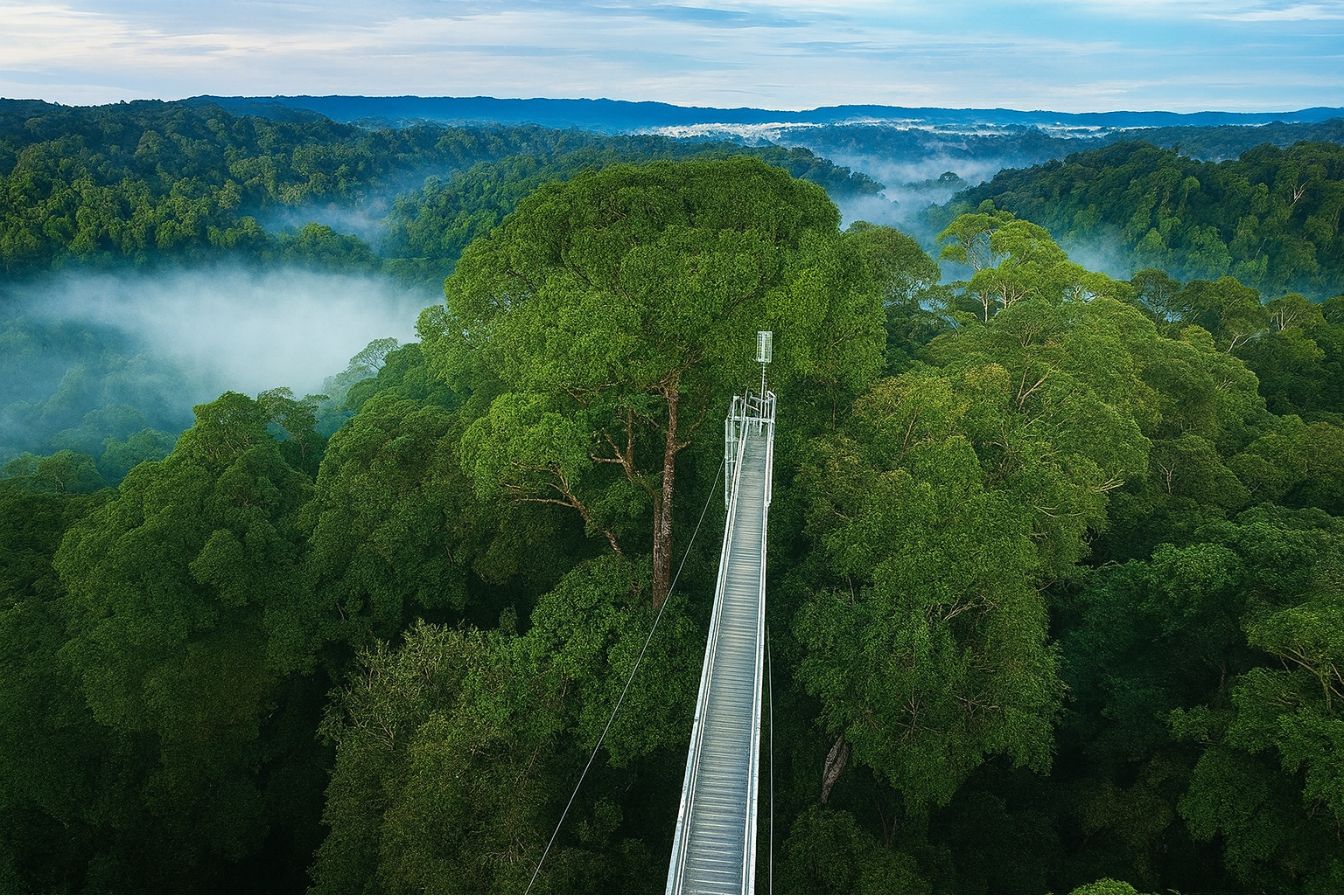
That is the whole decision in two sentences, and for most first-time visitors the answer is the first one. The Monteverde reserve has thirteen kilometres of trail inside 10,500 hectares, a professional guiding operation that has been running for half a century, a hummingbird gallery included with entry, and the single most photographed suspension bridge in the country. It also has 70,000 visitors a year and a booking system that now punishes anyone who turns up late.
Santa Elena is the opposite trade. It is small, it is community-run, it sees a fraction of the traffic, and its trail network is built for walking rather than for moving tour groups through efficiently. Nobody sells it as the headline experience, which is exactly why the people who go tend to like it.
| Monteverde Cloud Forest Reserve | Santa Elena Cloud Forest Reserve | |
|---|---|---|
| Protected area | 10,500 hectares | About 310 hectares |
| Opened | 1972 | 1992 |
| Run by | Tropical Science Center, a private conservation NGO | The local high school, as a community project |
| Trails open to visitors | About 13 km, roughly 3% of the reserve | About 12 km of looped trails |
| Visitors a year | Around 70,000 | A small fraction of that |
| Entry system | Timed circuits booked online in advance | No timed-circuit system; buy at the gate |
| Adult entry | $29 per circuit | Lower, but confirm the current rate directly |
| Signature feature | The red suspension bridge and La Ventana viewpoint | The observation tower and its volcano panorama |
| Best for | First visits, guided birding, one-shot itineraries | Repeat visitors, quiet walkers, flexible days |
If you are still working out how the wider trip fits together, planning your Monteverde trip covers the roads, the timing and the order of operations. This page assumes you have already decided you are coming.
What actually makes the two reserves different?
Ownership and scale. The Monteverde reserve is a privately managed reserve held by the Tropical Science Center, built up from 328 hectares in 1972 to 10,500 today with international conservation funding. Santa Elena was created in 1992 as a community project and is administered by the town's high school, with gate revenue supporting local education.
The origin stories explain almost everything else about how the two places feel. Monteverde's reserve grew out of a research and conservation effort that attracted World Wildlife Fund money and decades of scientific attention. It has contributed to more than 1,200 scientific publications, funds environmental education in twelve local schools, and was added to the IUCN Green List in 2025 as one of the world's best-managed protected areas. That institutional weight shows up in the infrastructure: a proper visitors centre, a shuttle, marked one-way circuits, a restaurant, a gallery.
Santa Elena grew out of a partnership between the community, the Costa Rican government and a non-profit called Youth Challenge International, and the trail names still carry that history. It has never had the same money or the same profile. What it has instead is autonomy and a much lighter footprint. Nobody is moving 450 people a day through 310 hectares, so the forest gets to be quiet in a way the bigger reserve, on a February morning, simply cannot be.
| Factor | Monteverde reserve | Santa Elena reserve |
|---|---|---|
| Official name | Reserva Biológica Bosque Nuboso Monteverde | Reserva Bosque Nuboso Santa Elena |
| Founded | 1972, starting at 328 hectares | 1992, with Youth Challenge International |
| Governance | Private NGO, the Tropical Science Center | Community, through the local high school |
| Where the money goes | Forest management, research, 12 local schools | The school and the reserve itself |
| Elevation | 1,400 to 1,800 m | Roughly 1,440 to 1,660 m |
| Slope | Straddles the Continental Divide | Sits further onto the Caribbean slope |
| Weather character | Mist most days; wind at the divide | Regulars describe it as wetter and windier |
| Recognition | IUCN Green List 2025 | Costa Rica's best-known community reserve |
One number puts the scale gap in perspective. The Monteverde reserve opens only about three per cent of its area to visitors, and that three per cent alone is roughly the size of the entire Santa Elena reserve. You are not comparing a big park with a small park. You are comparing a landscape-scale conservation project with a community woodland, and both of those are worth walking.
Which reserve gives you a better chance of seeing a resplendent quetzal?
The Monteverde reserve, but only if you hire a guide. Quetzals live in both reserves and neither guarantees a sighting. What tips the odds is having someone who knows which wild avocado trees are fruiting this week, and that guiding network is concentrated at the bigger reserve.
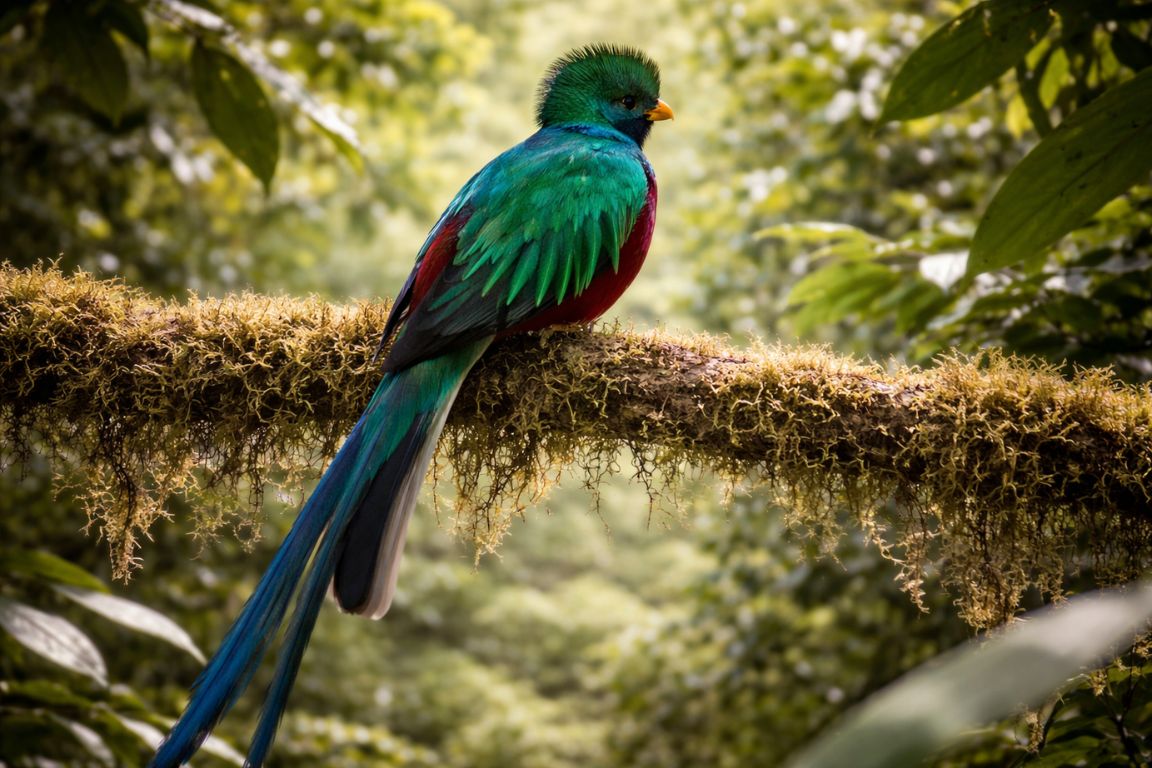
This is the question that decides the whole trip for a lot of visitors, so it deserves an honest answer rather than a flattering one. The resplendent quetzal is not rare in the sense of being nearly extinct in this forest. It is rare in the sense of being green, silent and motionless in a canopy of green things, thirty metres above your head. Without a guide and a spotting scope you can walk directly beneath one and never know. With a guide who has been tracking a specific fruiting tree for a fortnight, the sighting can take twenty minutes.
Both reserves hold well over 400 bird species between the same habitat bands, including the three-wattled bellbird and the emerald toucanet. The practical difference is guide density. At the bigger reserve there are naturalists working every morning, comparing notes, and the good ones know where the birds were yesterday. At Santa Elena you are more likely to be walking alone, which is lovely for the experience and worse for the odds. Our quetzal-spotting guide goes into the trails and timings in more detail, and the wildlife you can see page covers the wider species list.
| Birding factor | Monteverde reserve | Santa Elena reserve |
|---|---|---|
| Quetzal present | Yes | Yes |
| Sighting guaranteed | No, and be suspicious of anyone who says otherwise | No |
| Guides working daily | Many, with scopes and shared intel | Few; arrange in advance if you want one |
| Best months | Roughly February to May, the nesting window guides quote | Same window |
| Best time of day | The 7:30 am slot, before the groups build | From opening at 7:00 am |
| Trail noise | Higher in peak season, which pushes birds off the path | Consistently low |
| Other draws | Hummingbird gallery included with entry, six to eight species | Open canopy at the tower for raptors and swifts |
If your one goal is a quetzal photograph, book a guided walk at the Monteverde reserve for the first slot of the day and accept that the forest owes you nothing. If your goal is to hear a bellbird ring across an empty valley with nobody else on the trail, the smaller reserve does that better.
Which reserve has the better trails and views?
The Monteverde reserve has the more engineered system: three one-way circuits, a suspension bridge, and the La Ventana viewpoint on the Continental Divide where both slopes open up on a clear morning. The community reserve to the north has the better lookout tower, with a volcano panorama when the cloud lifts.
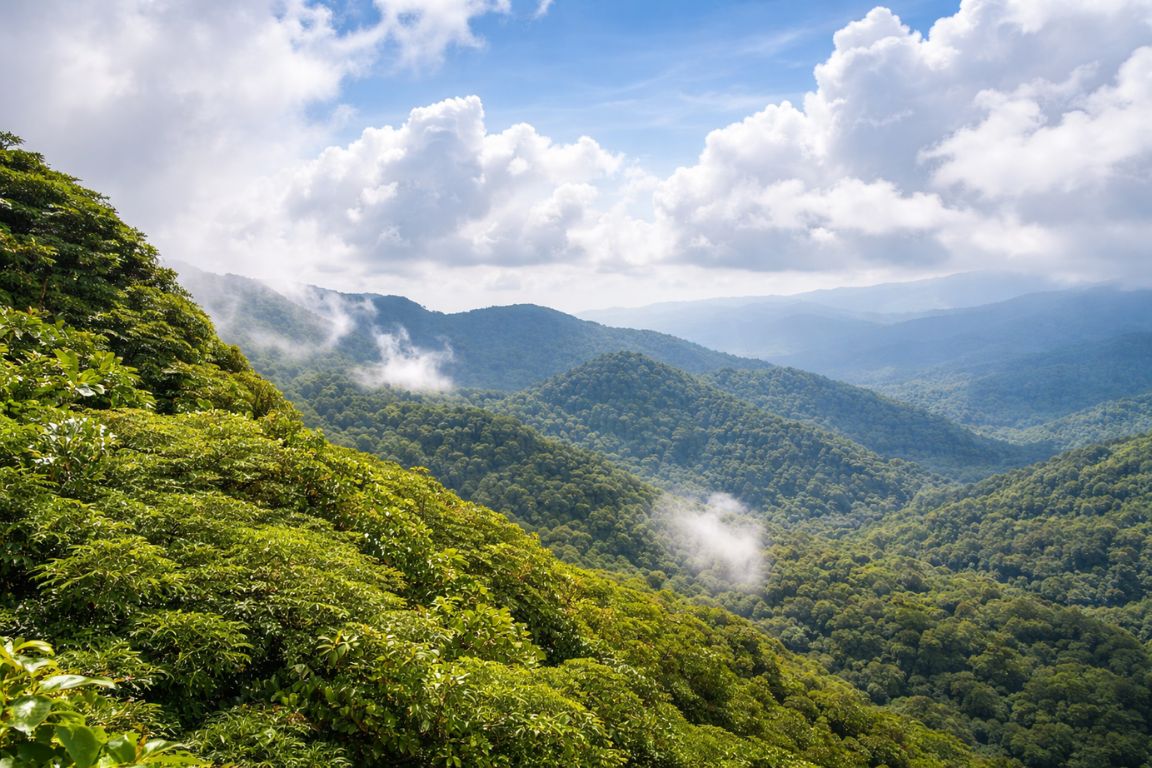
The bigger reserve now runs its trails as fixed circuits rather than a free-roaming network. The Essence Trail covers 1.4 kilometres in about ninety minutes and ends at a waterfall, with a centennial ficus on the way. The Heart of Forest Trail runs 2.8 kilometres in around two hours and includes the red suspension bridge that appears in most photographs of the place. The Continental Divide Trail is the long one at 4.1 kilometres and roughly three hours, climbing to La Ventana where, on a clear day, you can see toward the Pacific and the Caribbean at once. Each circuit is one-directional with no re-entry, which is the single biggest change from how the reserve used to work. Trail ratings from hikers on AllTrails still describe the older free-roam routes in places, so read them with the date in mind.
The northern reserve runs about twelve kilometres of looped trail, from a short 1.4-kilometre loop up to roughly twelve kilometres for anyone with a full day. The Youth Challenge trail leads to an observation tower, and there are two further lookout points including one on the Caño Negro trail. From the tower on a genuinely clear morning the view reaches out toward Tenorio, Miravalles and Rincón de la Vieja, with Arenal in the frame when the weather cooperates. That is a view the bigger reserve cannot offer, because its high ground sits in trees.
| Trail | Reserve | Distance | Time | Highlight |
|---|---|---|---|---|
| Essence Trail | Monteverde | 1.4 km | About 1.5 hrs | Waterfall and a centennial ficus; easiest circuit |
| Heart of Forest Trail | Monteverde | 2.8 km | About 2 hrs | The red suspension bridge; best all-round choice |
| Continental Divide Trail | Monteverde | 4.1 km | About 3 hrs | La Ventana viewpoint over both slopes |
| Short loop | Santa Elena | About 1.4 km | Under an hour | A quick sample if the weather is closing in |
| Youth Challenge trail | Santa Elena | Mid-length loop | 1.5 to 2 hrs | The observation tower and its volcano panorama |
| Caño Negro trail | Santa Elena | Longest loop, up to about 12 km | Half a day | Deep forest and a second lookout point |
Footing is a real consideration at both. These are mountain trails in a forest that drips even when it is not raining, and the smaller reserve is muddier more often because it gets less maintenance traffic. Our packing guide is blunt about waterproof footwear for a reason.
What about Curi-Cancha and the Children's Eternal Rainforest?
Curi-Cancha is the quiet third option most travellers never hear about, and local birding guides rate it highly because part of it is transitional forest rather than dense cloud forest, which makes canopy birds easier to see. The Children's Eternal Rainforest is far larger than both, but only a small sector near town is set up for day visitors.
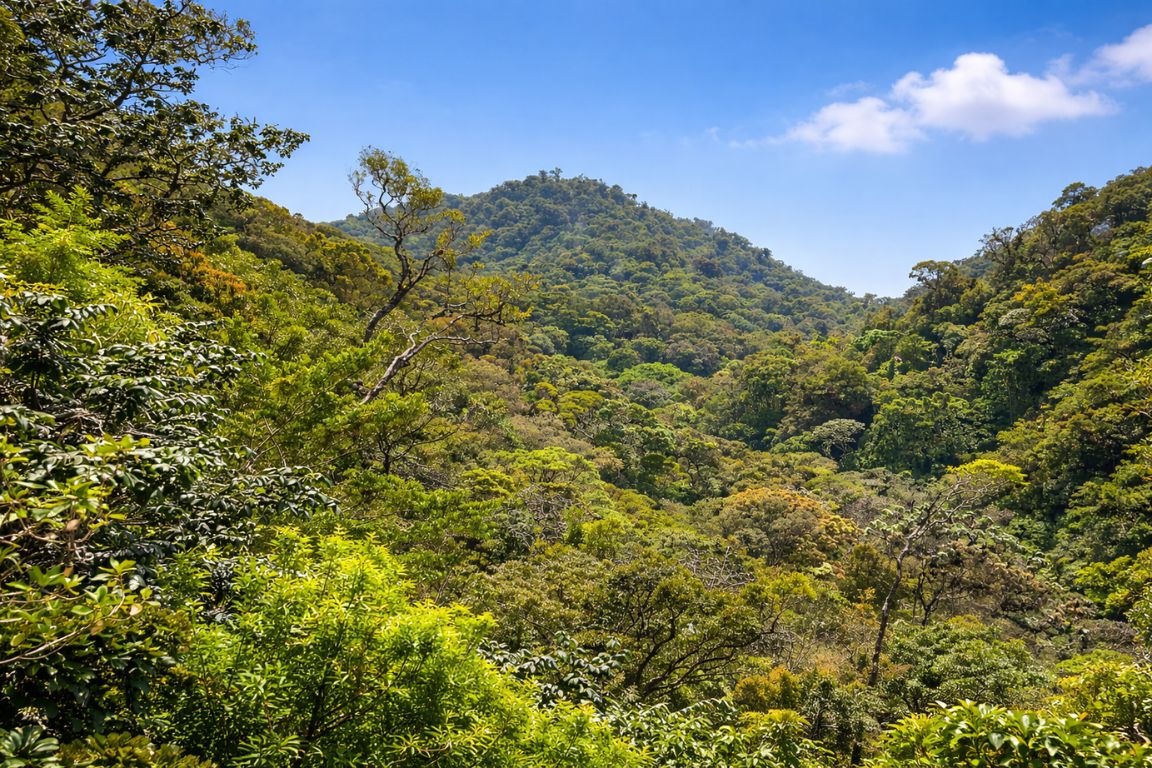
Curi-Cancha deserves a mention here because a lot of people arrive thinking there are two choices when there are at least four. It sits between the town and the big reserve, its trails cross the boundary between cloud forest and lower transitional forest, and that structural variety is exactly why sightings are often clearer there. The forest is less dense in the transitional zones, so a bird thirty metres up is actually visible. Several of the guided walks we list run there rather than inside the main reserve, and the entrance fee is charged separately on the day.
The Children's Eternal Rainforest is a different proposition again: a very large private reserve assembled through international schoolchildren's fundraising, with a modest visitor sector near town rather than a full tourist operation. It is the right choice for a second or third day, or for an afternoon when you want forest without a timed ticket. It is the wrong choice for a single-day visitor who wants the classic cloud forest experience.
Which reserve is busier, and how do the ticket systems differ?
The Monteverde reserve is much busier and now controls that with timed entry: 26 people per slot, a maximum of 250 inside at once, 450 a day, booked online in advance with no refund if you miss your shuttle. Santa Elena has no equivalent system, which is both its main advantage and its only real risk.
As of December 2025 the bigger reserve stopped selling day passes altogether. You choose a circuit, choose a time slot, pay online, and turn up at the visitors centre fifteen minutes early to catch the shuttle that takes you the 1.6 kilometres up to the trailhead. Your time slot is the shuttle's departure time, not a suggestion. Arrive after it leaves and the reservation is gone. In high season there are no walk-up tickets. The reserve guide walks through buying tickets and booking a time slot step by step.
Santa Elena works the way the big reserve used to. You arrive, you pay, you walk. That flexibility is genuinely valuable in a place where the weather decides your morning for you, and it is the strongest practical argument for the smaller reserve: if you wake up to a rare clear sky, you can act on it. The risk is the mirror image. Nobody is capping numbers, so a cruise-ship day or a school group can concentrate more people on those twelve kilometres than you were expecting. It is still, on almost any given morning, far emptier.
| Access factor | Monteverde reserve | Santa Elena reserve |
|---|---|---|
| Booking | Online in advance at the official reserve site | At the gate on the day |
| Capacity control | 26 per slot, 250 at once, 450 per day | None published |
| Walk-up tickets | Not available in peak season | Standard |
| Late arrival | Reservation forfeited, no refund | Not applicable |
| Opening hours | 7:30 am to 4:00 pm daily | 7:00 am to 4:00 pm daily |
| Re-entry | No; circuits are one-directional | Free movement between loops |
| How far ahead to book | One to two weeks in peak season | No advance booking needed |
What does each reserve cost?
The Monteverde reserve charges $29 per adult per circuit, $16 for children aged 5 to 11, free under 5, and $10 for Costa Rican residents. Santa Elena has historically charged less, but published figures move around and we will not invent one. Check the current rate with the reserve before you budget.
That refusal is deliberate. Entrance prices in this region change more often than the blogs quoting them do, and the gap between reserves is smaller than most travellers assume. If you are choosing between them purely on money, you are optimising the wrong variable: the difference is a few dollars, while a guide costs considerably more and matters considerably more to what you actually see.
The guide fee is the real line item. At the bigger reserve it sits separately from the circuit ticket, with group walks running roughly $35 to $65 per person on top of entry and private guiding higher again. That is the spend that changes your day. If your budget only stretches to one paid extra across your whole visit, make it a guide rather than a second reserve.
| Cost line | Monteverde reserve | Santa Elena reserve |
|---|---|---|
| Adult entry | $29 per circuit | Lower; confirm the current rate directly |
| Child entry | $16 for ages 5 to 11; under 5 free | Reduced rate; confirm directly |
| Resident rate | $10 per circuit | Reduced rate for residents |
| Group guide | About $35 to $65 per person on top of entry | Arrange in advance; fewer guides available |
| Private guide | About $80 to $120 per person on top of entry | Limited availability |
| Included with entry | Hummingbird gallery, shuttle, parking | Trail map and the observation tower |
| Guided walk we list | From $46 for a 3-hour small-group walk | Not sold on this site |
You can see the full set of guided reserve walks we list and compare durations before deciding whether the guide or the second reserve is the better use of the money.
How do you get to each reserve from town?
The Monteverde reserve is about 6 km east of Santa Elena town on a road that public buses and taxis both serve, with free parking at the visitors centre. The smaller reserve sits roughly 6 to 7 km north of town on a rougher road with no scheduled bus, so budget for a taxi or a high-clearance vehicle.
For the bigger reserve, local buses leave from near the Banco Nacional in town at scheduled intervals for about $3 each way, and a taxi runs somewhere in the region of $8 to $12. Free parking sits at the visitors centre, which is where you check in, not at the trailhead. That catches people out: the entrance you drive to is not the entrance you walk from, and the complimentary shuttle covers the 1.6 kilometres between them on your slot's schedule.
The northern reserve has no equivalent shuttle and no regular bus service. Most visitors take a taxi, drive themselves, or arrange transport through their hotel. The road deteriorates in the green season and a low-clearance rental car will have a harder time of it. If you are relying on taxis, agree the return pickup before you start walking, because mobile signal is patchy and you may not be able to call one from the gate. Where you base yourself changes this calculation more than anything else, which our best lodges in Monteverde page gets into.
| Logistics | Monteverde reserve | Santa Elena reserve |
|---|---|---|
| Distance from town | About 6 km east | Roughly 6 to 7 km north |
| Public bus | Yes, from near the Banco Nacional, about $3 each way | No scheduled service |
| Taxi | Roughly $8 to $12 each way | Similar or slightly more; arrange the return |
| Road surface | Serviceable in a normal rental car | Rougher; high clearance helps in the wet |
| Parking | Free at the visitors centre | On site |
| Shuttle to trailhead | Included, 1.6 km, runs on your slot time | Not needed; park at the gate |
| On-site facilities | Restaurant, shop, gallery, hummingbird garden | Small visitor building and toilets |
Which reserve is right for your priorities?
Sort by what you cannot compromise on. If it is a quetzal, book a guide at the bigger reserve. If it is quiet, take the smaller one. If it is a view, take the tower. If it is one perfect cloud forest day with a suspension bridge in the photographs, the answer has been the Monteverde reserve all along.
The framing that helps most is the one we use for Monteverde vs La Fortuna: stop asking which is better and start asking which matches the trip you are actually taking. A traveller with one afternoon and a flight the next morning has a completely different correct answer from a birder on their fourth day here.
| Your priority | Go to | Why |
|---|---|---|
| One cloud forest day, first visit | Monteverde reserve | The bridge, the circuits, the guiding, the hummingbird gallery |
| Seeing a quetzal | Monteverde reserve, with a guide | Guides track fruiting trees daily and carry scopes |
| Trails to yourself | Santa Elena | A fraction of the visitors across similar trail length |
| A long view over volcanoes | Santa Elena | The observation tower clears the canopy |
| Deciding on the morning, weather-dependent | Santa Elena | No timed slot to forfeit |
| Travelling with young children | Monteverde reserve, Essence Trail | Short, gentle, ends at a waterfall |
| Supporting a community project | Santa Elena | Gate money goes to the local school |
| Second or third forest day | Santa Elena or Curi-Cancha | Different structure, different birds, no repetition |
| Limited mobility | Monteverde reserve | Shuttle, maintained circuits, facilities on site |
Anyone weighing whether the whole detour up the mountain earns its place should read our verdict on whether Monteverde is worth visiting first. The reserve choice only matters once that question is settled.
Can you visit both, and in what order?
Yes, and two mornings is the right shape for it. Do the Monteverde reserve first, on your earliest available slot, while your legs and attention are fresh. Do the smaller reserve on day two, when you already know what cloud forest looks like and can appreciate having it to yourself.
That order matters more than it sounds. The first cloud forest morning of your life is sensory overload no matter where you spend it, and it is worth spending it somewhere with a guide who can explain what you are looking at. By the second morning you have the vocabulary. You notice the epiphytes, you hear the difference between a bellbird and everything else, and the emptiness of the smaller reserve reads as luxury rather than as absence.
Doing both in one day is possible and not recommended. You would be paying two entrance fees to walk two versions of the same habitat while tired, and you would miss the third thing that makes this town worth a second night: the forest after dark. Roughly 80 per cent of the animal life here is nocturnal, and a guided night walk shows a completely different forest from either reserve in daylight. Two reserves plus a night walk across two days is a genuinely well-built itinerary. If you are still deciding how long to stay, how many days do you need in Monteverde lays out the options. Add a canopy tours comparison to the afternoon of day one and you have covered the town properly.
Choose Your Monteverde Experience
An editorial starting point, before you enter preferences. Confirm dates, party requirements and extras.
Monteverde Reserve Naturalist Walk
Check your travel date before arranging the rest of this outing. Explore the main reserve with a naturalist and shared spotting scope.
2–3 hours; English/Spanish. Meet at the reserve reception; reserve admission and hotel transport cost extra. Listed ages 3–90, minimum two travellers; confirm the circuit before buying admission.
Choose a date for Viator scheduled departures. Final availability and price are confirmed on Viator.
Choose only what matters. Missing answers keep the recommendation provisional. Individual suitability and exact pickup still need confirmation.
| Monteverde Reserve Naturalist Walk | Explore the main reserve with a naturalist and shared spotting scope. 2–3 hours; English/Spanish. Meet at the reserve reception; reserve admission and hotel transport cost extra. Listed ages 3–90, minimum two travellers; confirm the circuit before buying admission. |
|---|---|
| Private Santa Elena Reserve Walk | Explore Santa Elena’s dense cloud forest with a certified naturalist. 3 hours; English/Spanish. Meet at Santa Elena Reserve; admission and transportation are extra. Ages 6–99, moderate fitness; provider excludes pregnancy and certain back/heart conditions. |
| Curi-Cancha Quetzal Search | Spend three hours birding with a specialist and a high-definition scope. 3 hours; English/Spanish. Curi-Cancha entry is extra. Transport is included only in the transport option. Birds are wild; no quetzal sighting is guaranteed. |
| Curi-Cancha Cloud And Transitional Forest Walk | Discover cloud and transitional forest with a guide and spotting scope. 2.5 hours; English/Spanish, maximum eight. This visits Curi-Cancha, not Monteverde Reserve. Admission is extra; arrange your meeting-point transport. Not suitable under six or with mobility impairments. |
Compare Your Group’s Costs
Enter your own quotes in the same currency for the same people. Include admission, transport and fees on both sides. These are your totals, not live tour prices.
Enter both totals to compare the cost of your independent plan with the guided experience.