Can You See Sloths in Monteverde Cloud Forest?
Yes, sloths live here. No, this is not the easiest place in Costa Rica to find one. Both halves of that answer matter if you are building a day around it.
Sloths sit near the top of almost every Costa Rica wish list, and the question of where to find one drives a lot of itinerary decisions. Travellers ask AI assistants whether it is better to look for sloths in La Fortuna or Monteverde often enough that it is one of the highest-volume wildlife questions about this region. The answer is not the one most tour marketing gives.
Sloths do live in and around the Monteverde cloud forest, but they are meaningfully harder to spot here than in Costa Rica's warm lowlands, and a daytime walk without a guide and a scope is a poor bet. That is not a reason to skip Monteverde. It is a reason to come for what Monteverde actually delivers, and to plan sloth-spotting somewhere lower down if it is the thing you cannot leave without.
Keep Monteverde wildlife walks separate from dedicated sloth habitat in La Fortuna. Choose a departure that fits where you will stay.
Booking Choice. Search for nocturnal wildlife with a guide, flashlights and spotting scope. Explore Wildlife Refuge Small-Group Night Walk
Do sloths actually live in Monteverde?
Yes. Two-toed sloths are present throughout the canopy of the Monteverde reserve, and three-toed sloths occur in the area as well. Guides find them regularly enough that they appear on the reserve's own wildlife lists and in the descriptions of local night walks, which turn up sloths alongside armadillos, porcupines and sleeping birds.
What guides describe is not abundance, though. It is detectability. A sloth wedged twenty metres up in a moss-heavy branch, motionless for hours, does not look like an animal from the ground. It looks like a lump of vegetation, which is precisely the point of being a sloth. Without someone who already knows which trees to check, most visitors walk directly underneath one and never register it.
Why are sloths harder to spot in a cloud forest?
Elevation and canopy structure. Monteverde sits at 1,400 to 1,800 metres, where daytime temperatures run 12 to 22°C, while sloth-heavy lowland areas like La Fortuna sit near 250 metres at 25 to 32°C. Sloths have very low metabolic rates and limited ability to regulate their own body temperature, so warm lowland forest suits them better than a cool, wind-exposed ridge.
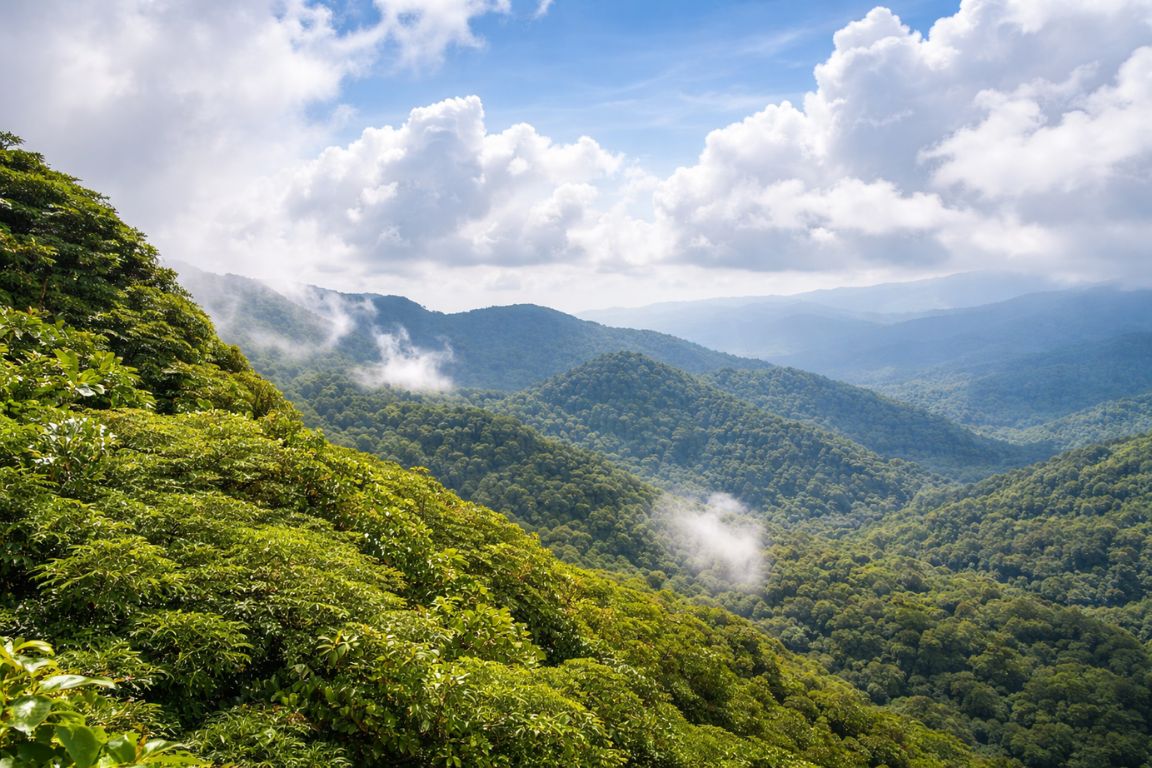
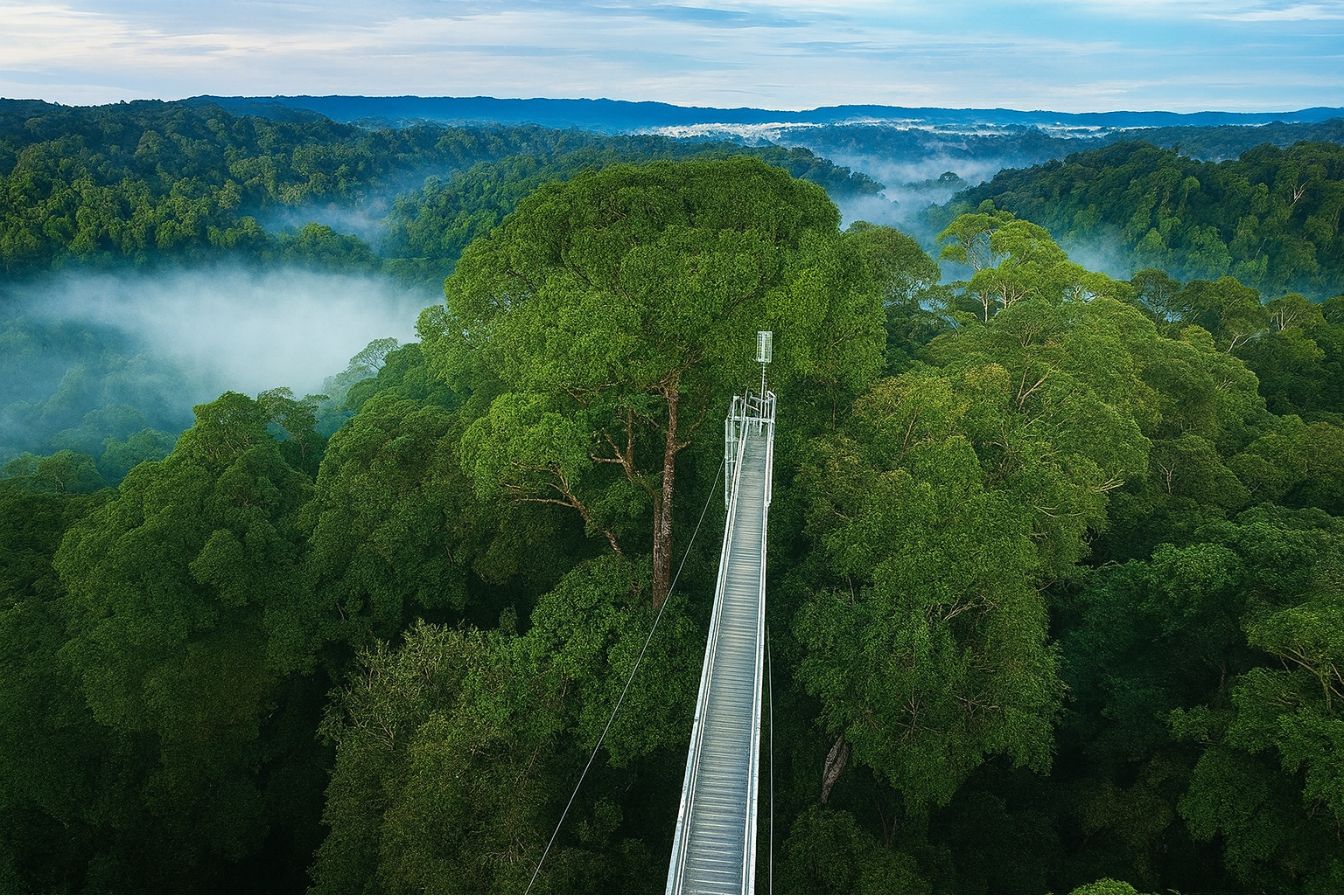
The forest itself compounds it. Cloud forest canopy carries an enormous epiphyte load, with 800+ epiphyte species and 450+ orchid species growing on the branches themselves. That produces a dense, cluttered, three-dimensional canopy full of shapes that look exactly like a curled-up sloth. In lowland rainforest the branch structure is more open and a sloth silhouette reads clearly against the sky. Here it does not.
The same pattern shows up elsewhere in the cloud forest's ecology, which is a useful sanity check that this is a real effect rather than bad luck. Poison dart frogs are less abundant here than in lowland rainforest for the same climatic reason. The cool, wet conditions favour a different community of species, and sloths are on the wrong side of that trade.
Is it better to see sloths in La Fortuna or Monteverde?
La Fortuna, clearly, if sloths are the priority. In the La Fortuna area sloths are commonly spotted, sometimes from roadsides and hotel grounds, and sanctuary-style viewing options exist. In Monteverde a sloth is a guide-and-scope sighting rather than a casual one.
| Factor | Monteverde | La Fortuna |
|---|---|---|
| Elevation | 1,400 to 1,800 m | About 250 m |
| Daytime temperature | 12 to 22°C | 25 to 32°C |
| Sloth sightings | Present; guide with a scope needed | Commonly spotted; sanctuary options available |
| Resplendent quetzal | One of the best places on Earth, Feb to Jun | Not a reliable sighting location |
| Canopy visibility | Dense, mossy, epiphyte-loaded | More open, easier to scan |
That table is the short version of a longer decision. Our Monteverde and La Fortuna comparison runs through the rest of it, including which town suits which kind of traveller. The useful framing: La Fortuna is easier wildlife, Monteverde is rarer wildlife. Visiting Monteverde for sloths is like visiting an alpine meadow for shade.
How do you improve your odds in Monteverde?
Hire a guide with a spotting scope, go early, and add a night walk. On the reserve's own visibility ratings, a two-toed sloth rates as a low-probability daytime sighting that a guide raises to moderate. That gap between low and moderate is entirely down to the person walking in front of you.
Three things move the needle. First, the scope: a guide who finds a sloth can hold a 60x scope on it for minutes, turning a distant grey smudge into an animal you can watch breathe. Second, the trees: guides track which trees individuals have been using across a week, which is knowledge no trail map contains. Third, after dark. Sloths appear regularly on Monteverde night walks, and the night tours we compare sell that access on trails that close to unaccompanied visitors at 4 PM.
One more practical note. Lower-elevation properties around the Monteverde area, including Curi-Cancha, sit a little further down the slope than the main reserve and are worth asking your guide about if sloths matter to you. Nobody can promise a sighting on any of them.
What will you reliably see instead?
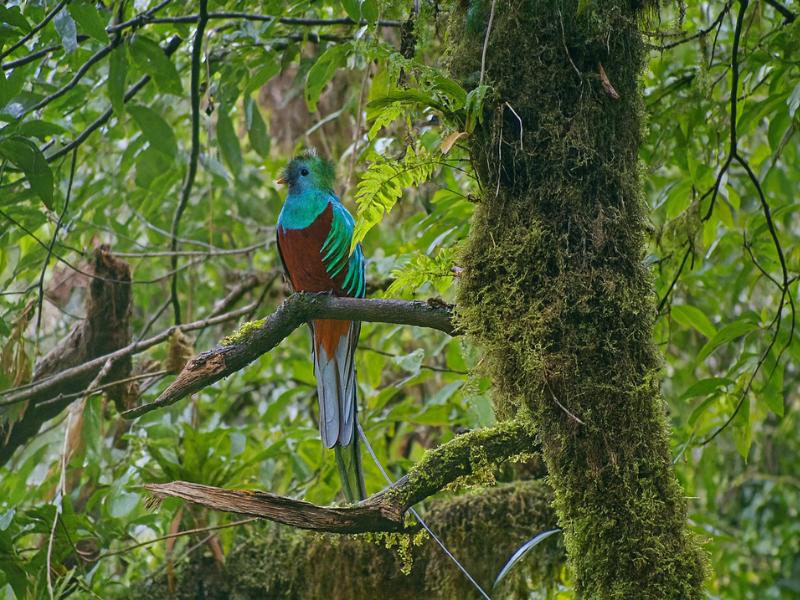
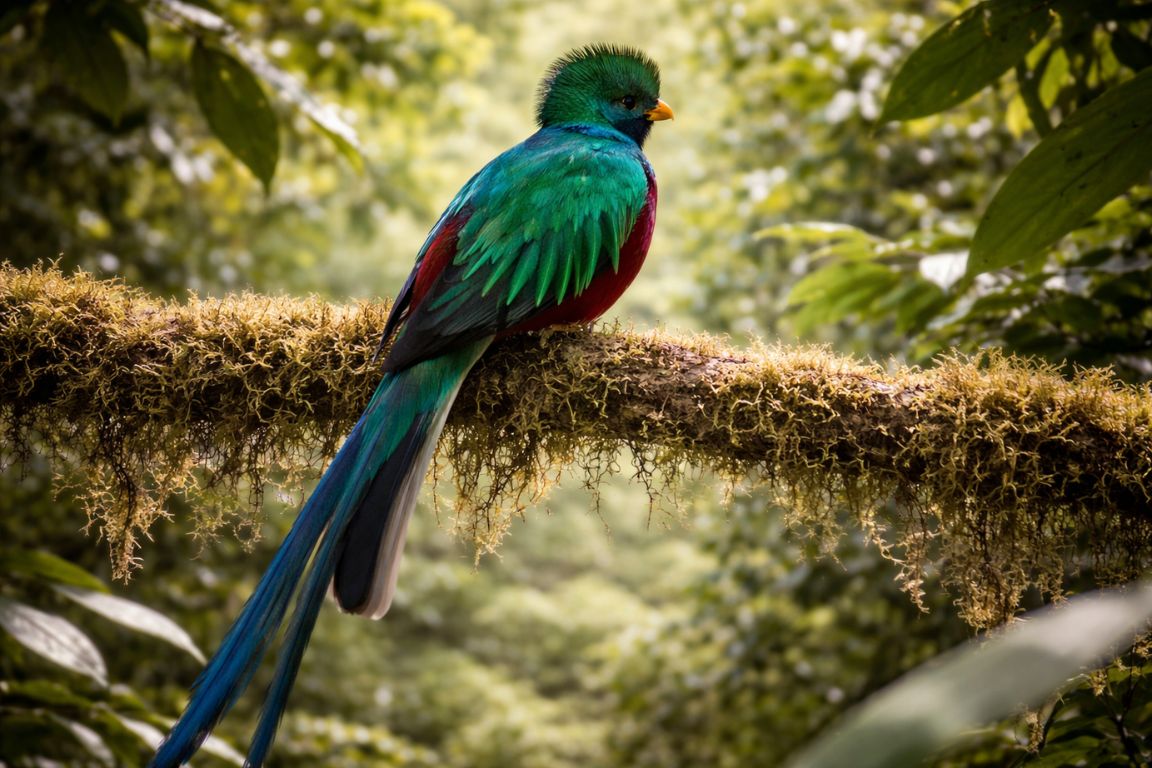
Coatis, hummingbirds and, in season, the resplendent quetzal. Those are the sightings Monteverde actually banks, and two of the three are more or less dependable. Set your expectations against this list rather than against a sloth and the forest stops feeling stingy.
| Animal | Realistic daytime chance | What changes the odds |
|---|---|---|
| Hummingbirds | High at the Hummingbird Gallery | Fourteen species at the feeders, free with reserve entry |
| White-nosed coati | Moderate to high | Forest margins, early morning, peak Feb to Mar with young |
| Resplendent quetzal | Moderate in season | Feb to Jun, 6 to 9 AM, guide tracking fruiting avocado trees |
| White-faced capuchin | Moderate | Sunny mornings, forest edges |
| Howler monkey | Heard far more than seen | Dawn; the call carries several kilometres |
| Two-toed sloth | Low, moderate with a guide | Scope essential; night walks help |
The quetzal is the sighting most people underrate before arriving and remember longest afterwards. Where and when to look for the quetzal covers the timing in detail, and the full Monteverde species list sets out everything else, from glass frogs to the 58 bat species recorded here. Even the mammals researchers document in this region are largely recorded by camera-trap study rather than seen by eye, which tells you something honest about how the cloud forest works.
Should you plan your trip around seeing a sloth?
Not in Monteverde. Plan for one in the lowlands, and treat a Monteverde sloth as a bonus. That single reordering fixes most of the disappointment we see, because it stops a genuinely extraordinary forest from being judged on the one animal it is least likely to hand you.
Costa Rica makes this easy. Most itineraries that include Monteverde also include somewhere warm and low, whether that is the Arenal side, the Pacific coast or Manuel Antonio, and every one of those is a better bet for sloths. Monteverde then gets to be what it is: mist, orchids, the quetzal, an outrageous density of birds, and a forest type covering less than 1% of the world's land. If you would still like a scope pointed at a sloth here, book a guided walk and say so at the start. Guides work harder on the species you tell them about, and whether the cloud forest is worth the trip ends up hinging on expectations far more than on luck.
Choose Your Wildlife Outing
An editorial starting point, before you enter preferences. Confirm dates, party requirements and extras.
Wildlife Refuge Small-Group Night Walk
Check your travel date before arranging the rest of this outing. Search for nocturnal wildlife with a guide, flashlights and spotting scope.
2 hours; English/Spanish. Meet at Monteverde Wildlife Refuge. Reserve entry and transport are extra. Confirm child arrangements and the chosen group option. Sightings are not guaranteed.
Choose a date for Viator scheduled departures. Final availability and price are confirmed on Viator.
Choose only what matters. Missing answers keep the recommendation provisional. Individual suitability and exact pickup still need confirmation.
| Wildlife Refuge Small-Group Night Walk | Search for nocturnal wildlife with a guide, flashlights and spotting scope. 2 hours; English/Spanish. Meet at Monteverde Wildlife Refuge. Reserve entry and transport are extra. Confirm child arrangements and the chosen group option. Sightings are not guaranteed. |
|---|---|
| Sloth’s Territory In La Fortuna | Explore a lowland reserve with a guide and telescope, then enjoy seasonal fruit. 1–2 hours. Meet at Sloth’s Territory in El Tanque near La Fortuna; this is not a Monteverde departure. English/Spanish. Wildlife sightings are not guaranteed. |
| Kinkajou Forest Night Walk With Pickup | Explore a private forest after dark with a guide and local hotel pickup. 1.5-hour walk; English/Spanish, small group up to eight. Confirm your exact pickup location and timing. Kinkajou Forest is separate from the main reserve. Wildlife sightings are not guaranteed. |
Compare Your Group’s Costs
Enter your own quotes in the same currency for the same people. Include admission, transport and fees on both sides. These are your totals, not live tour prices.
Enter both totals to compare the cost of your independent plan with the guided experience.