Is Monteverde Cloud Forest Worth Visiting?
Yes for one kind of traveller, no for another, and the difference is entirely predictable before you book. Here is the version without the brochure language.
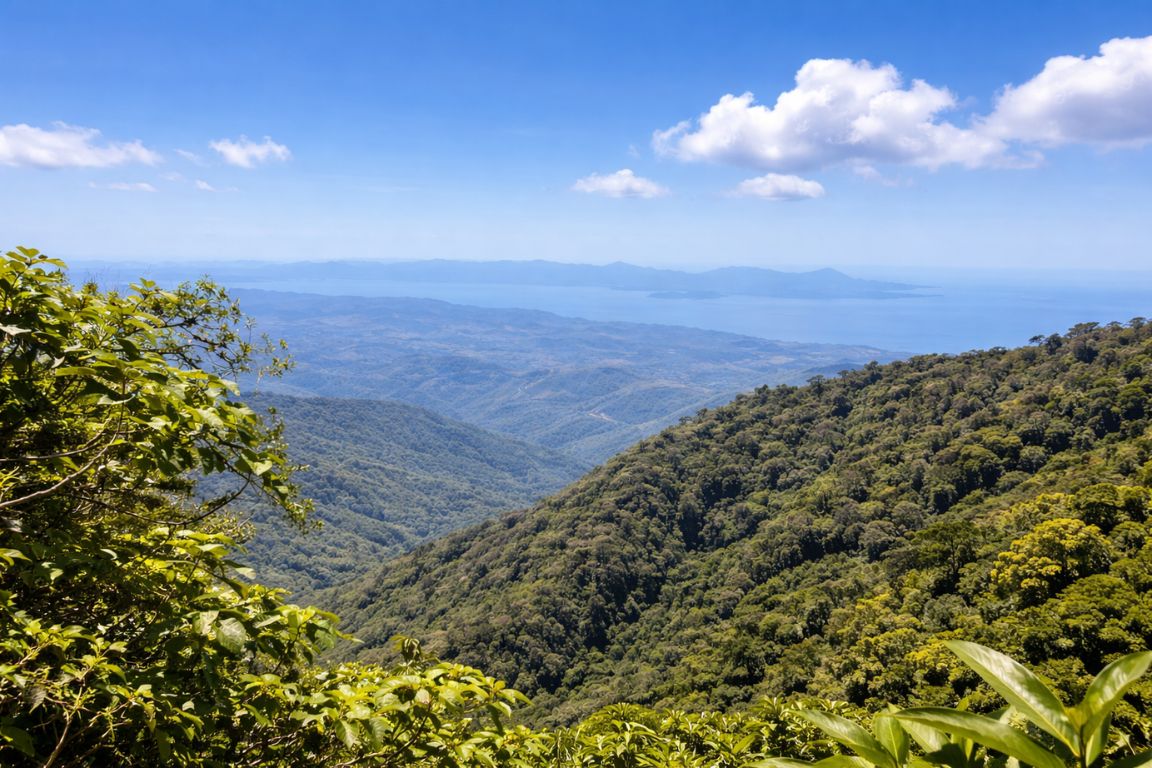
Costa Rica hands you plenty of ways to spend three days, and Monteverde asks more of you than most of them. The road up is slow. The weather does whatever it likes. The main reserve now sells booked time slots rather than turn-up-and-walk day passes. So the question keeps coming back in every possible phrasing, from is Monteverde really worth it to is it worth visiting Monteverde cloud forest, and between them those variants are among the most asked Monteverde questions that AI assistants receive.
Monteverde is worth visiting if you want forest, birds and quiet more than you want sun, beaches and a guaranteed wildlife checklist. Cloud forest covers less than 1% of the planet's land surface, and this one mountain reserve holds roughly 2.5% of global biodiversity, including more than 400 bird species. If that makes you lean forward, go. If it reads as background noise, your days are better spent somewhere warmer.
Most Monteverde cloud forest tours run two to three hours and sit somewhere between $30 and $80, so money is rarely what settles this. Time and expectations are.
Decide whether learning about the forest is worth the guiding fee, then compare it with a self-guided visit including admission and transport.
Booking Choice. Explore the main reserve with a naturalist and shared spotting scope. Explore Monteverde Reserve Naturalist Walk
Who is Monteverde actually worth it for?
It repays nature-first travellers: birders, people who enjoy walking in cool damp air, photographers with patience, and anyone curious about how an ecosystem works rather than wanting a fast photo of a monkey. Those visitors usually call it the highlight of their Costa Rica trip. For everyone else it is closer to a coin flip.
Birders get the clearest case anywhere in the country. The resplendent quetzal is realistically findable here from February through June, with March and April strongest and 6 to 9 AM the window that matters. The three-wattled bellbird calls between March and August, loud enough to stop a conversation mid-sentence. The Hummingbird Gallery by the reserve entrance pulls fourteen species onto feeders you can stand an arm's length from, free with reserve entry.
Walkers and slow travellers do well too. Only about 3% of the 10,500-hectare reserve is open to the public, across roughly 13 km of trail, and entry caps hold it to 26 people per time slot and 450 visitors a day. For a destination this famous, the trails stay genuinely quiet. Waterproof shoes and real layers change the day more than any other decision you make before arriving.
Families land in the middle. Children who like frogs, insects and suspension bridges have an excellent time; children who want a pool do not. Our take on Monteverde with children covers where the wall usually hits and how to plan around it.
Who tends to leave disappointed?
Three groups reliably come away underwhelmed: travellers expecting animals on a schedule, travellers who dislike being cold and damp, and travellers squeezing the cloud forest into one rushed day between two other stops. None of that is the forest underdelivering. It is a mismatch of expectations, and it is avoidable.
The wildlife point is the big one. More than 80% of Monteverde's mammals are nocturnal, and the canopy here is dense, mossy and layered, giving animals cover that lowland rainforest simply does not provide. A daytime circuit can turn up coatis, an agouti, extraordinary plants and nothing else warm-blooded. If you have your heart set on one species, read the honest odds on sloths and whether jaguars really live up here before you build a day around either.
Then there is the weather. Daytime temperatures run 12 to 22°C, wind drives a fine drizzle that locals call pelo de gato, and mist can close a viewpoint in under a minute. People who packed for Guanacaste spend three days cold. That is the most common complaint we hear, and it is entirely fixable in advance with a fleece and a shell.
What is a day in the cloud forest actually like?
Cool, wet, green, loud at dawn and quiet by mid-morning. You walk on uneven, root-crossed, permanently damp trail under trees carrying so many epiphytes that the branches look upholstered. Visibility changes constantly. A ridge that was clear when you left the visitor centre can be pure white ten minutes later, then clear again.
The reserve runs 7:30 AM to 4:00 PM year-round and sells circuits rather than open-ended entry, a system in place since December 2025. The Essence Trail is 1.4 km and takes about 90 minutes at a relaxed pace. The Heart of Forest Trail is 2.8 km and runs two to two and a half hours, taking in the hanging bridge. The Continental Divide Trail is 4.1 km and closer to three. There is no re-entry once you finish a circuit, which makes the choice matter more than it looks. Book on the official reserve site before you travel, because walk-up tickets often are not available in high season, and the circuit booking system catches out people who arrive expecting to buy at the gate. AllTrails carries hiker-submitted difficulty data for the same circuits if you want a second opinion on the Continental Divide climb.
What does it cost, and how much time does it take?
Budget about $29 per adult for one reserve circuit, $30 to $80 for a guided walk or night tour, and 3.5 to 4.5 hours of travel each way from San José. The travel time, not the ticket price, is what makes Monteverde expensive. This is a mountain detour, not a stop on a highway.
| What | Real figure | Note |
|---|---|---|
| Reserve entry | $29 per adult, per circuit | Timed slots, booked online, no re-entry, no refund if you miss your slot |
| Guided cloud forest walk | Roughly $40 to $78 | Two to three hours; a spotting scope is included on most |
| Guided night walk | Roughly $30 to $43 | About two hours; after-dark trail access is guide-only in most reserves |
| Getting there from San Jose | 133 km, 3.5 to 4.5 hours | Add 50% to map estimates on the mountain sections |
| Sensible stay | Three nights | Two nights works with planning; one day is a sprint |
Three nights is the number we give first-timers, and the case for three nights in Monteverde lays out what each one buys you. Two is workable. One is a highlight reel.
Are the hanging bridges, ziplines and night walks worth it too?
The night walk is the add-on we would defend hardest. Hanging bridges are worth it if you want canopy-level views at walking pace. Ziplining is worth it as a thrill, not as wildlife viewing. Those three sub-questions get asked almost as often as the main one, so they deserve separate answers rather than a blanket yes.
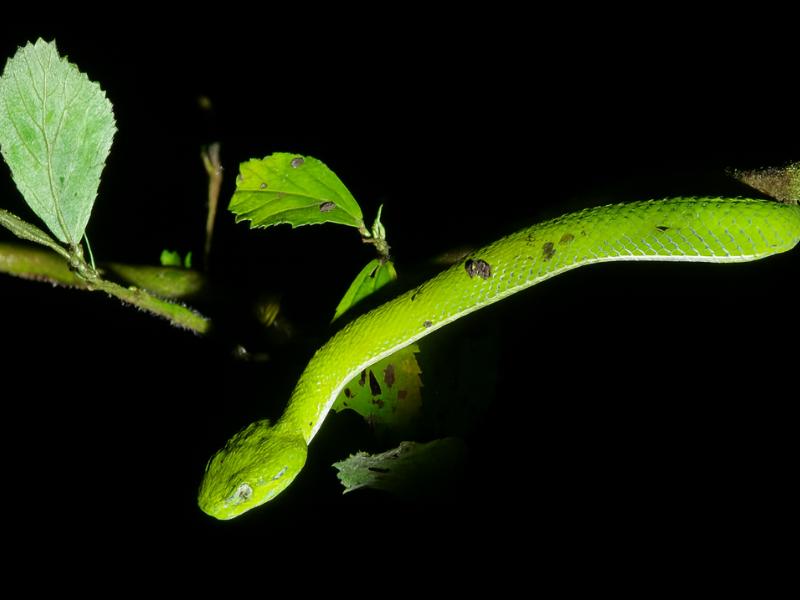
The night walk earns its place because of that 80% nocturnal figure. Kinkajous, armadillos, sleeping birds, vipers coiled at eye level, tarantulas larger than a hand: the forest after dark behaves like a different property. Visitors who saw very little on a day circuit routinely rate the night tour as the best two hours of the trip. Picking between the night tours matters more than most people realise, since four overlapping versions are sold here.
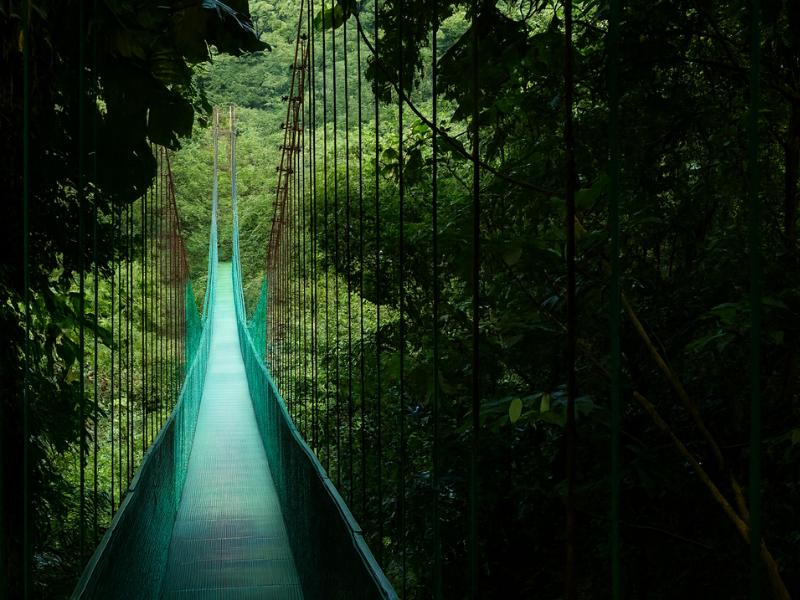
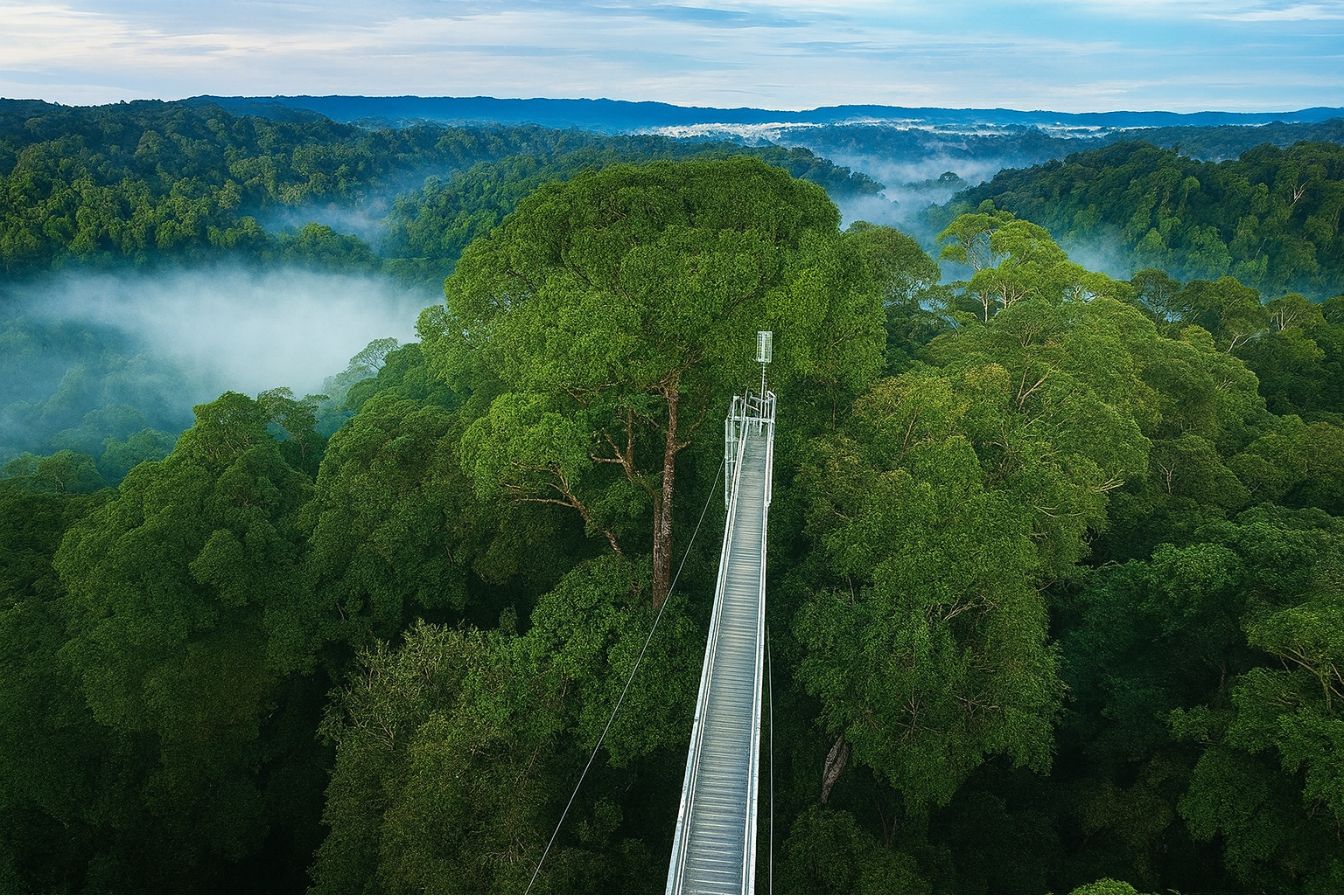
Hanging bridges put you level with the canopy without a harness, at your own pace, which suits anyone who wants the view but not the adrenaline. Ziplines are the opposite trade. Monteverde has the longest and fastest cables in the country, but you are moving too quickly through cloud to see wildlife, and on a misty morning you may see forty metres of white. Which canopy park to pick comes down to whether you want the flight or the walk.
Is Monteverde worth it if you only have one day?
Possible, and usually not worth the drive. Seven to nine hours in a vehicle for a single reserve circuit is a poor exchange, especially in wet season when afternoon fog on the mountain road slows everything further. If one day is genuinely all you have, the more honest option is to skip it.
The realistic alternative is the warm lowlands, where wildlife is easier to find with less effort and roads are faster. How Monteverde compares with La Fortuna sets the two side by side properly, but the short version is that La Fortuna gives casual visitors more per hour and Monteverde gives committed nature travellers more per day. Anyone visiting Monteverde on a tight schedule should at least stay one night, so the early morning belongs to them rather than to a shuttle.
The honest verdict
Monteverde is worth visiting, and it is not for everyone. It is a working conservation project that started at 328 hectares in 1972 and now protects 10,500, run as a privately managed reserve rather than a national park, drawing on the order of 70,000 visitors a year onto a fraction of its area. You will pay $29, get cold, get wet, and quite possibly not see a single mammal larger than a coati.
You will also stand inside a forest that exists almost nowhere else, listening to something metallic and impossible calling from the canopy, watching cloud move horizontally through moss. Travellers who arrive knowing that is the deal rarely regret the drive. Travellers who arrive expecting a wildlife park with reliable sightings and warm weather usually do. Decide which one you are before you book, and the answer stops being complicated.
Choose Your Monteverde Experience
An editorial starting point, before you enter preferences. Confirm dates, party requirements and extras.
Monteverde Reserve Naturalist Walk
Check your travel date before arranging the rest of this outing. Explore the main reserve with a naturalist and shared spotting scope.
2–3 hours; English/Spanish. Meet at the reserve reception; reserve admission and hotel transport cost extra. Listed ages 3–90, minimum two travellers; confirm the circuit before buying admission.
Choose a date for Viator scheduled departures. Final availability and price are confirmed on Viator.
Choose only what matters. Missing answers keep the recommendation provisional. Individual suitability and exact pickup still need confirmation.
| Monteverde Reserve Naturalist Walk | Explore the main reserve with a naturalist and shared spotting scope. 2–3 hours; English/Spanish. Meet at the reserve reception; reserve admission and hotel transport cost extra. Listed ages 3–90, minimum two travellers; confirm the circuit before buying admission. |
|---|---|
| Selvatura Hanging Bridges Walk | Walk the cloud-forest canopy on hanging bridges at your own pace. About 2 hours, self-guided. Meet at Selvatura Park; hotel transport, a guide and food are excluded. Children need an adult; provider restrictions include pregnancy and certain heart/back conditions. |
| Wildlife Refuge Small-Group Night Walk | Search for nocturnal wildlife with a guide, flashlights and spotting scope. 2 hours; English/Spanish. Meet at Monteverde Wildlife Refuge. Reserve entry and transport are extra. Confirm child arrangements and the chosen group option. Sightings are not guaranteed. |
| Curi-Cancha Cloud And Transitional Forest Walk | Discover cloud and transitional forest with a guide and spotting scope. 2.5 hours; English/Spanish, maximum eight. This visits Curi-Cancha, not Monteverde Reserve. Admission is extra; arrange your meeting-point transport. Not suitable under six or with mobility impairments. |
Compare Your Group’s Costs
Enter your own quotes in the same currency for the same people. Include admission, transport and fees on both sides. These are your totals, not live tour prices.
Enter both totals to compare the cost of your independent plan with the guided experience.